


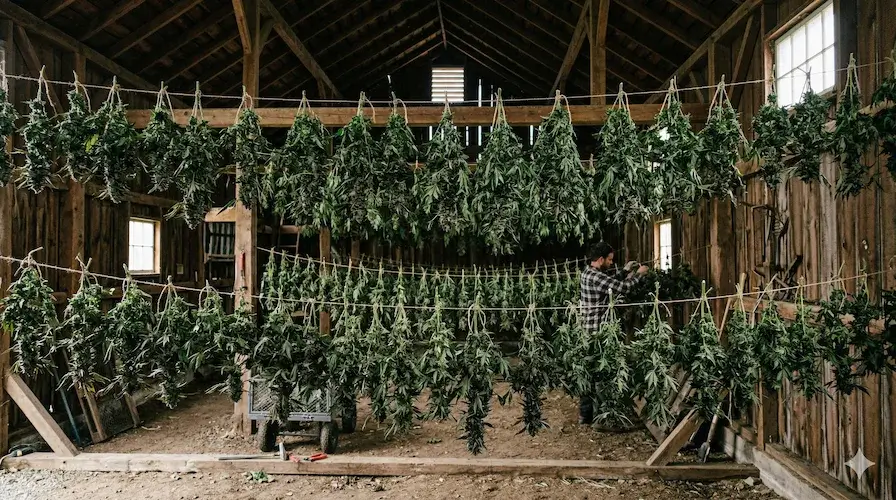
Growing cannabis takes months of work. Harvesting and curing is where that work either pays off or gets wasted. Most growers who produce decent plants lose quality at this stage—harvesting too early, drying too fast, or rushing the cure. A plant with genuine genetic potential that’s harvested at peak maturity and cured properly will smoke better than a poorly finished version of the same strain at twice the cost. This guide covers everything from knowing when to harvest to a proper long-term cure.
How To Know When Cannabis Is Ready To Harvest
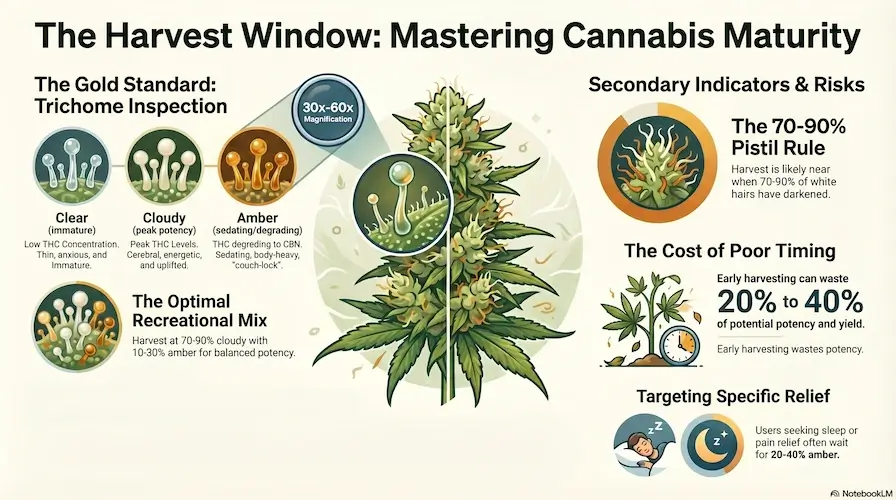
Harvest timing is the single most impactful quality decision you make after choosing seeds. Harvest too early, and you lose 20% to 40% of potential potency and yield. Harvest too late, and THC degrades to CBN, producing more sedating, less nuanced effects. The difference between optimal and suboptimal harvest windows can be a week or less.
Two methods for determining harvest readiness:
Trichome inspection (most accurate). Using a jeweler’s loupe (30x to 60x magnification) or a digital microscope, examine the trichomes on the calyx and sugar leaves—not the fan leaves, which mature at a different rate. Three trichome states:
- Clear/translucent: Not ready. THC hasn’t reached maximum concentration. Harvesting here wastes potential and produces a thin, anxious effect.
- Cloudy/milky white: Peak THC. Maximum potency with the most cerebral and energetic effect. Most users targeting potency and uplifted effects harvest at 80% to 90% cloudy.
- Amber: THC has begun degrading to CBN. Effects shift toward sedating, body-heavy, more couch-lock character. Users targeting sleep or pain relief often prefer 20% to 40% amber. Past 50% amber, the plant is overripe.
For most recreational users, harvesting at 70% to 90% cloudy trichomes with 10% to 30% amber represents the best balance of potency and effect complexity. For detailed trichome inspection guidance, see harvesting cannabis plants: expert guide and best practices.
Pistil color (secondary indicator). White pistil hairs (the small hairs covering developing flowers) progressively darken to orange, red, or brown as the plant matures. When 70% to 90% of pistils have darkened, most strains are approaching the harvest window. This method is less accurate than trichome inspection because pistil color varies by genetics and environment, but it’s useful as a quick check without magnification.
Pre-Harvest Preparation: Flushing
Flushing—running plain pH-adjusted water through the growing medium for the final 7 to 14 days before harvest—remains a debated topic. The theory is that clearing residual nutrients from the plant and medium results in cleaner, smoother smoke. The evidence is mixed. Some growers report noticeable improvement from flushing; others see no difference. Organic soil growers often skip it entirely, arguing that there is no synthetic salt accumulation to flush.
The practical recommendation: if you’re growing with synthetic nutrients (General Hydroponics, Botanicare, etc.), a 7-day flush before harvest does no harm and may improve quality. If you’re growing organically in soil, flushing is optional. For a step-by-step guide, see how to flush cannabis plants in soil, coco, and hydro.
The Harvest Process: Step By Step
Tools needed: Sharp pruning scissors or garden shears, trimming scissors (spring-loaded preferred), a clean work surface, drying line or rack, and gloves (optional but highly recommended—trichomes are sticky).
Step 1: Cut the plant. Most growers cut the main stem at the base. Some prefer harvesting by branch—cutting one large branch at a time, trimming, and hanging before moving on. For very large plants, this method is more manageable.
Step 2: Trim. Remove large fan leaves before or immediately after cutting—they contain minimal trichomes and slow drying. Trimming technique preference:
Wet trimming (done immediately) produces cleaner-looking buds and faster drying.
Dry trimming (done after drying) is slower but often results in better terpene preservation and a more even dry.
Both methods work, but dry trimming is increasingly preferred by quality-focused growers.
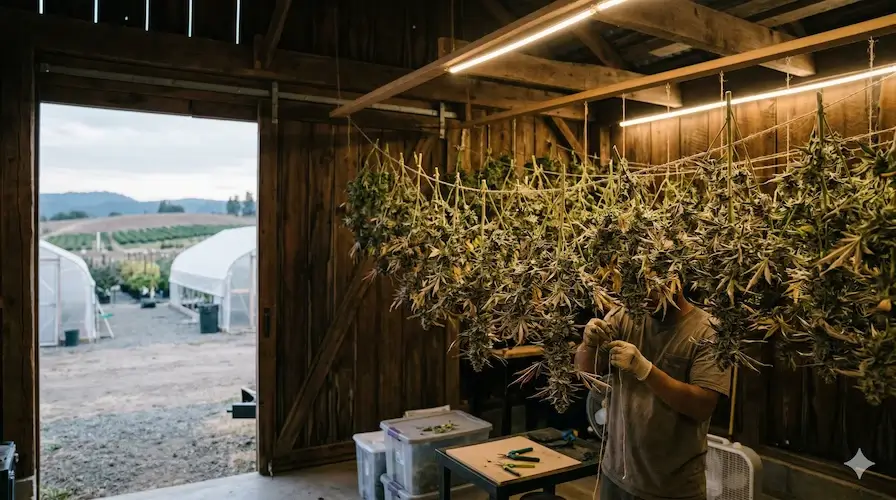
Step 3: Hang or rack to dry. Place branches on drying lines or racks. Hang branches upside down if using a line. Ensure airflow around all surfaces—buds touching surfaces or each other can develop mold. See how to dry weed: step-by-step guide for full setup details.
Drying: Getting the Environment Right
The drying environment is just as important as the cure.
Target drying conditions:
- Temperature: 60°F to 70°F (15°C to 21°C)
- Humidity: 45% to 55% RH
- Darkness: Light degrades cannabinoids and terpenes
- Airflow: Gentle and indirect (never directly on buds)
Drying time: 7 to 14 days for whole branches. Wet-trimmed buds dry faster (5 to 10 days). Drying is complete when small stems snap cleanly, and buds feel dry with slight resistance.
Too fast is the biggest risk. Buds dried in 3 to 4 days often trap internal moisture, leading to mold during curing. If humidity is too low (below 40% RH), slow drying by increasing humidity or leaving more leaf material on the plant.
The Cure: Why It Matters More Than You Think
The cure separates good cannabis from great cannabis. A proper cure:
- Breaks down chlorophyll (reducing harshness)
- Enhances terpene expression (better smell and flavor)
- Balances internal moisture
- Improves smoothness
- Extends shelf life (1 to 2 years with proper storage)
Basic cure method:
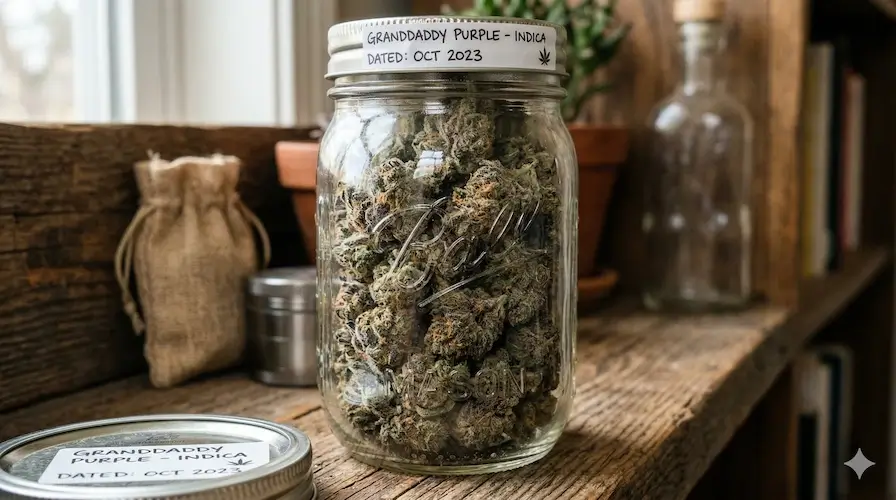
Step 1: Place dried buds in glass mason jars. Fill to 75% capacity.
Step 2: Store in a cool (60°F to 70°F), dark place.
Step 3: Open jars twice daily for 7 to 10 days (“burping”) for 5 to 15 minutes. If you smell ammonia, moisture is too high—leave jars open longer and increase burping.
Step 4: After two weeks, reduce burping to once daily. After 3 to 4 weeks, burp every few days.
Minimum cure time:
2 weeks: noticeable improvement
4 weeks: standard
6 to 8 weeks: fully cured
Some strains continue improving for 3 to 6 months.
Humidity Control During the Cure
Humidity packs (Boveda 62%, Integra 62%) help maintain ideal moisture levels. Use one 8-gram pack per quart jar.
Target humidity: 58% to 65% RH.
Below 55% dries terpenes; above 65% risks mold.
Storage: After the Cure
Cool and dark. Store around 60°F for best longevity.
Airtight containers. Glass jars are best. Avoid plastic.
Avoid freezing. It damages trichomes unless making concentrates.
Start With Seeds That Finish Well
A great harvest starts with strong genetics. Seeds Here Now carries verified genetics from top breeders—strains known for finishing clean and rewarding a proper cure with exceptional terpene profiles.