


How To Flush Cannabis Plants Before Harvest: The Complete Grower’s Guide
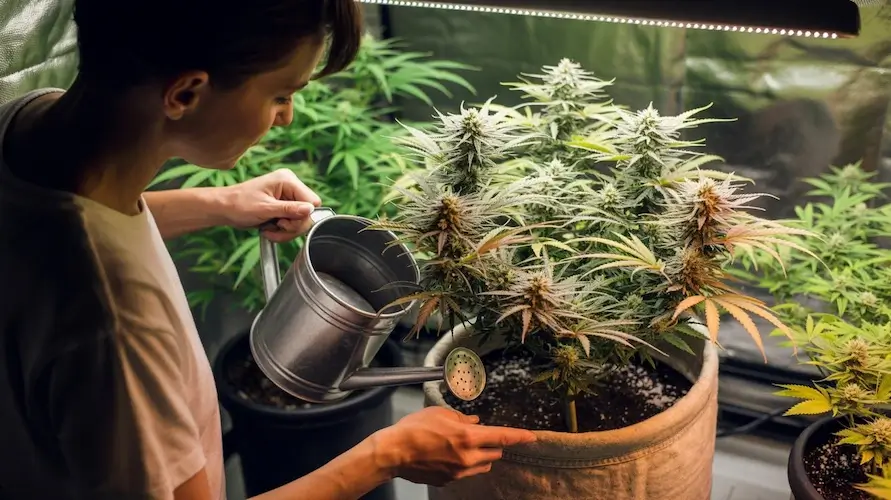
Flushing cannabis plants is one of the most debated practices in cultivation. Some growers consider it essential. Others believe it does nothing at all. If you are searching for how to flush cannabis plants, you are likely approaching harvest and want the cleanest, smoothest final product possible.
This guide explains exactly what flushing cannabis plants is, when to do it, how to do it correctly in soil, coco, and hydro systems, and whether flushing actually works. It is written for real-world growers who want better smoke quality, improved flavor, and professional-grade results at harvest.
Quick Answer: Should You Flush Cannabis Plants?
Yes, if you grow with synthetic or bottled nutrients, flushing cannabis plants before harvest is recommended. Flushing helps reduce excess mineral salts in the root zone, which many growers believe leads to smoother smoke, cleaner flavor, and better burn quality.
If you grow in fully organic living soil, aggressive flushing is usually unnecessary. Most organic growers rely on natural nutrient depletion instead.
What Does It Mean To Flush Cannabis Plants?
Flushing cannabis plants is the process of running plain, pH-balanced water through the growing medium during the final stage of flowering to remove excess nutrients and mineral salt buildup.
The purpose of flushing is to reduce residual nutrient salts in the root zone, encourage the plant to use stored nutrients, improve terpene expression and flavor, produce smoother smoke with less harshness, and help the plant finish its life cycle naturally.
Flushing does not increase THC levels or bud size. Its role is quality control, not yield enhancement.
Why Growers Flush Cannabis Plants Before Harvest
Over time, fertilizer salts accumulate in soil, coco, and hydro systems. If left in the plant at harvest, these salts may affect how the dried flower burns and tastes.
Many growers report that flushing allows strain-specific terpene profiles to come through more clearly, without chemical or fertilizer aftertaste.
Flushed cannabis often burns cleaner and feels less harsh on the throat, especially when combined with proper drying and curing.
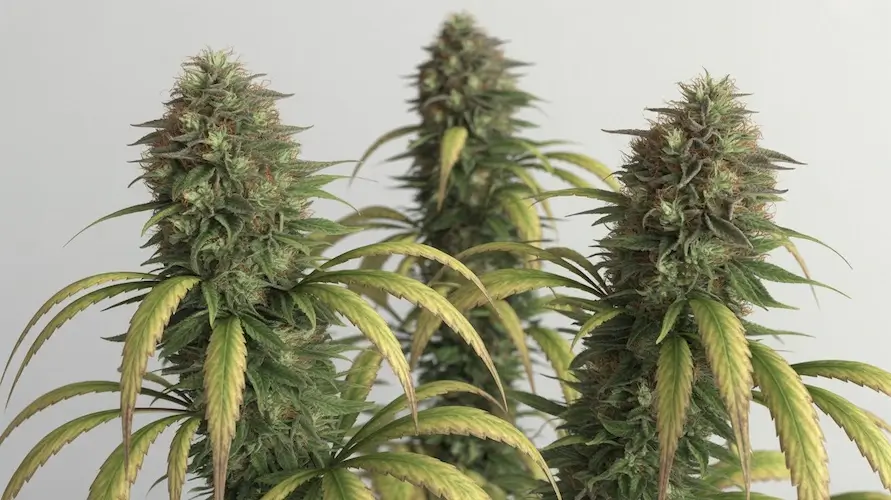
As nitrogen is depleted during flushing, fan leaves naturally turn yellow and die. This fade is a normal end-of-life signal and often coincides with peak ripeness.
When To Flush Cannabis Plants
Standard flushing timelines depend on the growing medium.
Soil grows typically require 10 to 14 days of flushing. Coco coir usually needs 7 to 10 days. Hydroponic systems flush quickly and often require only 3 to 7 days.
Do not flush based solely on calendar days. Start flushing when trichomes are mostly cloudy with some amber, pistils are darkening and receding, bud growth has slowed, and the plant has stopped stacking weight.
Flushing too early can reduce yield. Flushing too late limits its effectiveness.
How To Flush Cannabis Plants Step by Step
First, stop all nutrients. Discontinue fertilizers, bloom boosters, PK additives, carbohydrates, and supplements. From this point forward, only plain water should be used.
Next, use properly pH-balanced water. Soil grows should be flushed at a pH of 6.0 to 6.5. Coco grows should stay between 5.8 and 6.2. Hydroponic systems should remain between 5.8 and 6.0. An incorrect pH can cause nutrients to stay locked in the medium rather than washing out.
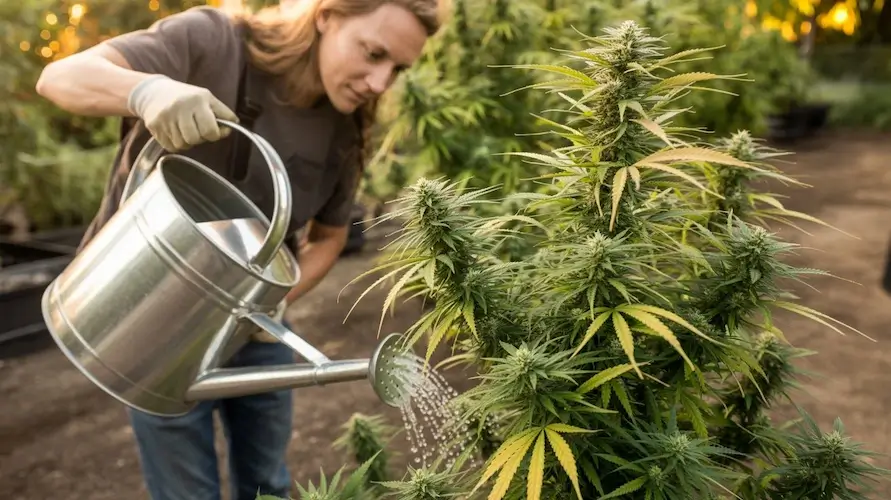
Flush the medium thoroughly using two to three times the container volume in water. For example, a 5-gallon pot should receive 10 to 15 gallons of water spread across multiple watering sessions. Ensure consistent runoff while avoiding root suffocation.
If possible, monitor runoff EC or PPM. Initial readings will be high. Continue flushing until runoff levels approach your source water, confirming that salts are being removed.
As flushing progresses, observe the natural fade. Large fan leaves will yellow and die back. Sugar leaves should remain mostly green. Buds should stay dense, resinous, and healthy. Do not attempt to correct the fade with nutrients.
What a Properly Flushed Cannabis Plant Looks Like
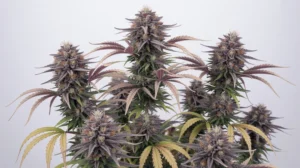
A successful flush produces predictable visual signs. Yellowing begins with large fan leaves and starts from the bottom of the plant. Buds retain color, frost, and structure. Resin production continues until harvest.
Red flags include sudden bud yellowing, stalled trichome development, severe wilting, or rapid leaf drop early in the flowering cycle. These usually indicate flushing too early or poor root health.
How To Flush Cannabis Plants by Growing Medium
Soil holds nutrients longer than other growing media, so flushing requires patience. Use slow, deep watering and allow slight dry-back between flushes. Avoid compacted or waterlogged soil. Organic soil growers often rely on water-only finishing rather than aggressive leaching.
Coco behaves like hydroponics and tightly binds salts. Flush more frequently, ensure strong runoff at each watering, and maintain calcium and magnesium until flushing begins. Coco plants typically show a faster visual fade than soil plants.
Hydroponic systems flush the fastest. Drain the reservoir, refill with plain, pH-balanced water, and optionally use a finishing agent. Most hydro plants show visible fade within a few days.
Should You Use a Flushing Agent?
Flushing agents are designed to dissolve and mobilize nutrient salts. They can speed up salt removal and are useful in heavily fed coco or hydro systems. However, they are not required, add cost, and offer limited benefit in organic soil grows. Plain water is sufficient for most growers when used correctly.
Common Cannabis Flushing Mistakes
Flushing too early is one of the most common errors and can reduce bud size and density. Overwatering during flushing can suffocate roots and stall metabolism. Using incorrect pH reduces flushing effectiveness and stresses the plant. Expecting white ash or perfect smoke from flushing alone ignores the importance of drying and curing.
Does Flushing Cannabis Plants Actually Work?
Scientific research on flushing is limited, and results are mixed. Some studies show minimal differences in mineral content between flushed and unflushed plants. However, these studies do not fully account for smoke smoothness, combustion quality, or terpene perception.
After flushing hundreds of plants across soil, coco, and hydro systems, most experienced growers agree that flushing improves smoke smoothness, enhances flavor clarity, and works best when paired with proper drying and curing. Flushing should be viewed as one part of a complete harvest process, not a standalone solution.
How Long After Flushing Should You Harvest?
Harvest when trichomes reach your desired maturity, the plant completes its natural fade, and buds stop swelling. Most growers harvest immediately after the flush period ends rather than waiting additional days.
FAQs: How To Flush Cannabis Plants
Do autoflower cannabis plants need to be flushed?
Yes. Autoflower cannabis plants should be flushed, but for a shorter period. Most autoflowers require 5 to 7 days of flushing, depending on the growing medium.
Can I flush cannabis plants with tap water?
Yes, as long as the water is properly pH-balanced and does not contain excessively high dissolved solids.
Should I flush cannabis plants grown in organic soil?
Light flushing with plain water is acceptable, but aggressive flushing is usually unnecessary in living soil systems.
Does flushing cannabis plants reduce THC levels?
No. Flushing does not reduce THC or other cannabinoids. It affects residual nutrients, not cannabinoid production.
What happens if I do not flush cannabis plants before harvest?
Unflushed plants can still be potent, but they often produce harsher smoke, darker ash, and muted terpene profiles.
Can flushing fix harsh or chemical-tasting buds?
Flushing can help, but it is not a cure-all. Drying and curing play an equally important role in smoke quality.
How much water should I use when flushing cannabis plants?
A general rule is two to three times the container volume per flush cycle, spread over multiple waterings.
Should I flush during the final dark period?
Flushing should be completed before any optional dark period. The dark period itself does not replace flushing.
Final Thoughts on Flushing Cannabis Plants
Learning how to flush cannabis plants correctly can significantly improve your final product when done at the right time and in the right way. While flushing is not magic, it remains a valuable tool for growers focused on clean flavor, smooth smoke, and consistent results.
Flush with intention, harvest with patience, and cure with care. The final weeks of your grow matter more than most growers realize.
Looking for more expert grow tips? Check out the Seeds Here Now blog.
Suggested Articles
 23 Jan 2026
  8 min read
;)
;)
;)
 January 20, 2026


RESPONSES (0)
No responses yet. Be the first to respond!