


Benefits of Autoflowering Seeds: Why Every Grower Should Run at Least One Auto [2026]

Autoflowering seeds used to be the consolation prize—what you grew when you couldn’t manage a real photoperiod setup. That reputation is outdated. Modern autoflowering genetics from breeders like FastBuds, Mephisto Genetics, and Night Owl Seeds have closed the gap significantly. Today, autos deliver real potency, real terpenes, and a harvest timeline that makes photoperiod growers genuinely jealous.
This isn’t a pitch to abandon photoperiods. It’s a case for why autoflowering seeds deserve serious space in any grow—beginner or veteran, indoor or outdoor. Here’s what they actually bring to the table.
1. Faster Harvest: 8–12 Weeks Seed to Harvest
This is the headline benefit and it’s real. Most autoflowering strains complete their entire life cycle—germination through harvest—in 8 to 12 weeks. Compare that to a photoperiod grow where you’re looking at 4–8 weeks of vegetative growth plus 8–12 weeks of flowering. Autos compress that into a single unbroken run.
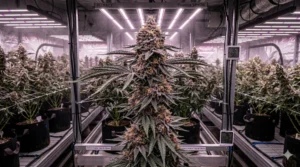
In practice, that means you can run 3–4 full indoor cycles per year where a photoperiod grower gets 2. Outdoors, it means planting in late spring, harvesting by midsummer, and running a second crop before your season closes. In short northern growing windows—Pacific Northwest, Great Lakes, high elevations—that second harvest isn’t optional. It’s the whole point.
Speed doesn’t come at the expense of quality in today’s top genetics. It just means you’re harvesting sooner. The difference between a mediocre auto and a well-bred auto isn’t the timeline—it’s the breeder. Shop autoflowering seeds at Seeds Here Now and you’ll find genetics that wouldn’t embarrass you next to any photoperiod strain.
2. Compact Plant Size
Autoflowers typically top out at 1–3 feet tall. Some stretch a bit more, some stay genuinely compact—it depends on the strain and environment. Either way, the size profile is fundamentally different from a photoperiod plant that wants to hit 5–8 feet in veg before you flip it.
That size advantage opens up growing scenarios that photoperiods just don’t fit:
- Small tents (2×2 or 2×4) where a photoperiod would eat all your space by week three
- Balconies, patios, and outdoor spaces where you need to stay under the fence line
- Closets, spare bedrooms, or any space-constrained setup
- Multi-plant SOG (Sea of Green) setups where small plants mean more plants per square foot
Compact plants are also easier to manage. Topping, training, defoliating, harvesting—everything is physically simpler when you’re not wrestling with a 6-foot tree.
3. No Light Cycle Management
Photoperiod plants require a shift to 12 hours of light and 12 hours of darkness to trigger flowering. That means light-tight rooms or tents, strict schedules, timers that can’t fail, and paranoia about any light leak that might stress your plants into hermaphroditism.
Autoflowers flower based on age. Set your lights to run 18–20 hours per day and leave them there. No flip. No scheduling headaches. No hermie risk from a malfunctioning timer or an accidental light leak during dark hours.
This matters more than it sounds for multi-tent operations. If you’re running an auto tent alongside a photoperiod flower room, you don’t need to isolate them from each other. The autos don’t care what your other room is doing.
4. Natural Resilience
Autoflowering plants carry Ruderalis genetics—originally from harsh, cold, northern climates. That heritage translated into natural toughness. Autos tend to be more resistant to temperature swings, humidity fluctuations, overwatering, and common pests and diseases than their photoperiod cousins.
That doesn’t mean they’re indestructible. Root rot will still kill an auto. Spider mites will still find them. But the margin for error is wider, which matters a lot when you’re learning the fundamentals or running in an environment you can’t perfectly control.
For outdoor growers in variable climates, this resilience means autos can handle a cold night or an unexpected rain event without falling apart. The right outdoor auto strain is one of the most practical crops you can run.
5. Multiple Outdoor Harvests Per Season
Outdoor photoperiod plants are photoperiod for a reason—they need the natural light cycle to trigger flowering in late summer. That means one harvest per outdoor season, timed around your latitude’s fall equinox.
Autoflowers don’t care about the light cycle. Plant them as soon as your last frost passes and they’ll be done in 8–10 weeks. In most of the continental USA, that means:
- First run: plant mid-April, harvest late June/early July
- Second run: plant early July, harvest mid-September
- Possible third run in warmer climates or greenhouses
Two outdoor harvests per year is a significant advantage for anyone growing for personal supply. It doubles your annual yield without doubling your space or equipment.
6. Strain Variety Has Never Been Better
The old knock on autos was that selection was limited to a handful of tired strains. That changed over the past decade. Today, nearly every popular photoperiod strain has an autoflowering version, and many of them are genuinely excellent.
At Seeds Here Now, you’ll find autoflowering versions of:
- Classic genetics like OG Kush, Girl Scout Cookies, Gorilla Glue, and Zkittlez
- Modern craft strains from breeders like FastBuds 420, Mephisto Genetics, and Night Owl Seeds
- CBD-rich and balanced THC:CBD varieties for those focused on therapeutic use
- Exotic flavor profiles—tropical, fruity, diesel, pine—across a wide range of effects
The idea that autos are a limited category is simply outdated. The catalog has exploded.
7. Ideal for Sea of Green (SOG) Cultivation
The Sea of Green method packs multiple small plants close together to maximize canopy coverage and yield per square foot. It works best with uniform, compact plants that don’t compete with each other for vertical space. Autoflowers are exactly that.
With SOG, you can run 4–9 plants per square foot in small containers (1–2 gallon pots), keep them on an 18-hour light schedule, and run continuous harvests on a staggered schedule. Each plant contributes a single main cola rather than a branchy structure, which keeps energy focused and buds dense.
This is one of the highest-efficiency growing methods available, and autos are purpose-built for it.
Which Autoflowering Seeds Should You Start With?
If you’re new to autos, start with a proven strain from a reputable breeder. Some reliable choices available at Seeds Here Now:
- FastBuds 420 – Girl Scout Cookies Auto: Balanced, potent, consistent. One of the better beginner autos on the market.
- FastBuds 420 – Zkittlez Auto: Fruity, euphoric, easy to grow. Great for outdoor and indoor runs.
- Mephisto Genetics – Samsquanch OG: Heavier indica profile, outstanding resin production, reliable genetics.
Seeds Here Now carries all of these in sealed breeder packs—unopened, unhandled, guaranteed authentic. We’ve been in business since 2010 and carry 80+ breeders. Our Grower’s Guarantee covers germination. Fast USA shipping on every order.
Browse all autoflowering seeds at Seeds Here Now →
FAQ: Autoflowering Seeds
Are autoflowering seeds worth it compared to photoperiod?
For most home growers, yes. The speed, simplicity, and flexibility of autos outweigh the yield difference in most real-world setups. If you’re breeding or running a high-output commercial garden where every gram matters, photoperiods still have an edge. For everyone else, autos make more sense more often than not.
Do autoflowering seeds produce lower quality than photoperiod?
Not anymore—not with quality genetics. Modern autos from top breeders regularly hit 20–27% THC and produce terpene profiles competitive with premium photoperiod strains. The quality gap has largely closed. The yield-per-plant gap is real but smaller than it used to be.
Can I clone autoflowering plants?
Technically yes, but it’s rarely worth it. Autoflowers have a fixed life cycle—a clone taken from an auto will start its clock from the mother plant’s age, not its own germination. You lose most of the timeline advantage. Most growers just buy fresh seeds for each run, which is easy when the seeds are affordable and germinate reliably.
What light schedule works best for autoflowering seeds indoors?
18/6 (18 hours light, 6 hours dark) is the most common and works well for most strains. Some growers run 20/4 or even 24/0 for maximum growth. Most autos do fine anywhere in the 18–20 hour range. Experiment to find what works for your specific genetics and setup.
Now go grow something.
Jb @the_real_james_bean
James Bean is the owner of Seeds Here Now, a USA seed bank established in 2010. Seeds Here Now carries sealed breeder packs from 80+ breeders with fast domestic shipping and a Grower’s Guarantee on every order.
Suggested Articles
 02 Apr 2026
  13 min read

;)
;)
;)
 April 26, 2023


RESPONSES (0)
No responses yet. Be the first to respond!