


How to Plant Weed Seeds: Step-by-Step Grower’s Guide [2026]
How to Plant Weed Seeds: Step-by-Step Grower’s Guide [2026]
Planting weed seeds sounds simple. And mostly it is—but the details matter, and there are a few specific ways growers derail an otherwise solid start. The goal is to take a viable seed from dormancy to a healthy seedling with minimal stress and maximum survival rate. This guide covers the full process, from germination through transplant, with the specifics that actually make a difference.
What You Need Before You Start
Before touching a seed, make sure you have the following ready:
- Quality seeds — Sealed breeder packs from a verified source. Genetics determine your ceiling. Don’t start with uncertain seeds.
- Growing medium — Seedling-specific mix or light coco/perlite blend. Avoid heavy nutrient-loaded soil for germination—seedlings can’t handle it.
- Small containers — Solo cups or 1-gallon containers for seedling stage. Transplant to larger pots as roots establish.
- Light source — 18 hours on, 6 hours off for indoor seedlings. Low-intensity LED or fluorescent lights work well at this stage. Don’t hit seedlings with full-power grow lights immediately.
- Water — pH-adjusted to 6.0 to 7.0 (soil) or 5.5 to 6.5 (coco/hydro). Use a simple pH meter—this matters more than people realize at the seedling stage.
- Humidity dome or propagation tray — Keeps humidity around 65% to 70% during germination and early seedling phase.
Step 1: Germination
Germination is the process of activating a dormant seed. There are several reliable methods. The paper towel method is the most widely used and has the highest success rate for most growers.
Paper Towel Method
- Dampen two sheets of paper towel with clean, pH-adjusted water. Not soaking wet—moist.
- Place your seeds on one paper towel sheet. Leave space between seeds so taproots don’t tangle.
- Fold the second sheet over the seeds.
- Place the paper towel setup inside a zip-lock bag or between two plates to retain moisture.
- Put it somewhere consistently warm: 70°F to 85°F. On top of a cable box, a seedling heat mat, or an upper shelf in a warm room. Avoid direct heat sources.
- Check every 12 hours. Most seeds crack and show a taproot within 24 to 72 hours. Seeds older than 72 hours without germination may still be viable—give them up to 5 days before considering them a loss.
Signs of Successful Germination
A small white taproot emerging from the seed shell is what you’re looking for. It should be white and firm. Yellow or brown taproots indicate problems—usually temperature extremes or contamination.
Handle germinated seeds by the seed shell, not the taproot. The taproot is fragile. Touching or bending it can cause irreversible damage at this stage.
Direct-Soil Germination (Alternative Method)
Some growers skip the paper towel and germinate directly in their growing medium. This eliminates the transplant shock from moving a germinated seed into soil. Poke a 1/4″ to 1/2″ deep hole, place the seed with the pointed end facing down, cover lightly, mist the surface, and keep warm. Results are more variable than paper towel germination but perfectly viable.
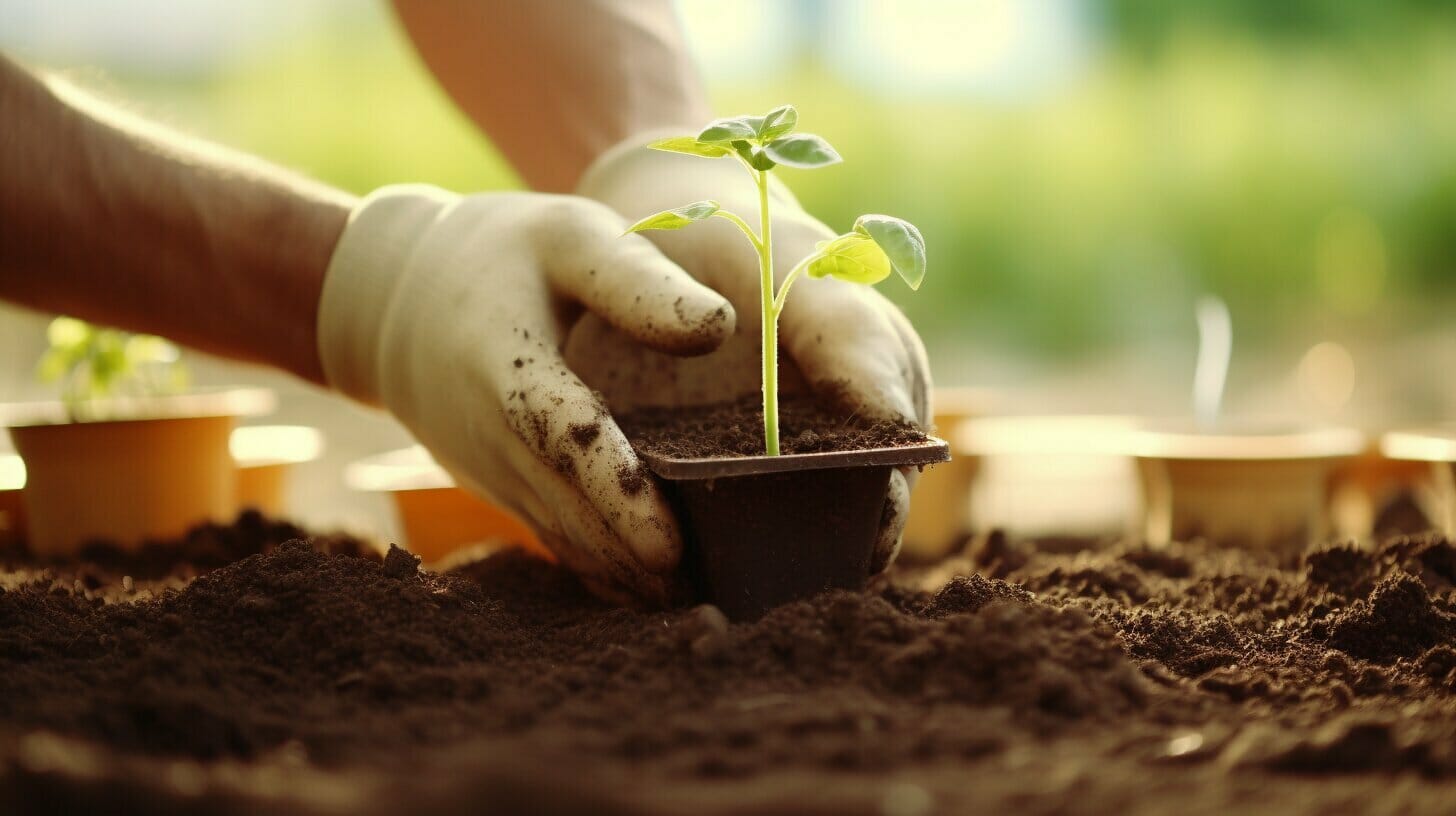
Step 2: Planting the Germinated Seed
Once your taproot is 1/4″ to 1/2″ long, it’s time to plant.
- Pre-wet your seedling medium. You want it moist throughout, not soggy. Squeeze a handful—it should barely release any water.
- Make a small hole about 1/2″ deep using a pen, pencil, or your finger.
- Place the seed in the hole with the taproot pointing down. If the taproot has curved, orient the seed so the curve faces down and the root can continue growing downward naturally.
- Cover lightly with growing medium. Don’t pack it down—just gently close the hole. The seedling needs to push through to the surface within a couple of days and dense soil makes that harder.
- Mist the surface lightly. Don’t water heavily at this stage—the moisture already in the medium is enough. Overwatering seeds causes damping off, a fungal condition that kills seedlings before they establish.
Step 3: Seedling Environment
The seedling stage runs from seed break through the first 2 to 3 sets of true leaves. This is the most fragile period of the plant’s life.
Temperature
Keep ambient temperature between 70°F to 80°F. Seedlings are sensitive to cold drafts and temperature swings. Avoid placing them near air conditioner vents, exterior walls, or anywhere with inconsistent temperature.
Humidity
Target 65–70% relative humidity during germination and early seedling. A humidity dome placed over your containers creates the right microenvironment. Remove it gradually once the seedling has its first true leaves and starts to show vigorous growth—typically after 7 to 10 days above soil.
Light
18 hours on, 6 hours off. Position lights closer than you would for veg—seedlings need less intensity but still need adequate light to prevent stretching. A seedling that reaches for the light before its stem is strong enough will topple and may not recover. If you see a long, thin stem between the seed leaves (cotyledons) and the soil, your light is too far away.
For indoor growers using LED panels: keep at 30% to 40% power at 24 to 36 inches above canopy during seedling stage. Ramp up gradually as the plant grows.
Watering
Water in small amounts around the base of the seedling, not directly on it. Let the medium dry slightly between waterings—the roots need oxygen as much as water. A consistent wet-dry cycle encourages roots to grow outward searching for moisture, which builds a stronger root structure than constant saturation.
pH your water every time: 6.0–7.0 for soil, 5.5–6.5 for coco or hydro. Incorrect pH is the most common cause of nutrient lockout problems in seedlings.
Step 4: First Feeding
Most quality seedling mixes contain enough nutrients for the first 2–3 weeks. Adding nutrients during the seedling stage usually does more harm than good—seedling roots are sensitive and nutrient burn shows up fast.
Wait until the plant has 3 to 4 sets of true leaves before introducing light feeding. When you do start, begin at 1/4 strength of your nutrient line’s recommended dose and work up based on how the plant responds. Watch for:
- Dark green leaves: possible nitrogen excess—back off
- Yellowing or pale leaves: possible deficiency—check pH first, then consider feeding
- Curling leaves: heat stress, overwatering, or pH issue—address the environment before feeding
Step 5: Transplanting
Transplanting is necessary when the plant’s root system fills its current container—visible as roots circling the bottom of the container or emerging from drainage holes.
Signs it’s time to transplant:
- Roots visible at drainage holes
- Plant looks disproportionately large for its container
- Watering frequency has increased significantly (roots are drinking faster)
Transplant to the next size up, not a massive container. Going from a 4″ cup to a 5-gallon pot in one move is a setup for overwatering problems—the plant can’t uptake water fast enough from a large volume of medium, and the wet soil stays wet, creating root rot risk.
Transplant Process
- Water the plant lightly 12 to 24 hours before transplanting. A slightly dry root ball holds together better than a fully saturated one.
- Prepare the new container with pre-moistened medium, leaving a space roughly the size of the original container in the center.
- Flip the original container upside down, support the base of the plant stem, and tap the container until the root ball slides out intact.
- Place the root ball in the new container hole and fill in around it gently. The plant should sit at the same height or slightly lower (cannabis can grow roots from buried stem sections).
- Water lightly around the root ball perimeter—not on the root ball itself—to encourage roots to spread outward.
Common Mistakes When Planting Weed Seeds
Overwatering germinated seeds. The most common mistake. Seeds and seedlings need moist, not saturated, conditions.
Using heavy, nutrient-loaded soil. High-nutrient soil burns seedling roots. Use light, well-draining seedling mix and wait to introduce nutrients.
Planting too deep. 1/2 inch is enough. Deep planting means the seedling has to work harder to reach light.
Inconsistent temperature. Seed germination stops below 65°F and seeds can die above 95°F. Keep it in the 70–80°F range consistently.
Too much light too early. Seedlings don’t need or want full-power grow lights. High-intensity light on fragile seedlings causes stress and bleaching.
FAQ: How to Plant Weed Seeds
How deep should I plant weed seeds?
1/4″ to 1/2″ deep is standard. Deeper planting means more work for the seedling to emerge. Shallower and the seed shell may not be shed cleanly as the seedling breaks the surface.
How long does it take for weed seeds to sprout?
Most quality seeds sprout within 24–72 hours of germination. Above-soil emergence after planting typically takes 2 to 5 days depending on temperature and medium. Seeds that haven’t sprouted after 7–10 days are likely not viable.
Should I germinate in paper towel or soil?
Both work. Paper towel gives you visual confirmation of germination and slightly higher success rates. Direct-soil germination eliminates transplant shock from moving a germinated seed. Most growers prefer paper towel for new or expensive genetics where they want to confirm viability before planting.
How much water do weed seedlings need?
Less than you think. Water in small amounts (50 to 100 ml for a solo cup) and let the medium dry slightly before watering again. The dry cycle is as important as watering—it encourages root development and prevents damping off.
Where can I buy quality weed seeds to plant?
Seeds Here Now carries feminized, autoflowering, and regular cannabis seeds in sealed breeder packs from more than 80 breeders. USA-based with fast domestic shipping and the Grower’s Guarantee. Check the free seeds page for current promotions before you order.
Suggested Articles
 10 Apr 2026
  8 min read

;)
;)
;)
 August 07, 2023


RESPONSES (0)
No responses yet. Be the first to respond!