


What To Do When Your Cannabis Clones Arrive
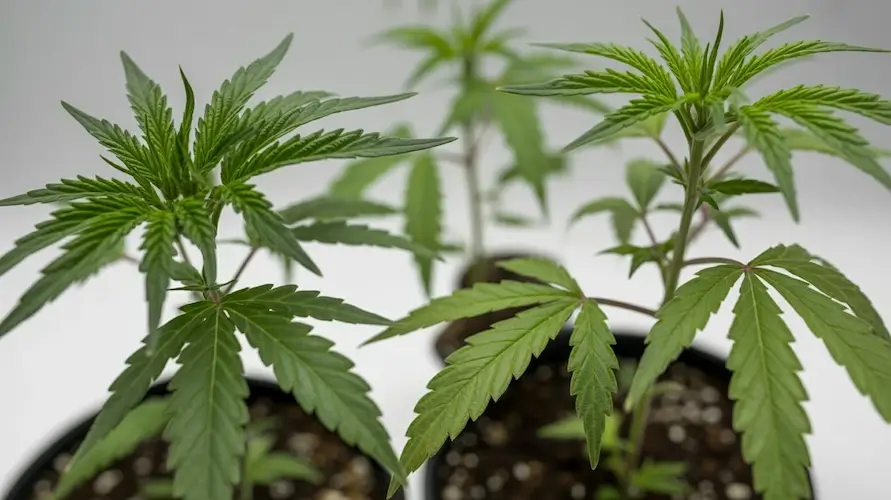
Receiving cannabis clones can feel like the easy part of growing. The genetics are already chosen, the plant is already alive, and the long wait for seeds to germinate is behind you. But in reality, the moment your clones arrive is one of the most sensitive phases of the entire cultivation cycle. A clone is not just a “small plant.” It is a recently rooted cutting that has already undergone a series of stress events: it was cut from a mother plant, forced to develop new roots, packaged, shipped, and then introduced into a brand-new environment.
That means the first few days after arrival are not about pushing growth. They are about helping the clone recover, stabilize, and transition from survival mode into active vegetative development.
This guide explains exactly what to do when your cannabis clones arrive, and more importantly, why those steps matter. If you understand the biology behind clone stress, root establishment, acclimation, and environmental control, you will make better decisions and avoid the mistakes that cause stalls, weak growth, or permanent setbacks.
Why the First 24 to 72 Hours Matter So Much
The first thing growers need to understand is that a clone does not arrive in a neutral state. It arrives already under pressure.
Unlike a seedling, which develops naturally in place from germination onward, a clone has had its normal development interrupted. It began life as a cutting, meaning it had to survive without roots for a period before new root tissue formed. Even after rooting, those new roots remain immature compared to the root system of a seed-grown plant of the same size. Then shipping adds additional stress: limited airflow, possible temperature swings, darkness or low light, and physical movement.
When a clone reaches your grow, it is often functioning with a narrow margin for error. If you immediately transplant it, feed it, blast it with intense light, or overwater it, you are stacking new stress on top of old stress. That is why so many clone problems happen in the first week. The grower is trying to accelerate development before the plant has actually recovered.
The real goal during the first 24 to 72 hours is not fast growth. It is physiological stability. You want the clone to regain turgor pressure, adjust to the new vapor pressure deficit, resume normal transpiration, and begin extending roots into the new environment. Once those systems are working smoothly, growth follows naturally.
Step One: Inspect the Clones Carefully and Intelligently
When your clones arrive, inspection is the first job. But inspection should go beyond just glancing at the leaves and deciding whether the plant “looks good.” A useful inspection tells you how the plant has been handling stress and what it will likely need next.
Start with leaf color and posture. Healthy clones usually have a reasonably even green tone and leaves that hold themselves with some firmness. A little droop after shipping is common and not automatically a red flag. Shipping often causes a temporary water imbalance because the plant has been in a low-light, enclosed environment. However, extreme limpness, leaf collapse, widespread yellowing, or mushy tissue can indicate deeper problems.
Next, inspect the stem and root zone. A good clone should have a stem that feels firm, not soft or pinched. If the clone is in a rooting plug or small starter pot, check whether the medium is lightly moist rather than soaked. A soaked medium can indicate overwatering, and overwatered clones often struggle because their root zone lacks oxygen.
Then look for pest or disease indicators. Do not just search for live insects. Also look for indirect signs such as:
- stippling on leaves
- silvery scraping marks
- webbing
- black specks
- distorted new growth
- powdery residue
- suspicious spotting near leaf veins
The reason this matters is simple: clones are one of the most common ways growers accidentally introduce pests into an otherwise clean grow. A healthy-looking clone can still carry eggs, larvae, fungal spores, or latent disease pressure. Early detection is far easier than trying to solve an infestation after the clone has been integrated into the room.
If your clones came from a trusted source with pest- and disease-free stock, your risk is lower, but inspection is still essential because it gives you a baseline. If a problem appears later, you want to know whether it likely arrived with the plant or developed in your environment.
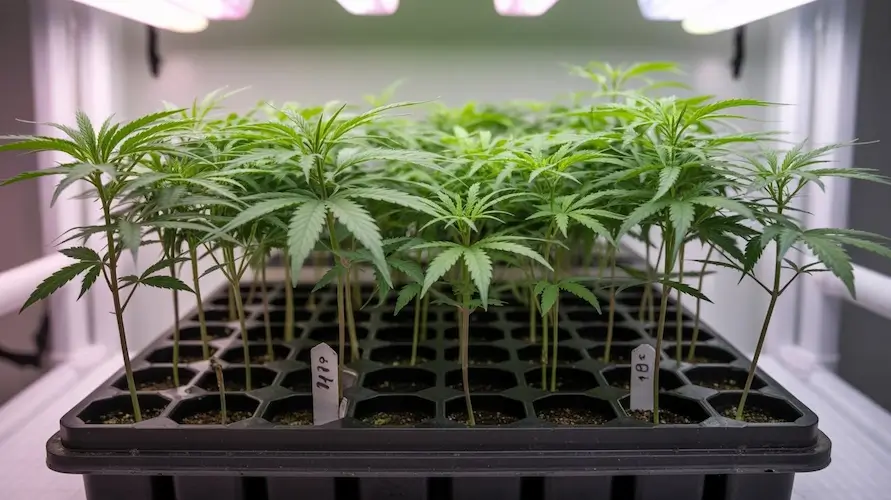
Step Two: Let the Clone Acclimate Before You “Do Anything”
One of the biggest mistakes growers make is assuming arrival means action. They want to transplant immediately, feed immediately, and put the clone into the full grow environment right away. In reality, acclimation is often the most important first step.
Why? Clones are extremely sensitive to environmental changes, especially light intensity, humidity, airflow, and root-zone conditions. If a clone is moved from a dim, humid shipping environment into bright light and dry air, transpiration can spike before the roots can supply enough water to the leaves. That causes drooping, stress signaling, and slowed establishment.
Think of acclimation as giving the plant time to re-balance its internal water economy. During shipping, stomatal behavior changes, transpiration changes, and the plant’s assumptions about the environment become inaccurate. The clone needs time to “read” the new room.
For most growers, a good acclimation period means placing clones in a stable environment for 12 to 24 hours before transplanting or increasing environmental intensity. During this time, aim for:
- moderate temperature
- moderate to high humidity
- low to medium light intensity
- no harsh direct fan
The purpose is to reduce demand on the plant while it regains equilibrium. You are not trying to make it grow. You are trying to prevent it from losing more ground.
Step Three: Light Management Is About Plant Demand, Not Just Visibility
When people say clones need gentle light, they often present it as a rule without explaining why. The reason has to do with how light drives plant demand.
Stronger light increases photosynthetic activity, but it also increases water demand. Under brighter light, the plant opens stomata more actively, respiration changes, and leaf temperature can rise. A mature plant with an established root system can handle that. A recently shipped clone often cannot.
That is why intense light can damage clones even if the clone does not look “burned.” Sometimes the issue is not direct light burn but a mismatch between leaf demand and root supply. The leaves are being told to work harder before the roots are physically capable of supporting them.
This is why low to moderate light on arrival is so helpful. It gives the plant enough energy to function without forcing it into overdrive. For the first couple of days, the light should support recovery rather than maximum photosynthesis.
A practical approach is to start with dimmed LEDs or softer propagation-style lighting, then gradually raise intensity over several days as the clone perks up and begins active growth. If new growth remains healthy and leaf posture improves, that is your signal that the plant is ready for more.
The deeper principle is this: clones should earn stronger light through recovery. Strong light is a growth tool, not a rescue tool.
Step Four: Watering Clones Correctly Means Understanding Root Capacity
Overwatering is probably the most common clone mistake, and it usually comes from good intentions. A grower sees a stressed clone and assumes water is the solution. But a clone is not helped by excess moisture if its actual problem is root immaturity or oxygen deprivation.
A clone’s root system is small relative to its leaf mass. That means it has a limited ability to process water, especially right after arrival. If the medium stays constantly saturated, the roots lose access to oxygen. Without oxygen, root respiration slows, nutrient uptake slows, and stress compounds. Ironically, a clone can look droopy in wet media because its roots are oxygen-starved and unable to function.
This is why you should always check the medium before watering. If it is still damp, wait. If it is lightly dry, water modestly rather than soaking the container.
The why here is critical: roots need both water and air. Cannabis roots do not want to live in mud. They want a moist, oxygenated environment where they can expand. Especially in the first few days, your job is to encourage root activity, not drown the root zone in the name of support.
Good clone watering is really about restraint. You are watering for the size of the root system the plant has today, not the size of the plant you hope it becomes next week.
Step Five: Transplant Timing Should Be Based on Recovery, Not Excitement
Many growers ask whether they should transplant as soon as the clone arrives. The answer is: only after the clone shows some signs of stabilization.
A transplant is another major environmental change. It simultaneously alters root-zone moisture distribution, oxygen availability, microbial exposure, and container volume. If a clone is already struggling because of the shipping process, adding transplant stress immediately can delay establishment.
That said, waiting too long is not ideal either, especially if the clone arrived in a very small plug or starter container. The right timing is usually within the first one to three days, once the clone has had time to adjust and is no longer obviously stressed.
The reason transplanting helps once the clone is stable is that roots need space and opportunity to colonize new media. A clone that has recovered enough to begin exploring its environment will establish faster in an appropriate final or intermediate container than one left too long in a tiny starter plug.
When transplanting, the goal is to create a welcoming root zone:
aerated media, moderate moisture, and minimal disturbance to the existing root mass. Do not compact the medium too tightly. Do not flood the pot. Do not assume more amendments are better. A clone needs a root environment that invites exploration, not one that overwhelms it.
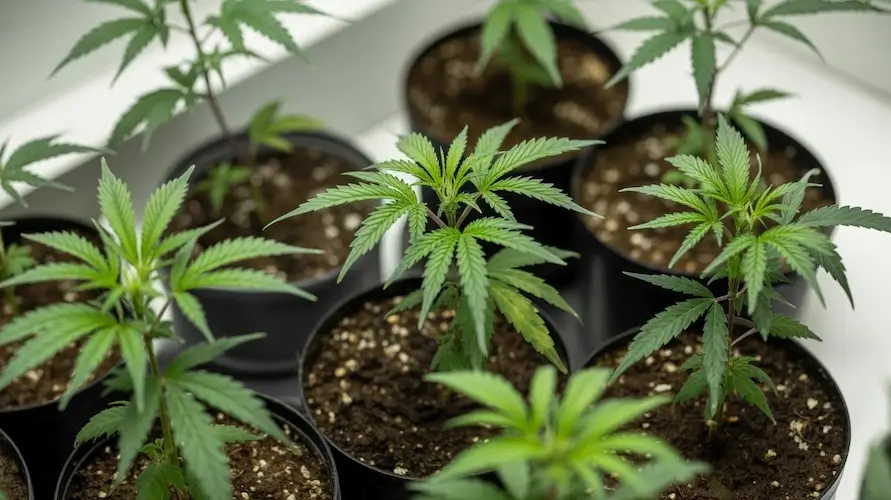
Environmental Control: Why Stability Beats “Perfect Numbers”
Growers often obsess over exact temperature and humidity numbers, but clones care most about stability. A clone can often tolerate slightly imperfect conditions if they are stable. What causes problems is rapid fluctuation.
For example, if humidity swings sharply between day and night, the clone has to keep re-adjusting transpiration. If temperatures spike during the day and crash at night, root activity and metabolic rhythm become inconsistent. Each swing forces the plant to adapt instead of grow.
That is why clone environments should be boring in the best possible way. Steady temperature, steady humidity, gentle air movement, and consistent light schedule allow the plant to devote energy to root expansion and recovery.
Humidity deserves special attention because clones are vulnerable to water-loss stress. Since their root systems are limited, they often benefit from a somewhat more humid environment during establishment. Higher humidity reduces transpiration pressure, allowing the leaves to stay hydrated while the roots catch up.
But there is nuance here. Extremely high humidity can reduce the plant’s incentive to drive root uptake and can increase disease risk if airflow is poor. The ideal environment is not “as humid as possible.” It is humid enough to reduce stress, while still encouraging the plant to function like a rooted vegetative plant rather than a cutting in a dome.
Why You Should Not Feed Clones Right Away
This is another area where growers often do too much too soon. A clone arrives, and the grower thinks, “Let’s feed it so it can start growing.” But nutrient uptake depends on root function. If the roots are not yet fully established or are still recovering from transport, feeding can actually increase stress rather than reduce it.
Fresh clones usually do not need immediate fertilizer for a simple reason: their limiting factor is rarely nutrient availability in the first few days. Their limiting factor is root establishment and environmental adaptation.
Adding nutrients too early can cause osmotic stress around delicate roots, especially if the medium is already pre-charged or the clone has been living on a low nutrient regimen before shipping. That can manifest as tip burn, slowed growth, or odd leaf behavior that growers misread as a deficiency.
The better strategy is to let the clone show active growth before feeding aggressively. Once you see the plant praying more confidently, holding posture, and starting new growth, that is evidence that the root system is engaging. At that point, light feeding makes sense.
The broader principle: feed growth, not hope. Nutrients are most useful when the plant is physiologically ready to use them.
Monitoring Stress Signals the Right Way
A lot of growers get into trouble because they react emotionally to every leaf movement. A clone droops a little, and they water it. A leaf curls slightly, and they move the light. A lower leaf yellows, and they start feeding. This usually creates more instability.
Instead, stress signals need context. A clone that droops slightly on day one after shipping may simply be adjusting. A clone that remains collapsed after two days under appropriate conditions may require intervention. A single yellow lower leaf may reflect shipping stress or mild aging. Rapid yellowing across the canopy suggests a bigger issue.
The key is to interpret signals through time, not in isolation. Ask: Is the plant improving, stable, or declining?
If the clone looks a little rough but is clearly getting better each day, stay the course. If it is holding steady but not improving, check root-zone conditions and environment. If it is declining, then you troubleshoot more actively.
This mindset is what separates good clone growers from reactive ones. Healthy clone establishment is often less about dramatic fixes and more about disciplined observation.
Advanced Tip One: Root Zone Temperature Often Matters More Than Air Temperature
This is one of the most overlooked points in clone growing.
Air temperature tells you what the leaves experience. Root-zone temperature tells you what the roots can do. And when clones arrive, root performance is usually the bottleneck.
Roots operate best within a fairly narrow temperature range. If the root zone is too cold, water and nutrient uptake slow, root enzymes function less efficiently, and the plant may appear stalled even if the air feels fine. That is why clones sitting on a cold floor or in a cool slab room often struggle despite “correct” canopy conditions.
On the other hand, if the root zone is too warm, oxygen availability can fall, microbial pressure can rise, and roots may become stressed or vulnerable.
The reason root-zone temperature matters so much is that a clone’s whole future depends on turning a fragile starter root mass into a vigorous colonizing system. If roots are sluggish, the whole plant is sluggish. If roots are comfortable, the plant often recovers faster than expected.
In other words, growers often think they are managing a leaf problem when they are actually managing a root-speed problem.
Advanced Tip Two: Clone Size Is Less Important Than Clone Readiness
Growers often assume bigger clones are better because they look more developed. But a large clone with underdeveloped roots can struggle more than a smaller, more balanced clone.
Why? Because leaf mass creates demand. More leaves mean more transpiration, more metabolic demand, and more pressure on the root system. If that leaf mass is not matched by a healthy root system, the plant is working at a deficit from the start.
A slightly smaller clone with a proportional, active root system often transitions more smoothly because its water demand is more manageable. It may actually outgrow the larger clone within a week or two simply because it established faster.
This is why clone quality should be evaluated as a balance between top growth and root capacity, not as a beauty contest based on height or bushiness alone.
Advanced Tip Three: Early Stress Has Long-Term Consequences
This is a point many growers underestimate. Clones do not always “bounce back” from bad starts as cleanly as people assume.
If a clone experiences major stress during the establishment phase, the effect can linger for the rest of the grow. The plant may remain smaller, root development may remain weaker, and branch structure may be less vigorous than it otherwise would have been.
This is especially true because clone establishment occurs when the plant is forming the structural and root foundation that later supports rapid vegetative growth. If that early foundation is compromised, later performance often reflects it.
That is why arrival handling should be treated as strategic, not routine. The first week is not just a holding period. It is the stage at which you set the ceiling for what the plant can become.
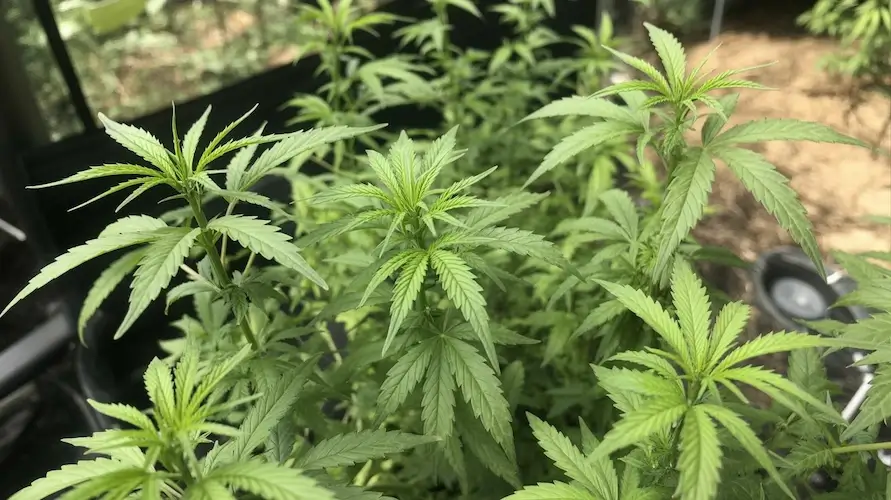
Indoor vs Outdoor Clone Arrival: Why the Transition Differs
Indoor and outdoor growers both need acclimation, but the logic differs.
Indoor growers are usually transitioning clones into a controlled environment. Their main challenge is avoiding excessive intensity too quickly. Since they control the room, they can gently shape the transition.
Outdoor growers face a steeper acclimation curve because sunlight is much more intense than indoor propagation light, and outdoor factors such as wind, temperature shifts, and low humidity can simultaneously stress clones.
That is why outdoor clone handling must include hardening off. The plant needs gradual exposure to direct sun over several days so the leaf tissue can adapt. A clone that goes straight from indoor propagation conditions to full outdoor sun can scorch or stall, even if the weather seems mild.
The why is simple: sunlight is not just brighter than indoor light. It is a completely different stress environment, combining light intensity, heat load, UV exposure, and airflow. Clones need time to build tolerance.
When Do Clones Actually “Take Off”?
One of the most reassuring things a grower can know is that clones do not usually explode with growth immediately. In fact, a short pause is normal.
The early phase after arrival is often a hidden period of root-building. Above ground, it may look like little is happening. Below ground, the plant is trying to establish itself in the new medium and environment.
Once the roots begin colonizing the media, you usually see visible signs:
better leaf posture, stronger color, more vigorous new growth, and faster daily change. For many healthy clones, this occurs between days five and ten after arrival.
This is important psychologically because growers often make mistakes during the “quiet phase.” They think nothing is happening, so they intervene too aggressively. In reality, patience is often the correct move.
Final Thoughts
What to do when your cannabis clones arrive is really a question about how to manage plant transition. The best growers are not the ones who do the most in the first 48 hours. They are the ones who understand what the plant actually needs during that time.
A newly arrived clone needs stability before stimulation. It needs recovery before optimization. It needs a root-friendly environment more than a nutrient-heavy one. And above all, it needs a grower who can distinguish between helping and interfering.
If you get the first week right, almost everything that comes after becomes easier. The clone roots faster, grows harder, handles training better, and enters vegetative growth with momentum instead of baggage.
That is why clone arrival is not a minor stage. It is one of the most important moments in the entire grow.
Now that you know how to take care of your new clones, get your garden started by shopping our selection of premium cannabis clones.
Frequently Asked Questions
How long should cannabis clones acclimate after arrival?
Most clones benefit from at least 12 to 24 hours of acclimation before transplanting or increasing light intensity. The reason is that shipping changes how the plant manages water, light, and airflow. Giving the clone time to stabilize reduces the risk of shock.
Should I transplant clones immediately upon arrival?
Usually not. It is often better to let clones settle first unless the starter media is clearly unsuitable or drying out too quickly. Transplanting is another stress event, so waiting until the plant has stabilized improves success.
Why do clones droop after shipping?
Drooping is often caused by a temporary water imbalance rather than severe damage. During shipping, clones experience different humidity, light, and airflow conditions. Once they arrive, the leaves may lose turgor until the roots and transpiration system rebalance.
When should I start feeding my clones?
Most clones do not need immediate feeding. It is usually better to wait until the plant has adjusted and started new growth. Feeding too early can stress delicate roots that are still recovering.
How much light should new clones get?
New clones should begin under gentle to moderate light, not full-intensity grow lights. Strong light increases water demand, and if the roots are not ready, the clone can quickly become stressed.
What humidity is best for newly arrived clones?
A moderately humid environment is usually best because it reduces water stress while roots are establishing themselves. The key is balance: enough humidity to help the clone recover, but not so much that airflow becomes stagnant or disease risk rises.
Why is root-zone temperature important for clones?
Root-zone temperature directly affects how efficiently roots absorb water and nutrients. If the root zone is too cold, clones may stall even when the air temperature seems fine. Comfortable roots often mean faster recovery and better early growth.
If you want, I can also turn this into an even more authoritative pillar post by adding sections on clone quarantine, foliar sprays after arrival, clone hardening-off outdoors, transplant media comparison, and a much deeper troubleshooting table for common clone symptoms.
Suggested Articles
 26 Mar 2026
  7 min read
;)
;)
;)
 March 24, 2026


RESPONSES (0)
No responses yet. Be the first to respond!