


Overwatered Cannabis: Signs, Fixes, and Prevention
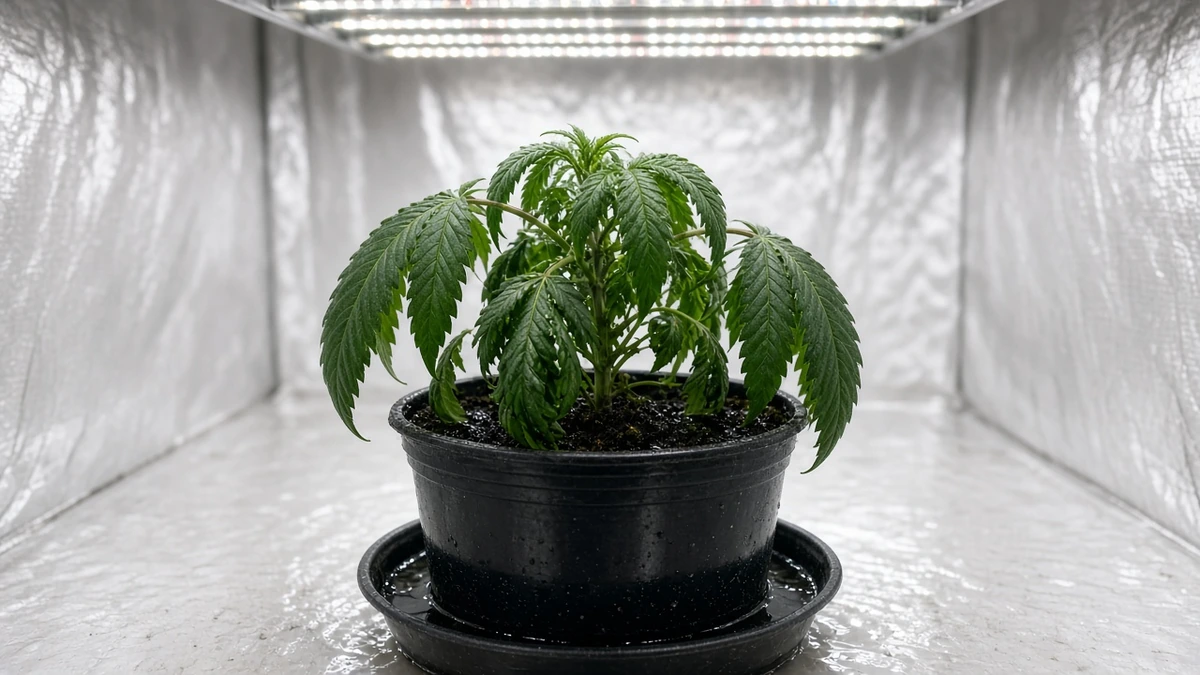
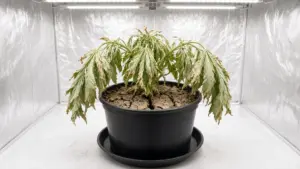
An overwatered cannabis plant is easy to misread. The leaves droop, so the first instinct is to grab the watering can, which is exactly the wrong move. Fat, firm leaves curling down on a pot that still feels like a brick mean the roots are drowning, not thirsty.
The good news is that overwatering is fixable if you catch it early. This guide covers what too much water does below the soil line, how to tell it apart from underwatering and other lookalikes, and how to nurse a struggling plant back to health. You’ll also find watering habits for soil, coco, and fabric pots, plus what changes for seedlings, autoflowers, and plants in flower.
What Overwatering Does to Cannabis Roots
Cannabis roots need two things from the medium: water and oxygen. Watering fills the air pockets between soil particles. As the plant drinks and the excess drains and evaporates, air moves back in. That wet-to-dry rhythm keeps a root zone healthy.
When the medium never gets a chance to dry, the roots sit in a low-oxygen environment. They can’t take up water and nutrients efficiently, fine root hairs die back, and the soggy conditions favor root rot organisms such as Pythium. Our guide to healthy cannabis roots shows what a thriving root zone looks like.
Why Wet Soil Makes Leaves Droop
It sounds backward, but a plant in soggy soil wilts for a similar reason a thirsty plant does: water isn’t moving up through it the way it should. Roots starved of oxygen lose much of their ability to pull water in, so the leaves sag. The difference is that leaves on an overwatered plant still tend to look plump and feel firm.
Overwatering Is About Frequency, Not Just Volume
Overwatering rarely means pouring too much at once. A thorough watering in a well-draining pot is fine. The trouble starts when you water again before air has returned to the medium. Small daily sips can do more harm than one deep drink every few days, because they keep the root zone permanently damp.
Signs of Overwatered Cannabis
The signs of overwatering cannabis tend to show up as a group. One sign alone can point several directions, but two or three together, plus a pot that still feels heavy, make a strong case.
Firm, Droopy Leaves That Curl Down
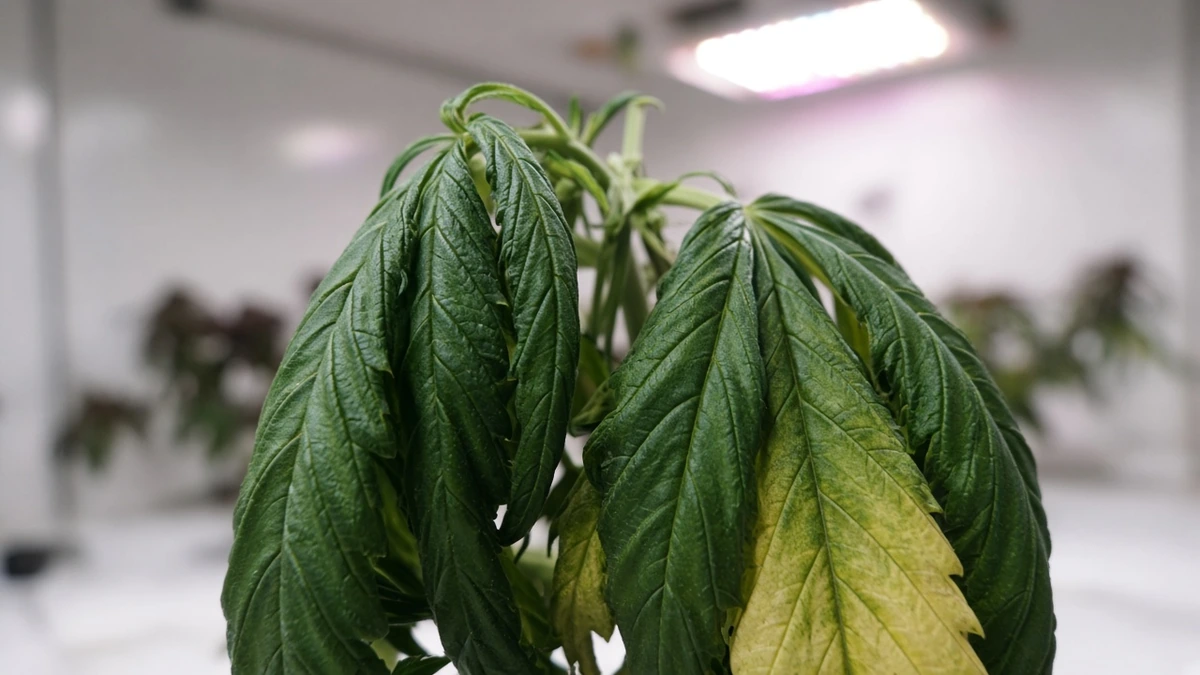
The classic sign is leaves that hang from their stems and curl downward along their length while still feeling thick and firm. Drooping that shows up shortly after a watering and doesn’t lift as the day goes on is a strong hint that the roots are waterlogged.
Slow Growth and Yellowing Lower Leaves
Roots short on oxygen can’t feed the plant properly, so growth slows and the plant can look stalled. Over time, lower leaves may yellow because the plant isn’t taking up nitrogen and other nutrients well, even when you’re feeding correctly. That looks a lot like a deficiency, which is why many growers add more nutrients and make things worse.
Soil That Stays Wet, Musty Smells, and Fungus Gnats
Push a finger into the medium. If it’s still damp several days after watering, the root zone is staying wet too long. Other clues include green algae or white mold on the surface, a sour or musty smell, and water sitting in the saucer. Tiny black flies over the soil are another giveaway. Fungus gnats lay their eggs in constantly moist topsoil, and their larvae can chew on young roots.
Overwatered Cannabis Seedlings and Autoflowers
Seedlings are the most common victims. A tiny root system in a big container can’t drink fast enough to dry it out. An overwatered cannabis seedling looks limp, grows slowly, and is more vulnerable to damping off, a disease caused by soilborne pathogens that rots the stem at the soil line. Give young plants a little water in a ring around the stem rather than soaking the whole pot. These tips for growing strong seedlings cover the rest of early care.
An overwatered autoflower faces a different problem: time. Autoflowers move through their life cycle without waiting for a change in light, so any stall eats into the plant’s final size. Autos often go straight into a large final container, which stays wet too long early on. Water lightly near the stem at first and widen the circle as the roots spread.
Overwatered vs. Underwatered Cannabis: How To Tell the Difference
Both problems make a plant droop, so growers mix them up all the time. The details, and the pot itself, usually give it away.
| Clue | Overwatered | Underwatered |
|---|---|---|
| Leaf feel | Firm, thick, swollen | Thin, limp, papery |
| Leaf posture | Heavy droop, leaves curl down along their length | Lifeless droop, edges may turn dry or crispy |
| Soil moisture | Damp or soggy below the surface | Dry, may pull away from the sides of the pot |
| Pot weight | Heavy | Noticeably light |
| Timing | Droops soon after watering, or stays droopy | Droops as time since watering grows, perks up soon after a good drink |
If the clues point to thirst instead, our guide to underwatering cannabis covers the signs and how to rehydrate a dry pot safely.
A Quick Diagnostic Check
If you suspect an overwatered weed plant, run through this check before you touch the watering can:
- Count the days since the last watering. A droop a day or two after watering points to too much, not too little.
- Lift the pot. A pot that feels as heavy as it did right after watering still has plenty inside.
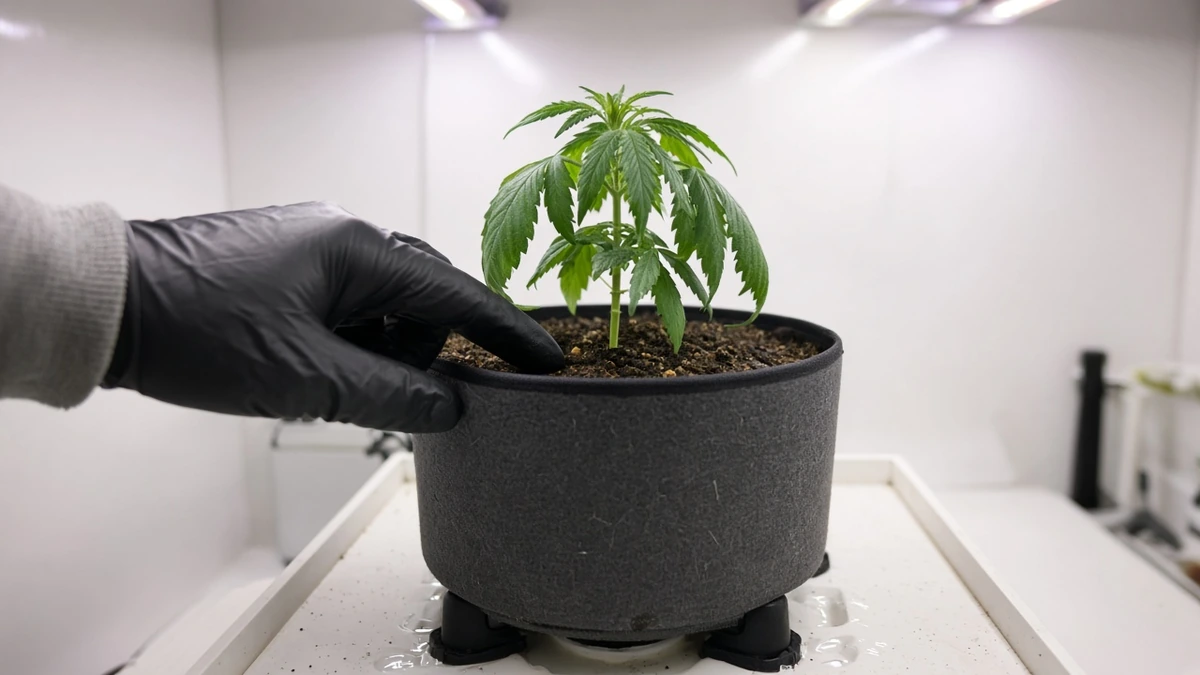
- Do the knuckle test. Push a finger down into the medium. If it’s damp below the surface, wait.
- Check the saucer and drainage. Standing water or slow drainage points to a drainage problem.
- Smell the medium. Healthy soil smells earthy. A sour or swampy smell suggests rot.
Problems That Look Like Overwatering
A few other issues share some of the same symptoms:
- Nutrient lockout: yellowing and slow growth despite regular feeding can come from pH problems or salt buildup. Here’s how to spot and correct nutrient lockout.
- Root rot: often the result of chronic overwatering, and it can keep causing symptoms after you fix your watering. Brown, slimy roots are the tell.
- A rootbound plant: a plant that has outgrown its container can droop and stall too, but the pot dries out fast instead of staying wet. Learn to recognize rootbound plants.
- Nitrogen toxicity: very dark green leaves with tips that hook down like a claw can pass for overwatering droop.
How To Save an Overwatered Cannabis Plant
Most overwatered plants bounce back if you act before the roots rot. Here’s how to fix overwatered cannabis, step by step.
Stop Watering and Let the Medium Dry
Hold off completely until the pot feels light and the medium is dry well below the surface. Skip feeding too, since roots that can’t breathe can’t use nutrients, and extra salts only add stress. Empty saucers right away so the pot isn’t wicking runoff back up.
Speed Up Drying With Airflow and Drainage
You can help the medium dry faster without stressing the plant:
- Set the pot on risers or a rack so air can reach the drainage holes.
- Run a fan to move gentle air across the soil surface.
- Gently poke a few holes in the medium with a skewer, away from the main stem.
- Make sure roots or compacted soil aren’t blocking the drainage holes.
Check the Roots for Rot
If the plant keeps declining after the medium dries, slide the root ball out of the pot and take a look. Healthy roots are white or cream-colored and firm. Brown, slimy, or mushy roots that smell bad point to cannabis root rot.
Trim away clearly dead roots with clean scissors, and don’t let the root zone stay wet afterward.
When To Transplant
Transplant if the pot has poor drainage, the medium is so dense it won’t dry, or the roots show signs of rot. Move the plant into a well-draining container with fresh, airy mix, then water lightly to settle it rather than soaking it. Transplanting is stressful, so treat it as a last resort. Our guide to transplanting cannabis covers the process. Autoflowers have little time to recover from that stress, so weigh the risk before moving one.
How Long Does an Overwatered Plant Take To Recover?
There’s no fixed timeline. It depends on how saturated the medium is, pot size, airflow, and whether rot has set in. Instead of counting days, watch for these signs of recovery:
- Leaves lift and lose their swollen, heavy look as the medium dries.
- New growth at the top comes in healthy and green.
- The plant starts drinking again, so the pot dries out faster after each watering.
Leaves that turned badly yellow usually won’t green back up, so judge the plant by its new growth. If the medium has dried out and the plant is still wilting, yellowing, or the roots smell foul, suspect root rot and inspect them.
How To Water Cannabis Without Overwatering
Prevention mostly comes down to rhythm. Our full guide to watering cannabis plants covers routine technique, and for young plants, here’s how often to water seeds and seedlings.
Water by Weight and Feel, Not the Calendar
A fixed schedule ignores what the plant is actually doing. Lift the pot right after a thorough watering so you know what “full” feels like, then lift it again each day. When it feels noticeably lighter and the top of the medium is dry, it’s time. Water slowly until a little runs out the bottom, then wait for the next dry-back.
As the plant grows, it’ll drink faster, and you’ll water more often.
Match Pot Size, Medium, and Drainage to the Plant
A small plant in a huge pot is the most common overwatering setup. Its roots can reach only part of the medium, so the rest stays wet. Step up through container sizes as the plant grows, or water only the area around the stem until the roots fill a big pot.
- Soil: start with a well-draining soil mix amended with perlite or a similar material for aeration, and let it dry noticeably between waterings.
- Coco coir: coco holds plenty of air even when wet, so coco growers usually water more often than soil growers and don’t let it dry out completely. Trouble in coco usually comes from poor drainage or pots left sitting in runoff.
- Fabric pots: breathable sides let the medium dry faster and expose root tips to air, which makes them forgiving if you tend to water too often.
- Drainage: every container needs drainage holes, and saucers should be emptied after each watering.
Overwatering During Flowering
The symptoms of overwatering during the flowering stage look much like they do earlier, but the stakes are higher. Wet medium releases moisture into the grow space and raises humidity around dense colas. Pair that with weak airflow, and you’ve built the conditions bud rot loves. Keep the medium on a healthy wet-to-dry cycle, empty runoff trays promptly, and stay on top of humidity control through late flower, when buds are at their densest. Check inside your biggest colas often, and learn the early signs of bud rot so you can catch it before it spreads.
Frequently Asked Questions
Can Overwatered Cannabis Plants Recover on Their Own?
Often, yes, as long as you stop watering and the medium can dry. If the pot can’t drain or rot has already set in, it needs your help.
How Can I Quickly Dry Out Overwatered Soil?
Stop watering, empty the saucer, raise the pot so air reaches the bottom, run a fan across the surface, and gently aerate the medium with a skewer. In severe cases, especially in a pot with poor drainage, transplanting into fresh, dry mix is the fastest fix.
Will Waterlogged Cannabis Plants Grow Back?
A plant that was waterlogged for a short time usually resumes growth once its roots get oxygen again. Damaged leaves may not recover, but healthy new growth shows the plant is back on track. Plants with severe root rot may not make it.
Is There Any Way To Save an Overwatered Cannabis Plant?
Yes. Stop watering, speed up drying, check the roots, and transplant if the medium won’t dry or the roots are rotting. The steps are laid out in the “How To Save an Overwatered Cannabis Plant” section above.
What Are the First Signs of Bud Rot?
Watch for a single sugar leaf or cluster of pistils that suddenly turns brown or yellow and wilts, often deep in a dense cola. Inside, the affected bud may look gray, brown, or mushy. Our guide to spotting bud rot shows what to look for and what to do next.
Grow Healthier Plants From the Start
Overwatering is one of the easiest mistakes to make and one of the easiest to fix once you know the signs. Lift your pots, trust the dry-back, and let the plant tell you when it’s thirsty. Starting with healthy, vigorous seeds gives you a strong plant to work with while you dial in your routine. If you’re planning your next grow, browse our feminized seeds, or pick up autoflower seeds for a faster start-to-finish grow. Before you plant, check the cannabis laws where you live.
Suggested Articles

 09 Nov 2026
 7 min read
;)
;)
;)
 October 27, 2026


RESPONSES (0)
No responses yet. Be the first to respond!