


Underwatering Cannabis: Signs and Solutions
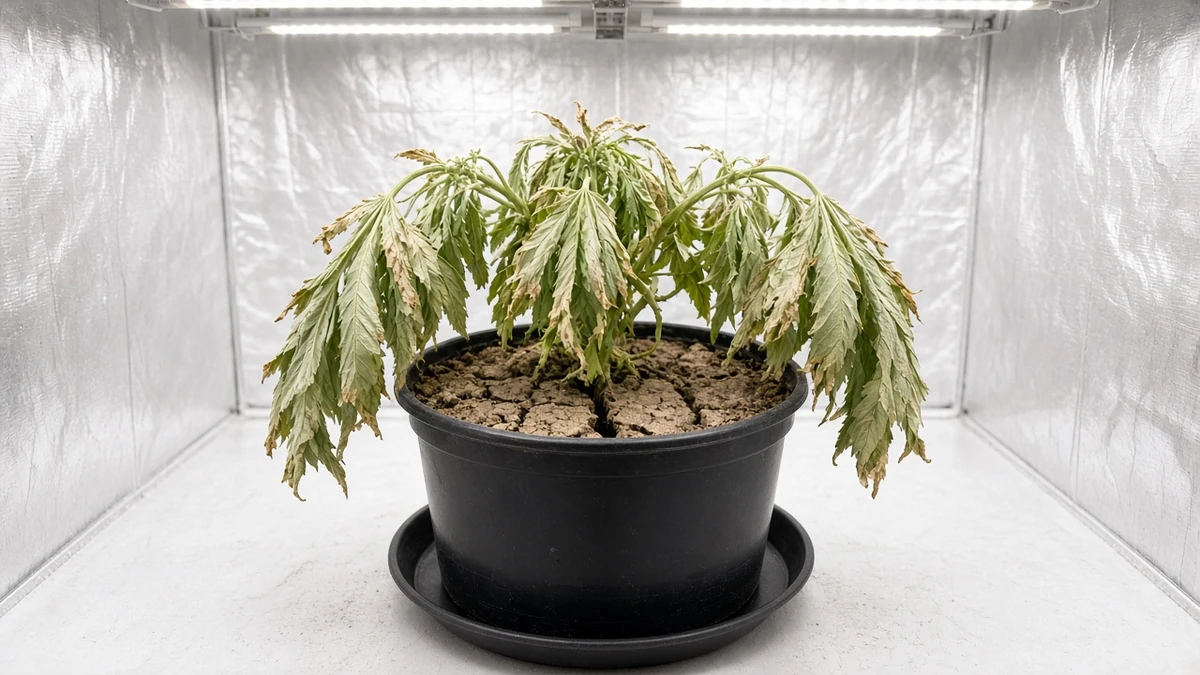
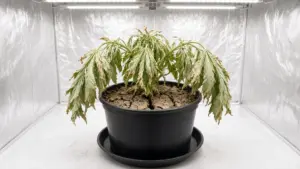
Underwatering cannabis is one of the easiest problems to fix, as long as you read it correctly. A thirsty plant droops, its leaves turn thin and limp, and the pot feels surprisingly light when you lift it. That last check takes two seconds.
The good news is that a mildly underwatered plant usually perks back up soon after a proper drink. This guide covers the signs, how to tell thirst from overwatering, how to rewet a dry pot safely, and what changes by growth stage.
What Happens When Cannabis Doesn’t Get Enough Water
Water keeps plant cells firm and holds leaves upright. As the root zone dries, that pressure drops and the plant sags.
The roots are the first to notice. According to Virginia Cooperative Extension, roots in drying media build up a stress hormone called abscisic acid and send it to the leaves, which typically causes the stomata to close. Stomata are the tiny pores that help drive water up through the plant, so once they close, that flow slows. Wilting is the first visible result.
Water also carries nutrients from the roots, and closed stomata limit the gas exchange that drives growth. That’s why chronic underwatering often shows up as slow, stunted growth rather than one dramatic wilt.
Signs of Underwatering Cannabis
No single symptom proves a plant is thirsty. Look for two or three signs together, then confirm by checking the medium and the weight of the pot.
Limp, Papery Leaves That Hang Down
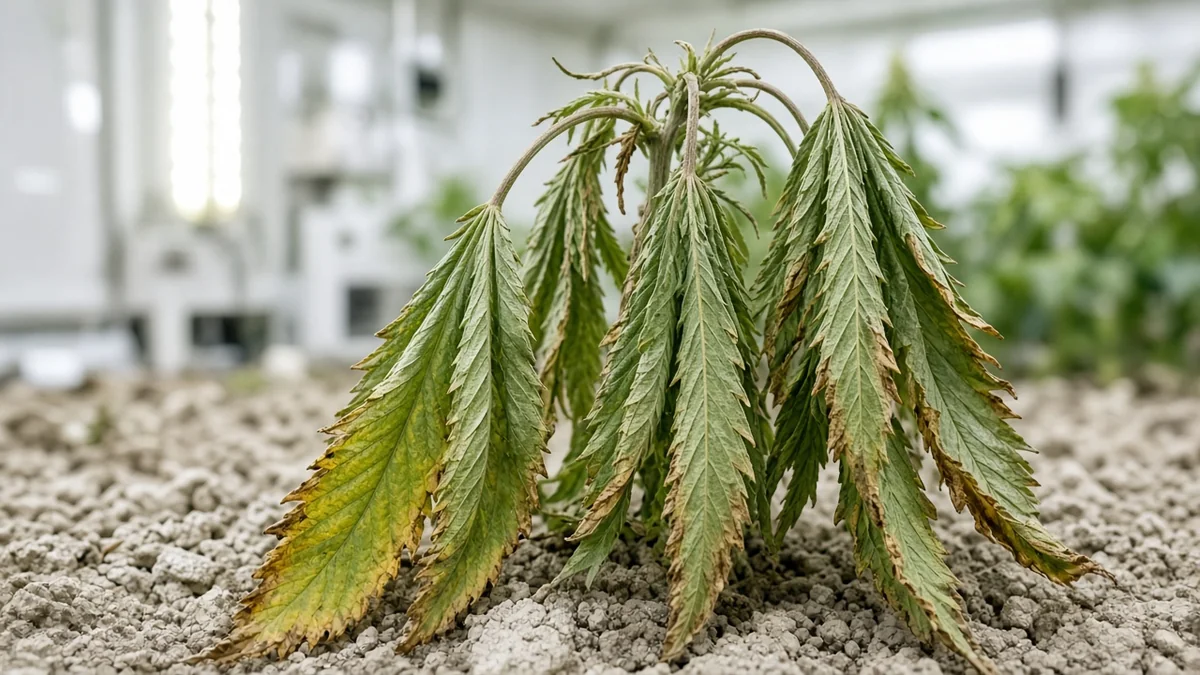
An underwatered weed plant droops with leaves that feel thin, soft, and papery. The whole fan leaf hangs from the stem instead of curling into a firm claw. Drooping that builds as the pot dries and lifts soon after watering points strongly toward thirst.
Dry, Crispy Edges and Yellowing Lower Leaves
If a plant stays dry for too long or dries out again and again, damage starts to show at the leaf margins. Virginia Cooperative Extension notes that in drought conditions, leaf edges are typically the first to show symptoms, turning brittle and brown as cells dehydrate. Leaves may also curl to reduce water loss, older leaves can yellow and drop, and new leaves may grow smaller than normal. These signs suggest a long-running problem, not one missed watering.
Dry Medium That Pulls Away From the Pot
Soil and soilless mixes shrink as they dry, and a gap between the medium and the container wall is a clear sign the root zone has gone very dry. Push a finger 1 to 2 inches into the medium. If it’s dry at that depth, the plant is ready for water.
A Pot That Feels Light
Pot weight is the most reliable everyday check. The University of Maryland Extension recommends exactly this: periodically lift the pot and compare its weight to when it was watered. For containers too large to lift, the same source suggests pushing a dowel to the bottom of the pot. Moist soil sticks to the dowel or darkens it slightly.
Underwatered or Overwatered? A Quick Check
Both problems make a cannabis plant droop, because in each case water isn’t reaching the leaves properly. Virginia Cooperative Extension explains that wet, airless roots send the same kind of stress signal as dry ones, so the first symptom can look nearly identical. The difference shows up when you touch the plant and the pot.
Start with the leaves. Thin, limp, papery leaves suggest thirst. Thick, firm leaves that curl downward suggest too much water. Next, lift the pot. A light pot with dry medium 1 to 2 inches down points to underwatering, while a heavy pot that still feels wet days after watering points to overwatering. Finally, think about timing. Underwatering droop tends to build as the pot dries, while overwatering droop often follows a watering and doesn’t lift.
If the signs are mixed, wait and recheck rather than watering on a guess. For a side-by-side breakdown, see our guide to telling overwatered and underwatered cannabis apart.
What Causes Underwatering
Underwatering isn’t always about forgetting the watering can. Several conditions speed up water use or keep water from reaching the roots.
- Small pots and rootbound plants. A pot packed with roots holds little medium to store moisture.
- Heat and low humidity. Warm, dry air pulls water from leaves faster. The University of Maryland Extension notes that a plant can wilt on a hot day because moisture evaporates from leaves faster than roots can supply it.
- Fast-draining media. Coco coir, perlite-heavy mixes, and fabric pots dry out faster than dense soil in plastic containers.
- Hydrophobic soil. Peat-based mixes that dry out completely can start to repel water, so it runs down the sides of the pot and out the bottom without soaking in.
- Irregular watering. Long gaps, or light sips that only wet the top layer, leave the lower root zone dry.
Midday drooping on moist medium is different. Virginia Cooperative Extension notes that daytime wilting in moist media usually means water is available but the roots can’t take it up fast enough, so more water may not help.
How To Fix an Underwatered Cannabis Plant
Once you’ve confirmed the medium is dry, the fix is simple: rehydrate the whole root zone, not just the top layer.
Water Slowly in Stages
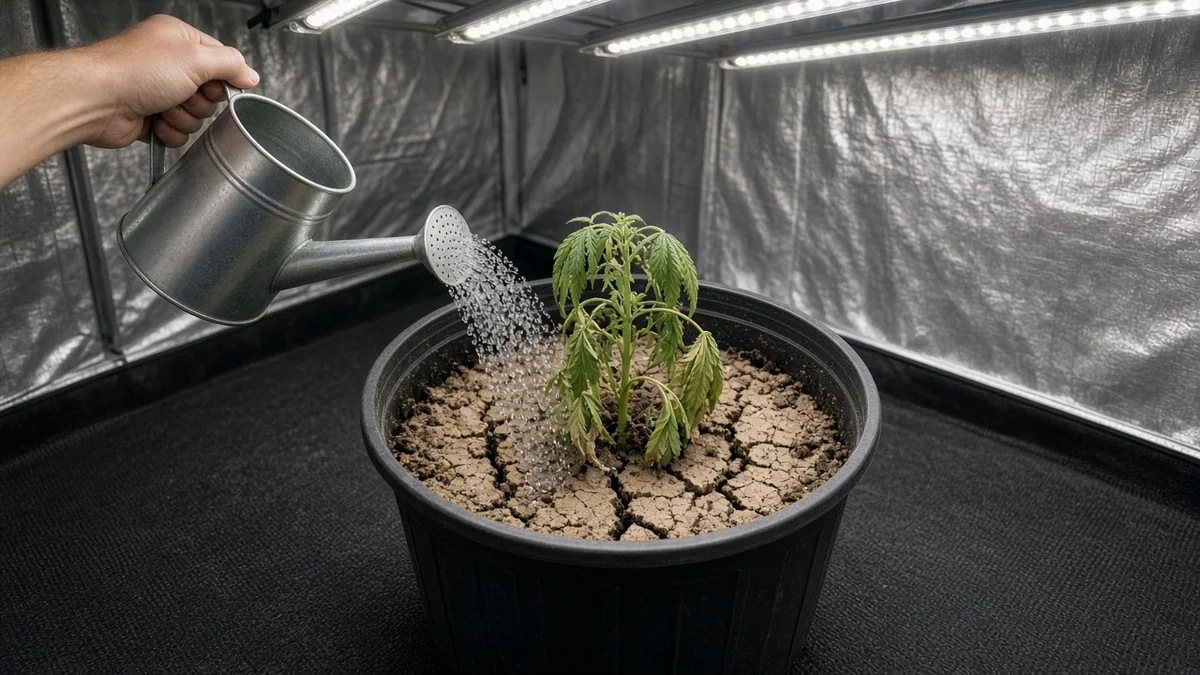
Pour slowly and evenly over the entire surface of the medium, not just at the base of the stem. Stop when water starts to drain from the bottom, give it a few minutes to absorb, then water again. The University of Maryland Extension advises watering thoroughly so water comes out of the bottom of the pot and pouring off any water that collects in the saucer afterward.
Rewetting Hydrophobic Soil
If water races down the sides and out the drainage holes within seconds, the medium has likely pulled away from the pot or become water-repellent. According to the University of Maryland Extension, potting mix that has pulled away from the sides may need several applications of water to rehydrate. Small, slow pours spaced a few minutes apart give dry particles time to absorb moisture. Bottom watering is another option. Setting a pot with drainage holes in a shallow basin of water lets the mix absorb moisture upward and can rehydrate hydrophobic soil, though it may take longer. Avoid leaving containers in standing water for more than 60 minutes.
Underwatered Coco and Hydro Media
Coco coir drains freely and can dry out quickly, especially in small pots or fabric containers. If dry coco sheds water instead of absorbing it, use the same slow, staged approach and check for dry spots before resuming your usual routine. In hydroponic systems, a plant shouldn’t run dry unless something has failed. Check pumps, timers, drippers, and reservoir levels first.
What Not To Do
Don’t flood a bone-dry pot with one huge pour, since most of that water will run straight through. Avoid swinging the other way and watering daily afterward to make up for it, which can keep the root zone too wet. Focus on rehydrating the root zone first, and make one change at a time so you can tell what’s helping.
How Long Does an Underwatered Plant Take To Recover?
Recovery time varies, but a wilted plant that perks up after watering is a good sign. Virginia Cooperative Extension treats that as confirmation the root zone has received enough water, and the University of Maryland Extension notes that short periods of wilting don’t harm plants. If a plant stays limp after watering, recheck the medium. It may still be dry in the middle, or the droop may have a different cause.
Damaged tissue is another matter. Leaves with brown, crispy edges or yellowing from repeated dry spells won’t turn green again. The plant will put its energy into new growth instead, so judge recovery by how the newest leaves look. Remove fully dead leaves if they bother you, but leave partly damaged ones that are still green in places.
Underwatering at Different Growth Stages
Seedlings and Clones
Seedlings and fresh clones have tiny root systems and little reserve, and a small cup of medium can dry out quickly under strong lights. Check them often, keep the medium lightly moist rather than soaked, and water gently.
Autoflowers
Autoflowers move from growth to flowering on their own schedule rather than in response to light changes, so there’s less room to wait out a setback. Steady watering is worth extra attention. Check pot weight regularly, especially in the first few weeks.
Flowering Plants
Flowering plants use a lot of water as buds develop. The University of Maryland Extension notes that extended periods of drought can inhibit flower formation, and severe heat and water stress during bloom may cause scorching or browning of flower buds. Mature plants in flower can also outgrow their containers, so a pot that was fine in veg may dry out much faster late in the cycle.
Does Drought Stress Increase Potency?
You may come across claims that withholding water before harvest boosts potency. One controlled study is often cited: Caplan, Dixon, and Zheng (2019), published in HortScience. The researchers withheld fertigation from container-grown plants during week seven of flowering for 11 days, until the plants reached a measured drought stress threshold. At harvest, the drought-stressed group had 12% higher THCA and 13% higher CBDA concentrations than a well-watered control.
That study was run under tightly monitored research conditions, with plant water status measured by instruments throughout. The authors also note that results may differ by cultivar or chemotype. It isn’t a home-grow recommendation, and Seeds Here Now does not suggest deliberately underwatering your plants. Without that level of monitoring, it’s easy to push a plant into real damage, and the most dependable approach is consistent, appropriate watering.
How To Prevent Underwatering
Preventing underwatering comes down to watering based on what the plant needs rather than a fixed calendar.
- Lift the pot. Learn the weight of a freshly watered container and water again when it feels noticeably lighter.
- Check below the surface. Use a finger 1 to 2 inches down, or a dowel in larger containers.
- Match pot size to plant size. Move plants that are drinking through their water quickly into a larger container.
- Adjust for conditions. Expect plants to use more water in hot, dry weather, under strong lights, and in late flower.
- Water thoroughly. Wet the whole root zone each time instead of giving small, frequent sips.
For routine watering, including how much to give and how different media behave, see our complete guide to watering cannabis plants.
Frequently Asked Questions
Why Is My Weed Plant Drooping?
A drooping weed plant is usually reacting to too little or too much water. Check the pot weight and the medium first. If watering doesn’t explain it, look at heat, humidity, and root health.
Do Droopy Leaves Mean Overwatering or Underwatering?
Droopy leaves can mean either. Thin, limp leaves on a light pot with dry medium point to underwatering. Firm leaves curling down on a heavy, wet pot point to overwatering.
How Do I Perk Up a Droopy Cannabis Plant?
If the medium is dry, water slowly and thoroughly until water drains from the bottom, in several stages if the mix has pulled away from the pot. A thirsty plant often perks up soon after a thorough watering. If the medium is already wet, don’t add more water. Let it dry and look for other causes.
Is It Better To Water Cannabis Too Much or Too Little?
Neither is good. A mildly underwatered plant often recovers quickly after a drink, while a constantly waterlogged root zone can lead to longer-lasting root problems.
Can an Underwatered Seedling Recover?
Often, yes, if you catch it early. Water a dry seedling gently so you don’t wash out the medium, and keep it lightly moist afterward. Seedlings have very little reserve, so check them often and don’t let the medium dry out completely.
Grow Healthier Plants From the Start
Good watering habits go a long way, and so does starting with reliable genetics. Seeds Here Now offers a wide selection of feminized seeds and autoflower seeds from respected breeders, so you can choose plants that suit your space and schedule. Before you start, check the cannabis laws where you live, since home cultivation is not legal everywhere.
Suggested Articles

 09 Nov 2026
 7 min read
;)
;)
;)
 October 29, 2026


RESPONSES (0)
No responses yet. Be the first to respond!