


Greenhouse Cannabis Cultivation: Essential Tips

Imagine cannabis plants thriving inside a well-designed greenhouse—lush, vibrant, and supported by the perfect environment. But how do you go from a beginner to an expert in greenhouse cannabis cultivation? This guide offers essential insights to strengthen your skills and improve your results. Whether you grow for personal enjoyment or professional production, understanding the best greenhouse practices is critical for ongoing success.
Year-round cannabis production is increasingly important as laws and market demand evolve. Greenhouse cultivation allows growers to maintain both quality and yield regardless of weather conditions. Below, we outline essential steps and innovative strategies to help you achieve abundant harvests. Prepare to blend natural sunlight with modern technology as we walk you through key methods to elevate your cannabis cultivation.
Key Takeaways
-
Learn the critical factors that make greenhouse cultivation a game-changing method for cannabis growers.
-
Understand how to select the right strains for greenhouse conditions to optimize growth and yield.
-
Discover why mastering climate control is essential for producing premium cannabis.
-
Explore the benefits of advanced irrigation and lighting technologies for plant health, vigor, and consistency.
-
Uncover strategies for securing and improving greenhouse operations for long-term sustainability.
The Merits of Growing Cannabis in a Greenhouse
Greenhouses are transforming cannabis production by creating controlled, resource-efficient environments. These structures show why many growers now use greenhouse cultivation to produce high-quality cannabis.
Understanding the Greenhouse Advantage
Greenhouses allow growers to regulate temperature, light, and humidity to support strong, healthy cannabis plants. This level of control protects crops from unpredictable weather and improves consistency, quality, and overall plant performance.
Types of Greenhouses Suited for Cannabis
Cannabis can thrive in several greenhouse styles, including traditional glass structures and modern polycarbonate models. Each type offers unique benefits such as improved light diffusion, durability, and climate adaptability. High-tech greenhouses equipped with automated systems provide especially precise environmental control.
Year-Round Cultivation Benefits
Greenhouses enable growers to cultivate cannabis continuously throughout the year. This consistency stabilizes supply, improves workflow, and supports safer, more reliable operations.
Energy Efficiency and Cost Savings
By relying on natural sunlight, greenhouses reduce the need for artificial lighting and heating. This significantly lowers energy consumption and makes greenhouse cultivation more cost-effective than fully indoor growing.
The Anatomy of an Ideal Cannabis Greenhouse
A well-designed cannabis greenhouse supports plant health, durability, and operational efficiency. Every component contributes to a reliable and productive cultivation environment.
Core Components of a Well-Designed Greenhouse
-
Structural materials that provide stability and maximize light diffusion
-
Advanced climate-control systems for precise temperature and humidity regulation
-
Effective ventilation to reduce mold, promote airflow, and deter pests
-
Efficient irrigation and nutrient delivery systems
-
Shading and lighting tools to balance natural sunlight with supplemental illumination
How These Components Work Together
| Component | Description | Benefits |
|---|---|---|
| Glazing materials | Glass or polycarbonate coverings | High light transmission, insulation, durability |
| Climate-control systems | Heaters, coolers, dehumidifiers, automated controls | Optimal growing conditions in any season |
| Ventilation | Passive vents, ridge vents, and mechanical fans | Stable airflow and reduced disease risk |
| Irrigation systems | Drip, ebb-and-flow, or automated watering | Steady nutrient delivery and efficient water use |
| Shading and lighting | Shade cloths and LED or HPS lights | Balanced light levels and consistent growth |
An ideal cannabis greenhouse integrates all these components into a cohesive system that supports vigorous plant development and high yields.
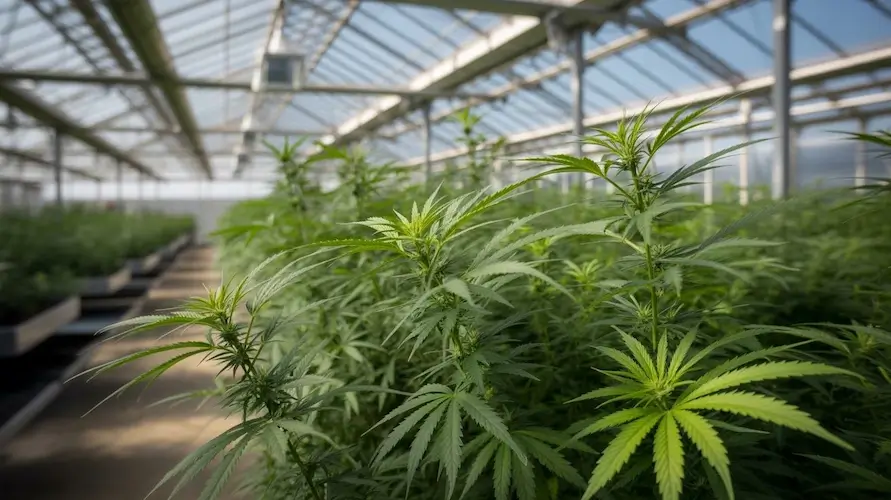
Selecting the Right Strains for Greenhouse Cultivation
Choosing the right cannabis strains is essential for success in a greenhouse environment. Growers must consider seed type, plant behavior, environmental compatibility, and desired effects.
Auto vs. Photo: Understanding Seed Types
Autoflowering (auto) and photoperiod (photo) seeds offer different cultivation advantages.
-
Autoflowering strains bloom automatically and do not rely on specific light schedules, making them ideal for beginners or quick harvests.
-
Photoperiod strains require specific light cycles to flower and often produce larger yields, offering greater control for experienced growers.
Popular Strains for Greenhouse Environments
Many cannabis strains perform exceptionally well in greenhouses, including:
-
Greenhouse Cheese
-
Greenhouse Skunk
-
Greenhouse Blue Dream
The right strain depends on your local climate, preferred effects, and overall cultivation goals.
How To Grow Cannabis in a Greenhouse
Greenhouses provide powerful environmental control by combining natural sunlight with supplemental systems that boost plant performance and yield.
Maximizing Natural and Supplemental Lighting
Cannabis requires abundant, consistent light. A greenhouse should be positioned to capture full-day sunlight. Supplemental LED lighting may be necessary in cloudy climates or winter months to maintain proper photoperiods and prevent premature flowering.
Scheduling for Optimal Growth and Harvest
A well-planned growth and harvest schedule ensures plants receive proper care during each stage. Automation tools can help maintain consistent light, temperature, and humidity, reducing the risk of human error.
Key Growth Phases
| Growth Phase | Natural Light Needs | Supplemental Lighting | Action Points |
|---|---|---|---|
| Germination | Low direct light, high humidity | Extend daylight if necessary | Monitor moisture daily |
| Vegetative | Maximum sunlight | Maintain 16–18 hours of light | Routine watering and feeding |
| Flowering | 12 hours of light and 12 hours of darkness | Ensure uninterrupted dark periods | Transition to bloom nutrients |
| Harvest | Reduced light | Minimal supplemental lighting | Prepare for drying and curing |
Each phase requires careful timing, observation, and environmental adjustment.
Mastering Climate Control for Premium Cannabis
Temperature, humidity, and airflow form the foundation of an optimal greenhouse environment. Mastering these elements promotes healthy growth and peak cannabinoid production.
Temperature and Humidity Regulation
Stable temperatures support efficient photosynthesis and nutrient uptake. Proper humidity levels are essential for mold prevention, plant respiration, and overall health.
Advanced Ventilation Techniques
Good ventilation maintains a uniform climate, prevents the buildup of heat and humidity, and reduces disease pressure. Systems may include ridge vents, oscillating fans, automated louvers, and ducted airflow solutions.
Climate Control Summary
| Factor | Temperature | Humidity | Ventilation |
|---|---|---|---|
| Vital for | Photosynthesis | Disease control | Air exchange |
| Optimal Range | 70–85°F during the day, 58–70°F at night | 40–60% relative humidity | Varies based on greenhouse size |
| Tools | Heaters, coolers, chillers | Humidifiers, dehumidifiers | Fans, vents |
| Advanced Systems | Automated climate controllers | Hygrometer-linked systems | Smart airflow management |
Greenhouse Design and Preparation
Thoughtful greenhouse design and preparation help ensure ideal growing conditions. Important considerations include:
-
Maximizing sunlight exposure
-
Selecting durable building materials
-
Installing effective heating, cooling, and ventilation systems
-
Providing reliable water and electrical infrastructure
-
Creating an adaptable interior layout
-
Streamlining space for easy plant care
Good design sets the foundation for healthy plants and a productive growing environment.
Essential Equipment: Irrigation and Lighting Technologies
Modern cannabis greenhouses rely on precise irrigation and lighting systems that improve plant growth, reduce labor, and increase efficiency.
The Role of LEDs
LEDs offer energy efficiency, customizable spectrums, and long-lasting performance. They support strong vegetative growth and dense flowering, even during low-light seasons.
Water-Cooled Lighting Solutions
Water-cooled lighting systems help stabilize greenhouse temperatures by removing excess heat from fixtures. This protects plants from heat stress and maintains a more consistent growing climate.
Securing Your Greenhouse Cannabis Operations
Security is essential for protecting your investment and maintaining regulatory compliance. A layered security strategy helps ensure safety, transparency, and operational integrity.
Key Security Measures
-
Conduct internal and external vulnerability assessments
-
Install surveillance cameras, alarms, and controlled-entry systems
-
Maintain detailed access logs and security protocols
-
Train staff on safety procedures and compliance requirements
-
Perform background checks on all employees
Regularly reviewing and updating your security systems strengthens your operation’s long-term resilience.
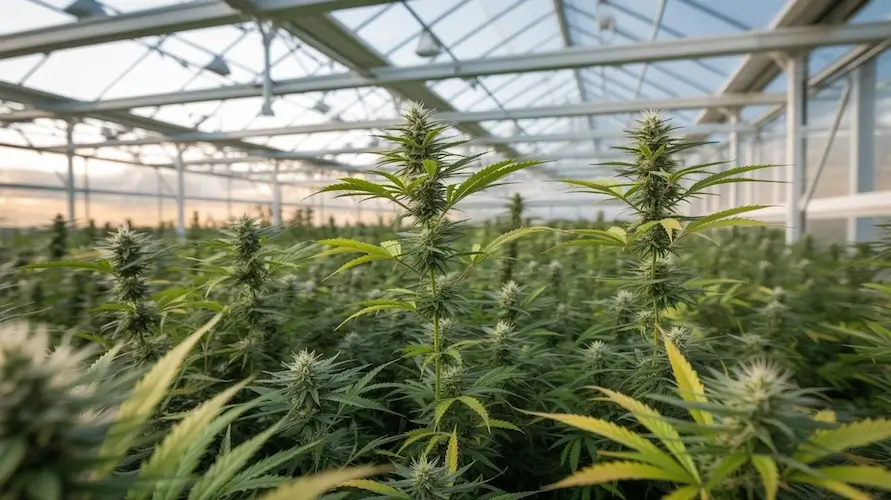
Integrating Best Practices for Water and Nutrient Management
Effective water and nutrient management supports vigorous plant growth and reduces the risk of pests and diseases.
Optimizing Feeding Cycles and Irrigation
| Growth Stage | Irrigation Frequency | Key Nutrients |
|---|---|---|
| Seedling | Light, frequent watering | Moderate nitrogen, low phosphorus and potassium |
| Vegetative | Moderate watering, avoid oversaturation | High nitrogen, medium phosphorus and potassium |
| Flowering | Less frequent, higher volume | Low nitrogen, high phosphorus and potassium |
| Pre-Harvest | Minimal watering | Flush with no nutrients |
Preventing Pests and Disease
-
Sterilize tools and equipment regularly
-
Enforce strong hygiene protocols for all greenhouse access
-
Use integrated pest management, including biological controls
-
Conduct routine inspections for early signs of problems
-
Maintain effective air filtration to reduce airborne pathogens
Cleanliness, consistency, and early intervention are essential for keeping cannabis plants healthy.
Conclusion
This guide explored the fundamentals of greenhouse cannabis cultivation, including strain selection, climate control, irrigation, lighting, and security. When applied correctly, greenhouse growing blends natural sunlight with advanced technologies to produce consistent, high-quality cannabis.
By implementing the practices outlined here, growers can improve yields, enhance plant health, and increase operational efficiency. Cannabis cultivation is both an art and a science, and staying informed about new methods, technologies, and research will help you remain successful as the industry evolves.
FAQs
What are the advantages of growing cannabis in a greenhouse?
Greenhouses offer environmental control, extended growing seasons, and energy-efficient production.
Which greenhouse types work best for cannabis?
Hoop houses, polycarbonate structures, and glass greenhouses all support successful cultivation.
Why is year-round production beneficial?
It provides a consistent supply and allows for multiple harvests each year.
How are greenhouses energy-efficient?
They rely on sunlight and efficient lighting, such as LEDs, to reduce electricity use.
What components are essential in a cannabis greenhouse?
Climate control, ventilation, irrigation, lighting, and insulation.
What is the difference between auto and photo seeds?
Autoflowers bloom automatically, and photoperiod strains require specific light cycles.
Which strains thrive in greenhouses?
OG Kush, White Widow, Blue Dream, Sour Diesel, and others.
How can I maximize light in a greenhouse?
Position the structure properly, use high-transparency glazing, and supplement with LEDs.
How do I create a harvest schedule?
Base it on strain needs, environmental conditions, and production goals.
Why are temperature and humidity important?
They influence plant health, mold prevention, and cannabinoid development.
What ventilation methods work best?
Ridge vents, passive airflow systems, and mechanical fans.
What should I consider when designing a greenhouse?
Materials, layout, climate systems, and infrastructure.
Which irrigation and lighting technologies are essential?
Automated drip irrigation and LED lighting.
How do LEDs and water-cooled lights help?
They improve energy efficiency and maintain stable temperatures.
How can I secure my greenhouse?
Use surveillance, alarms, controlled access, and trained staff.
What are the best water and nutrient management practices?
Monitor pH, adjust feeding cycles, maintain cleanliness, and inspect plants regularly.
Suggested Articles

 27 Mar 2026
  20 min read
;)
;)
;)
 December 15, 2025


RESPONSES (0)
No responses yet. Be the first to respond!