


Grape Stomper Strain Review: A Sativa-Dominant Classic
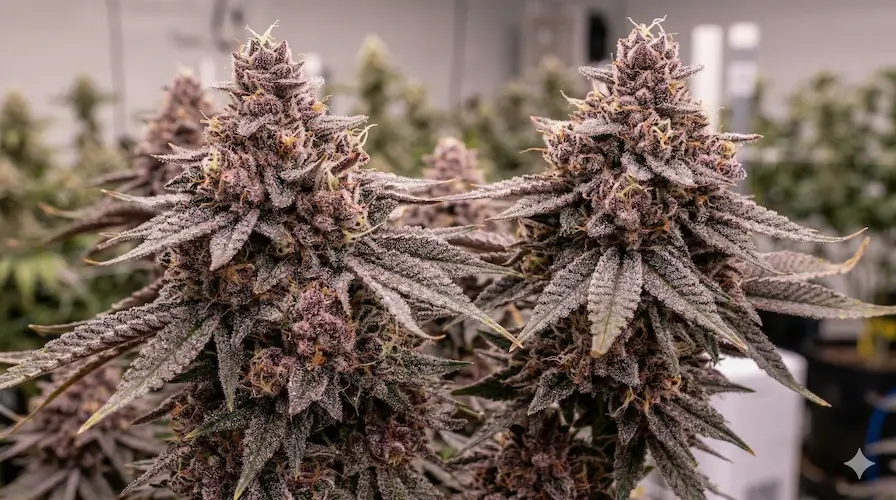
When we talk about strains that bring together serious genetics with undeniable bag appeal, Grape Stomper deserves a spot in your grow library. This sativa-dominant hybrid has been turning heads in the cannabis community for years — and for good reason. It delivers on multiple fronts: striking visual appeal, a complex flavor profile that actually tastes as its name suggests, and effects that keep users coming back. Whether you’re running a commercial operation or perfecting your home grow, understanding what the Grape Stomper strain brings to the table is worth your time.
We’ve worked with serious growers who’ve crushed it with this strain, and we’ve watched it earn legitimate respect in competitive circles. The combination of potency, yield potential, and cultivation characteristics makes it a genuine consideration for anyone looking to expand their rotation. This review breaks down everything you need to know about Grape Stomper — from its genetic foundation to practical growing tips that’ll help your crop succeed.
Grape Stomper Strain Genetics: Built on Legendary Foundation
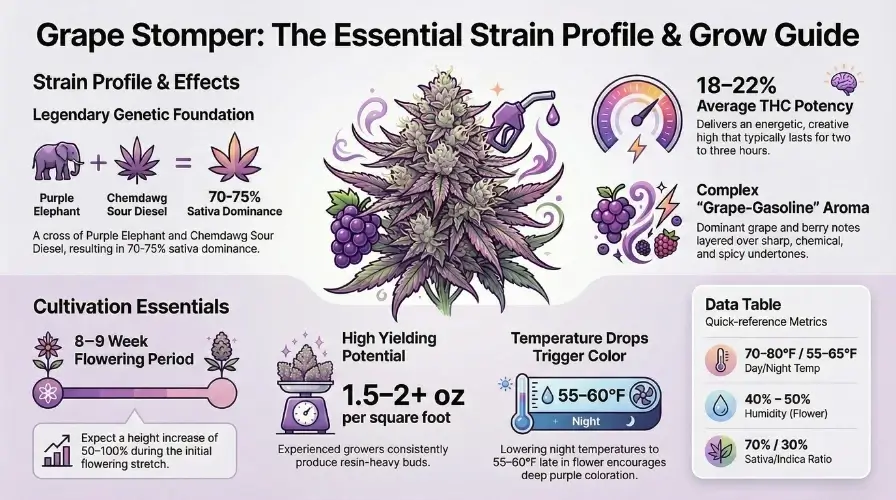
Understanding a strain’s genetics is understanding its potential. The Grape Stomper strain is a cross of two seriously respected cultivars: Purple Elephant and Chemdawg Sour Diesel. This genetic pairing is where the magic begins.
Purple Elephant contributes the visual drama that makes the Grape Stomper strain so photogenic — deep purples and blues in the phenotype spectrum, along with berry-forward aromatic qualities. If you’re interested in exploring other purple genetics, we’ve put together a detailed guide on the best purple cannabis strains. The purple coloration isn’t just cosmetic — it often indicates the presence of anthocyanins, compounds that contribute to the overall flavor and effect profile.
Chemdawg Sour Diesel is where the sativa dominance and potency come from. This legendary lineage brings energetic, uplifting effects that make Grape Stomper work so well for daytime consumption. The Sour Diesel genetics contribute sharp, pungent undertones — the kind of complexity that separates strains with personality from one-dimensional cultivars. The Chemdawg lineage adds density and resin production, which means solid yield potential and impressive trichome coverage at harvest.
The combination creates a strain that’s roughly 70–75% sativa and 25–30% indica. This ratio gives you uplifting effects and sativa growth structure without the incredibly long flowering times of pure sativas. Best of both worlds — that energetic cerebral experience combined with manageable cultivation parameters. The Grape Stomper strain consistently ranks among the best sativa-dominant hybrids for high yields.
Flavor & Aroma Profile: Grape Meets Gasoline
Grape Stomper delivers on the name. When you open a jar of properly cured Grape Stomper, the first thing you notice is the dominant grape aroma — serious, filling-the-room berry notes that tell you what you’re about to experience before you even break apart a bud.
But Grape Stomper doesn’t stop at grape. Underneath that fruity sweetness, you’ll find distinct berry undertones — black currant and blueberry. There’s also a peppery, spicy note that rounds out the profile. And here’s where the Chemdawg Sour Diesel parentage really shows up: underneath all the fruit, there’s a sharp, chemical, almost gasoline-like undertone that keeps the aroma from being one-dimensional. This complexity is what separates good strains from great strains.
When you smoke or vape Grape Stomper, the flavor translates remarkably well. Grape flavor comes through on the inhale, with sweet, fruity character dominating. On the exhale, you get berry notes and peppery spice, followed by a lingering chemical taste that adds depth. Some growers report a slight herbal, pine-like finish on the backend. The overall experience is smooth and flavorful, especially when properly dried and cured. Rushing your cure process will cost you here — Grape Stomper benefits from that 2–3 week cure period.
The terpene profile includes prominent myrcene (fruity, berry character), caryophyllene (spicy, peppery notes), and pinene (herbaceous undertones). These terpenes work together to create the distinctive Grape Stomper experience that cannabis connoisseurs recognize. Also, check out our Bathing Grape strain review if you want to explore more grape-forward genetics in your rotation.
Effects & Potency: What To Expect
The Grape Stomper strain typically tests in the 18–22% THC range, with some phenotypes pushing higher. What’s important to understand is that THC percentage is only part of the story — the terpene profile, cannabinoid ratios, and sativa-dominant structure all work together to create the actual experience.
The effects are decidedly uplifting and energetic. This is a daytime strain for most users. The sativa dominance means cerebral, creative effects that come on fairly quickly. Users report mental clarity, focus, and pleasant euphoria that doesn’t leave you couch-locked. It’s the kind of strain that makes conversation flow, makes creative projects seem manageable, and lifts your mood noticeably.
The indica genetics from Purple Elephant provide light body relaxation, keeping the high balanced. You’re not jittery — there’s subtle physical ease that prevents the experience from being too heady. This balance is part of what makes Grape Stomper so widely appealing. The high typically lasts 2–3 hours, making it practical for real-world use without impairing you for half your day.
Medical Benefits & Therapeutic Applications
From a medical cannabis perspective, the Grape Stomper strain has several therapeutic angles worth considering. The energizing effects make it relevant for patients dealing with depression, fatigue, or low motivation. Unlike indica-dominant strains that might increase lethargy, Grape Stomper can help lift mood and promote activity — important for patients who need to be functional while managing their condition.
The sativa dominance also makes this strain potentially useful for patients with ADHD or focus-related challenges. Mental clarity and uplifting effects can help some users maintain focus. Some medical users report that Grape Stomper helps with mild pain and muscle tension, thanks to indica genetics and caryophyllene terpenes. The stress-relieving properties are valuable, too — many consumers report relief from anxiety and stress due to the combination of myrcene and the overall balanced effect profile.
We always encourage medical patients to work with healthcare providers and start with lower doses to understand their personal response. Everyone’s endocannabinoid system is different, and individual results will vary.
Growing the Grape Stomper Strain: Your Complete Cultivation Guide
Flowering Time & Basic Parameters
Grape Stomper typically flowers in 8–9 weeks, with 9 weeks being more common for full maturation. Expect about 4–6 weeks of quality vegetative growth before flipping to flower. Our vegetative growth stage guide covers everything you need to know about getting plants to optimal pre-flowering size. The sativa genetics mean you’ll see some height increase during the stretch — typically 50–100% — so account for that in your vertical space planning.
Yield & Bud Structure
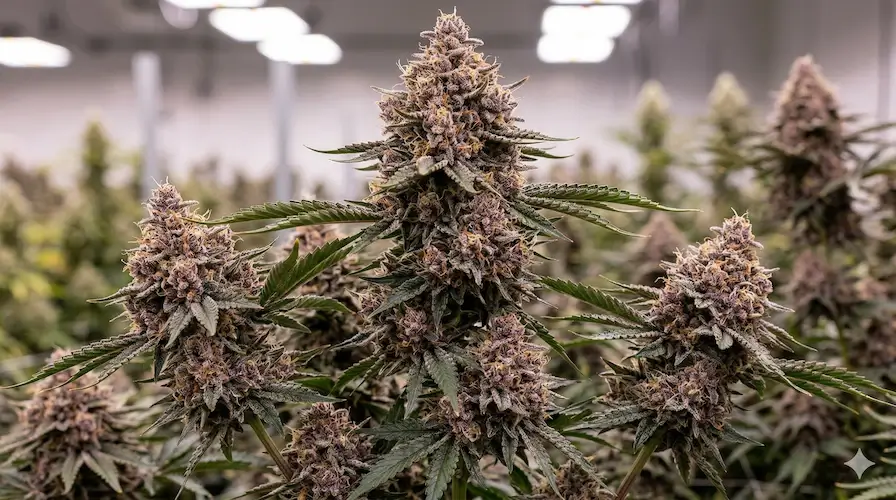
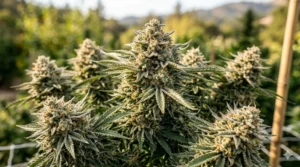
Grape Stomper performs with solid yields — typically 1.5–2+ oz per square foot in flower, with experienced growers consistently hitting the upper end. Buds develop into medium-to-large chunky structures with impressive resin coating. You’ll see that characteristic purple coloration, especially when exposed to cooler night temperatures during late flower. Trichome production is generous, which means excellent hash returns if that’s part of your operation.
Environmental Preferences
Temperature: keep things in the 70–80°F range during the day with a 10–15°F drop at night. That temperature differential in the last 2–3 weeks of flower will bring out purple coloration more aggressively. Some growers deliberately lower night temperatures to 55–60°F during late flower. Humidity: aim for 40–50% during flower to balance bud density with rot prevention. Light: Grape Stomper responds well to around 600–700 PPFDs in flower.
Training & Structure Management
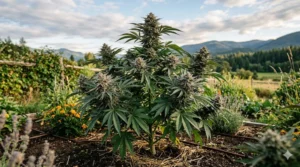
The sativa genetics mean plants naturally want to grow tall with a dominant main cola. If you’re running limited vertical space, training is essential. Low-stress training (LST), topping, or manifold training all work beautifully on Grape Stomper. The plant responds positively to training without becoming stressed, and most growers find that training significantly improves final yields by promoting more even canopy development.
Substrate & Nutrients
Grape Stomper grows well in quality living soil, hydroponic systems, and everything in between. Quality soil for cannabis cultivation makes a noticeable difference. The plant has moderate nutrient requirements — balanced nitrogen-forward during veg, shifting to phosphorus and potassium dominance in flower. This strain particularly appreciates micronutrients, especially boron and magnesium.
Harvest Timing
For the best effects profile, harvest when about 20–30% of trichomes have turned amber. After you cut, hang dry for 7–10 days in a 60–65°F environment with 50% humidity, then move to cure jars for at least 2–3 weeks. Don’t rush this process — the flavor development in Grape Stomper really depends on proper post-harvest handling.
Grape Stomper Strain Review: Conclusion
The Grape Stomper strain is one of those varieties that proves you don’t have to sacrifice flavor for performance—or vice versa. It delivers a complete package: vibrant terpene expression, dependable yields, and an effect profile that fits seamlessly into real-world use. From the grow room to the jar, it carries a level of consistency that both new and experienced cultivators can appreciate.
What makes it especially compelling is its versatility. It’s a strain that responds well to different growing styles, rewards proper post-harvest care, and offers enough phenotypic variation to keep things interesting without becoming unpredictable. For consumers, the experience is equally well-rounded—uplifting without being overwhelming, flavorful without being one-note.
If you’re looking to diversify your garden with a sativa-dominant hybrid that brings both character and reliability, the Grape Stomper strain earns serious consideration. It’s the kind of cultivar that doesn’t just perform well once—it establishes itself as a repeat contender in any thoughtful rotation.
Frequently Asked Questions About Grape Stomper
What are the effects of the Grape Stomper strain?
Grape Stomper delivers uplifting, energetic effects typical of its sativa dominance. Users report mental clarity, creativity, and euphoria, making it an ideal daytime strain. The modest indica genetics provide light body relaxation. Effects last 2–3 hours. The overall profile is balanced — cerebral stimulation without anxiety, plus mild physical ease without sedation.
What is the THC content of Grape Stomper?
Grape Stomper typically tests between 18–22% THC, with some phenotypes potentially higher. The terpene profile and genetic expression contribute significantly to the actual experience beyond just the THC number.
Is Grape Stomper indica or sativa?
Grape Stomper is sativa-dominant, typically running about 70–75% sativa and 25–30% indica. You get the uplifting, creative effects of a sativa without the excessively long flowering times of pure sativas.
How long does Grape Stomper take to flower?
The Grape Stomper strain has a flowering time of 8–9 weeks, with 9 weeks being typical for full maturation. From seed to harvest, you’re looking at about 13–15 weeks for a complete cycle, including vegetative growth.
How much yield can I expect from the Grape Stomper strain?
Grape Stomper delivers 1.5–2+ oz per square foot in flower, with experienced growers consistently hitting the upper range. The bud structure is chunky and resin-heavy, so quality and quantity both impress.
What are the parent strains of Grape Stomper?
The Grape Stomper strain is a cross of Purple Elephant and Chemdawg Sour Diesel. Purple Elephant contributes visual drama and berry-forward aromatics. Chemdawg Sour Diesel brings sativa dominance, uplifting effects, and potency.
Suggested Articles
 06 Apr 2026
  9 min read
;)
;)
;)
 April 06, 2026


RESPONSES (0)
No responses yet. Be the first to respond!