


Best Purple Cannabis Strains: Discover Top Varieties Today

If you’re a cannabis connoisseur, you know that not all strains are created equal. One of the most popular and visually striking varieties is purple cannabis strains.
In this article, you’ll learn everything you need to know about the best purple cannabis strains, where to find them, and how to grow them. From the rarest and most exquisite to the most popular and widely available, we’ll cover it all.
Key Takeaways
- This article will cover the best purple cannabis strains, where to find them, and how to grow them.
- From rare and exquisite to popular and widely available, we’ll cover it all.
SeedsHereNow.com: The Best US Seed Bank for Purple Cannabis Strains
When it comes to finding the best purple cannabis strains, buying high-quality seeds is crucial. That’s where Seeds Here Now comes in. As one of the most reputable seed banks in the US, SHN is known for its wide selection of top-grade cannabis seeds.
SHN has earned a reputation for reliability and customer satisfaction, with many growers raving about the quality of its seeds and customer service. The website offers an extensive variety of strains, including many popular purple cannabis strains. Whether you’re looking for something sweet and fruity or a Indica, SHN has you covered.
What sets SHN apart from other seed banks is its commitment to quality and genetics. The company works with some of the most reputable breeders and geneticists in the industry to ensure that their seeds are always top-notch. Additionally, SHN frequently offers promotions and discounts, making it an affordable option for growers who want to try out different purple strains.
SeedsHereNow.com: The Best USA Seed Bank
As a US-based seed bank, SHN offers several advantages over international seed banks.
If you’re looking for the best purple cannabis strains, look no further than SeedsHereNow.com. With its wide variety of high-quality seeds and commitment to customer satisfaction, SHN is the go-to seed bank for growers who want to grow the best purple cannabis strains.
What Makes Purple Cannabis Strains Unique?
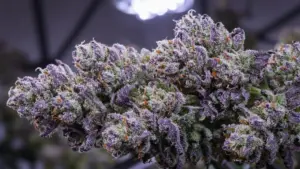
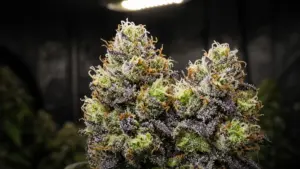
Purple cannabis strains are sought after by many cannabis enthusiasts for their stunning appearance and unique flavor and aroma profiles. What makes these strains so unique is the presence of anthocyanin pigments, which give the plant its distinctive purple color.
Anthocyanins are a type of flavonoid that can be found in many plants, including grapes, blueberries, and eggplants. When cannabis plants are exposed to cold temperatures, the anthocyanins in the plant begin to break down and produce a range of pigments that can appear as shades of purple, blue, and even red.
Genetics also plays a significant role in the development of purple cannabis strains. Breeders have worked to create strains with specific genetics that are more likely to produce purple hues, resulting in a range of purple strains with varying shades and intensities of color.
Temperature fluctuations can also impact the development of purple tones in the plant. In general, colder temperatures will produce more vibrant purple colors, while warmer temperatures can result in more muted shades of purple.
Overall, the unique combination of genetics and environmental factors that contribute to the development of purple cannabis strains make them a popular and highly sought-after option for cannabis enthusiasts and growers alike.
Top Purple Cannabis Strains for Stunning Color
If you’re looking for cannabis strains with gorgeous purple hues, you won’t be disappointed with these top-rated options.
| Strain | Genetics | Appearance |
|---|---|---|
| Purple Haze | Haze x Purple Thai | Dark green with purple and blue hues |
| Granddaddy Purple | Purple Urkle x Big Bud | Deep purple buds with bright orange hairs |
| Purple Kush | Hindu Kush x Purple Afghani | Deep shades of purple with hints of black |
Try them out to see which one suits your needs best!
How to Choose the Best Purple Cannabis Strain for You
Choosing the best purple cannabis strain can be overwhelming, especially with so many options available. To help you make an informed decision, consider the following factors:
- Consider what kind of experience you want to have and look for strains that align with those goals.
- Flavor Preferences: Purple strains can have unique flavors, such as grape or berry. If you have a particular flavor preference, look for strains that offer those profiles.
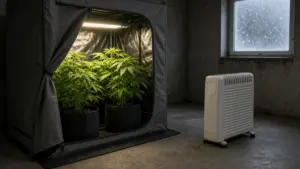
- Growing Conditions: If you plan to grow your own purple cannabis, consider the growing conditions required for the strain you choose. Some strains may require specific lighting or temperature conditions.
Another important factor in choosing the best purple cannabis strain is researching the strain’s genetics.
Reading user reviews can also be helpful in making an informed decision.
Ultimately, the best purple cannabis strain for you will depend on your individual preferences and needs. Take the time to research and experiment with different strains to find the one that best suits you.
How to Read a Seed Pack Label
Most breeder labels show the strain name, the breeder, the seed type and the seed count. Feminized and autoflower packs are marked as such, and regular packs contain a natural mix of male and female seeds. Many labels also print the cross, for example “Parent A x Parent B”, plus a filial marker such as F1, F2, S1 or BX.
F1 is a first-generation cross of two distinct parents, S1 is a line made from a single parent and BX is a cross back to one of the original parents. These details tell you far more about a pack than its name alone.
Feminized, Regular or Autoflower Seeds?
Feminized seeds are bred to produce female plants, which keeps things simple when space is limited. Regular seeds produce males and females and are the choice for anyone who wants to make their own crosses. Autoflowering seeds flower on their own timeline regardless of light hours, which suits short seasons and quick indoor runs.
Browse our feminized, regular and autoflower seeds to compare options.
How to Spot Genuine Breeder Packs
Well-known names get copied. Genuine breeder packs have consistent printing, a clear breeder name or logo and a sealed closure, and many carry a batch code or security sticker. Blurry artwork, misspelled names or loose seeds in a plain bag are warning signs.
The simplest protection is buying sealed packs from a seed bank that names the breeder on every listing.

Storing Seeds Until You Plant
Seeds stay viable longest when they are kept cool, dark and dry. Leave them in the sealed pack, place the pack in an airtight container with a food-safe desiccant packet, and store it somewhere with a steady temperature.
Label each container with the strain, breeder and purchase date, and let it warm to room temperature before opening so moisture does not condense on the seeds.
Choosing a Seed Bank You Can Trust
A trustworthy seed bank names the breeder and lineage on every listing, sells sealed breeder packs rather than anonymous loose seeds, and answers questions about where its stock comes from. Clear listings make it easy to compare releases and pick the right genetics for your space.
Seeds Here Now lists the breeder on every pack, so you always know whose work you are buying.
Germinating Seeds: A Simple Method
The paper towel method is the easiest way to start most seeds. Place them between two damp paper towels on a plate under an upturned bowl, keep them warm, around 70°F to 80°F, and check once a day.
Once a taproot appears, plant the seed about a quarter to half an inch deep in a light starter medium with the root pointing down, and give the seedling gentle light as soon as it breaks the surface.
Indoor or Outdoor: Choosing Where to Grow
Indoors you control light, temperature and humidity, which makes it easier to keep dense flowers clean and to time the harvest. Outdoors you trade that control for free sunlight and bigger plants, but you need a season long enough for the variety to finish before cold, wet weather arrives.
Check the breeder’s flowering time for the seeds you choose against your first expected autumn rain or frost. If the numbers are tight, an indoor run, a greenhouse or an autoflower version is usually the safer choice.
Seedling Care: The First Three Weeks
Seedlings need gentle light, mild warmth and a medium that is moist but never soggy. Water in small amounts around the stem, let the top of the medium dry slightly between waterings and keep a light breeze moving so stems thicken.
Hold off on strong nutrients until the plant has several sets of true leaves; most starter mixes carry enough food for the first couple of weeks. Pale, stretched seedlings usually want more light or a closer lamp, while drooping, dark leaves often mean too much water.
Feeding and Watering Basics
Start feeding at a quarter to half of the label strength and increase slowly while watching the leaf tips. Burnt, crispy tips point to too much food; yellowing lower leaves in vegetative growth often point to too little nitrogen.
Water when the pot feels noticeably lighter rather than on a fixed schedule, and make sure excess water drains away. Consistent pH, roughly 6.0 to 7.0 in soil and 5.5 to 6.5 in hydro or coco, keeps nutrients available to the roots.

Training Options for Better Canopies
Low-stress training (bending and tying branches outward) and topping (removing the main tip so two colas form) both create a flatter, more even canopy. An even canopy shares light more fairly and usually improves the size of lower flowers.
Train during vegetative growth and stop major changes a week or so into flowering. Autoflowers have a short vegetative window, so stick to gentle bending rather than topping if you are unsure.
Knowing When Plants Are Ready to Harvest
The breeder’s flowering time is a starting estimate, not a deadline. Look at the trichomes with a jeweller’s loupe or a clip-on phone lens: clear heads mean the plant needs more time, cloudy heads mean it is close, and a share of amber heads shows it is fully mature.
Pistils darkening and curling in is another sign. Check several flowers from the top and the middle of the plant, because the top colas often mature a few days earlier.
Drying and Curing Your Harvest
Hang branches or lay flowers on racks in a dark room around 60°F to 65°F and about 55 to 60 percent humidity, with gentle air movement that does not blow directly on the plants. Small stems should snap rather than bend before the flowers go into jars, which usually takes one to two weeks.
Fill glass jars about three-quarters full and open them briefly each day for the first week, then less often. A slow, steady cure protects the aroma that drew you to the strain in the first place.
Common Grow Problems and How to Avoid Them
Dense flowers are prone to mould when humidity stays high late in flowering, so keep air moving, thin out crowded inner growth and aim for lower humidity in the final weeks. Inspect leaves weekly for spider mites, thrips and fungus gnats, and act early rather than late.
Nutrient burn, overwatering and light stress are the other usual suspects. Change one thing at a time and give the plant a few days to respond before making another adjustment.
Questions to Ask Before You Order Seeds
Before you buy, confirm the breeder, the exact cross and filial marker, the seed type and the number of seeds in the pack. Check the expected flowering time and plant size against your space, and decide whether you want a feminized, regular or autoflower version.
If anything on a listing is unclear, ask the seed bank before ordering. A good seller will tell you exactly whose genetics you are getting and how the pack is supplied.

Where to Buy Purple Cannabis Seeds
When it comes to purchasing purple cannabis seeds, it’s important to choose a reputable source to ensure the quality and authenticity of the seeds. One popular option for buying seeds is through online seed banks. These seed banks offer a wide variety of strains and often have customer reviews and detailed information about each strain.
One recommended online seed bank is Seeds Here Now. They also offer a selection of purple strains, including Purple Punch, Grape Ape, and Purple Chemdawg.
Regardless of where you choose to purchase your purple cannabis seeds, be sure to do your research and read reviews to ensure you are getting the best possible product.
Tips for Growing Purple Cannabis Strains
Successfully growing purple cannabis strains requires attention to detail and patience. Here are some tips to help you cultivate healthy and vibrant plants:
| Tip | Description |
|---|---|
| Control temperature | |
| Provide proper lighting | Make use of LED lights or other sources of light that provide full spectrum light, including blue and red wavelengths. |
| Manage humidity levels | Aim for a relative humidity of 50% to 60% during the flowering stage, but avoid excess moisture that can cause mold or mildew. |
| Choose quality soil | Use organic soil or a properly balanced hydroponic system to provide the necessary nutrients and pH levels for optimal growth. |
| Prune and trim regularly | Remove any dead or yellowing leaves, as well as any small buds that are unlikely to develop into full-sized colas. This will redirect the plant’s energy towards larger, healthier buds. |
| Be patient | Purple strains often take longer to mature than their green counterparts, so be prepared to wait a few extra weeks before harvesting. |
Exploring New Crossbreeds and Hybrids
If you’re a cannabis enthusiast, you know that new strains are being developed all the time. One of the most exciting areas of development is crossbreeding and hybridization.
New purple strains that have recently emerged in the market include Purple Lemonade, Purple Hulk, and Purple Nightmare.
One of the benefits of crossbreeding and hybridization is the ability to create new strains with specific characteristics that appeal to different types of users. Or they may focus on developing strains with specific flavor profiles or aroma profiles.
New purple strains that have recently emerged in the market include Purple Lemonade, Purple Hulk, and Purple Nightmare.
If you’re interested in trying out some of the newest crossbred and hybrid strains, be sure to do your research.
How to Store Purple Cannabis Strains for Longevity
Here are some tips to help you store your strains for longevity:
- Control temperature: Keep your purple cannabis strains in a cool, dry place away from direct sunlight. Ideally, the temperature should be between 60 to 70°F (15 to 21°C).
- Aim for a humidity level of 59% to 63% to keep your purple strains at their best.
- Store your purple strains in an airtight container to minimize oxygen exposure.
There are several storage options available for storing purple cannabis strains, including:
| Storage Container | Pros | Cons |
|---|---|---|
| Mason jars | Durable and airtight | Can be bulky and heavy |
| Plastic bags | Lightweight and portable | Not as airtight as other containers |
| Vacuum-sealed bags | Minimizes oxygen exposure | Requires a vacuum sealer |
Ultimately, the storage container you choose will depend on your personal preference and the amount of cannabis you need to store.
Best Purple Cannabis Strains: Conclusion
There is no denying that purple cannabis strains are some of the most beautiful and sought-after varieties in the market.
With new crossbreeds and hybrids emerging regularly, the world of purple cannabis strains is constantly evolving and exciting to explore. So, why not try a new strain today and discover the wonders of purple cannabis?
FAQ
Q: What are purple cannabis strains?
A: Purple cannabis strains are varieties of marijuana that exhibit purple or violet hues in their flowers.
Q: What causes purple cannabis strains to have their distinctive color?
A: The purple color in cannabis strains is primarily caused by a pigment called anthocyanin. Anthocyanins are responsible for the purple, blue, and red colors seen in many fruits, vegetables, and flowers. Temperature fluctuations, genetics, and other environmental factors can also influence the expression of these pigments in cannabis plants.
Q: Where can I buy purple cannabis seeds?
It’s crucial to ensure the authenticity and quality of the seeds when making a purchase.
Q: How do I grow purple cannabis strains?
A: Growing purple cannabis strains requires attention to factors such as lighting, temperature, humidity, nutrients, and pruning techniques. Providing optimal conditions can enhance the development of vibrant purple colors in plants. It’s advisable to research strain-specific growing guidelines and seek advice from experienced growers.
Q: How should I store purple cannabis strains?
Controlling temperature, humidity levels, and light exposure is essential to prevent degradation. Utilizing airtight containers and storing them in a cool, dark place is recommended.
Q: Are there any new crossbreeds or hybrid strains of purple cannabis?
A: Yes, there are constantly new crossbreeds and hybrid strains being developed by breeders and geneticists. These innovative strains aim to combine the unique characteristics of purple cannabis with other desirable traits.
Suggested Articles
 23 Nov 2026
 10 min read
;)
;)
;)
 August 18, 2023


RESPONSES (0)
No responses yet. Be the first to respond!