


Shiskaberry Strain Review: A Berry-Infused Cultivar


The Shiskaberry strain, also called Kish or Shishkeberry, is an indica-leaning hybrid of DJ Short Blueberry x Afghani, originally released by Barney’s Farm. It smells like sweet berries over earthy pine, reports about 18% to 26% THC, and took second place for Best Indica at the 2001 High Times Cannabis Cup.
I’m James Bean, founder of Seeds Here Now since 2010. This review covers Shiskaberry’s lineage, names, aroma, look and reported potency.
Seeds Here Now sells authentic breeder packs to adults 21+.
Shiskaberry at a Glance
| Trait | Shiskaberry |
|---|---|
| Lineage | DJ Short Blueberry x Afghani |
| Breeder | Originally Barney’s Farm |
| Also known as | Kish, The Kish, Shishkeberry |
| Type | Indica-leaning (about 80/20) |
| Reported THC | About 18% to 26% |
| Aroma | Sweet berries, earthy, fruity, pine |
Lab figures vary by sample, so treat THC numbers as reported ranges, not guarantees.
Shiskaberry Genetics and History
Shiskaberry pairs DJ Short’s Blueberry with an Afghani indica. It was originally released by Barney’s Farm and is also sold as Kish or The Kish.
Blueberry brings the fruit; Afghani brings resin and dense structure. Read our Blueberry review and Afghan Kush review.
DJ Short and the Blueberry Parent
The berry half of the Shiskaberry strain comes from DJ Short’s Blueberry. As the story is usually told, DJ Short worked with Thai and Afghan landrace stock in the late 1970s and 1980s and kept selecting for a true blueberry aroma, a note almost nobody had captured in cannabis before.
Blueberry became one of the most decorated strains of the Dutch seed era and is widely credited with a Best Indica win at the 2000 High Times Cannabis Cup. It went on to become one of the most used parents in modern breeding. When a cross lists DJ Short Blueberry, it usually means the breeder wanted that ripe, jammy berry note.
Our Blueberry strain review covers the parent in depth, and you can browse DJ Short seeds in our shop.
The Afghani Parent and the Hash Tradition
The other parent is listed only as an Afghani indica. The exact plant is not documented, which is normal for Afghan stock that reached Western breeders decades ago. What is well known is the tradition behind it.
Afghan cannabis was grown for hashish in the mountains of Afghanistan and the surrounding region for generations. The plants selected there were prized for heavy resin, compact structure and earthy, spicy, hash-like aromas. When those genetics reached Europe and North America in the 1970s and 1980s, they became the backbone of many famous indica lines.
In the Shiskaberry strain, the Afghani side supplies the earthy, piney base under the fruit and much of the resin. Our guides to landrace and heritage strains and heirloom landrace strains cover this history.
Why Blueberry x Afghani Works
Blueberry itself already carries Afghan genetics in its background, alongside Thai stock. Crossing it back onto another Afghani indica pushes the line further toward the compact, resinous, earthy side of that family while keeping the berry on top.
That kind of pairing was a common approach in the classic seed era: take a line with a special aroma and anchor it to a sturdy, well-known indica. The Shiskaberry strain is one of the clearest examples, which is part of why buyers treat it as a reference point for berry indicas.

Barney’s Farm and the Amsterdam Seed Scene
Shiskaberry was originally released by Barney’s Farm, one of the best-known Amsterdam seed companies. The company is closely tied to the Barney’s coffeeshop brand in Amsterdam and has collected many Cannabis Cup awards over the years.
Around the turn of the century, Amsterdam was the center of the seed world. Breeders there could work openly and sell packs to the public, and many classic American and landrace genetics were stabilized into seed releases in that period. Shiskaberry belongs to that era: a Dutch release built on an American berry line and an old Afghan indica.
You can find the Barney’s Farm Shiskaberry feminized pack in our shop and browse the full Barney’s Farm catalog.
The 2001 High Times Cannabis Cup
The Shiskaberry strain is best known for placing second for Best Indica at the 2001 High Times Cannabis Cup in Amsterdam. In those years the Cup was the most visible competition in cannabis, and a placing there could turn a new release into a household name among buyers.
That result is a large part of why Shiskaberry seeds are still sought after more than two decades later. For a buyer, a documented award from the classic Amsterdam Cup era is a meaningful piece of provenance.
Shiskaberry and the Classic Indica Era
The late 1990s and early 2000s were the peak years for named indica releases from Dutch seed companies. Many of the strains buyers now call classics were released or decorated in that window, and most of them combined Afghan structure with a distinctive aroma from a second parent.
Shiskaberry fits that pattern exactly. It sits alongside other heritage indica lines from the period as a snapshot of what breeders valued at the time: resin, compact plants and a memorable nose. For anyone building a collection around cannabis history, it is one of the more important berry lines of that era.
Kish, The Kish and Shishkeberry: Why the Names Vary
Shiskaberry is sold and discussed under several names: Kish, The Kish and the alternate spelling Shishkeberry. All of them refer to the same Blueberry x Afghani line.
Name drift like this is common with older strains. Shorter nicknames catch on in conversation, spellings change as the name passes from seller to seller, and over time several versions end up in circulation. When you compare listings, check the lineage rather than the spelling.
Shiskaberry Aroma and Appearance
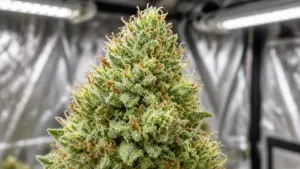
The Shiskaberry strain smells of sweet berries over an earthy, piney Afghani base. The berry note is real fruit, not candy.
Buds are dense and resinous with a heavy frost layer; read more about trichomes. Shiskaberry seeds suit buyers of berry and Afghan heritage lines.
Shiskaberry Terpenes and Aroma Notes
Terpenes are the aroma compounds in cannabis, the same family of compounds found in fruit peel, herbs and pine needles. The Shiskaberry strain is usually reported to carry myrcene, caryophyllene, pinene, geraniol and limonene.
- Myrcene: a sweet, musky base that supports the ripe-berry note.
- Caryophyllene: a peppery spice in the background.
- Pinene: the fresh pine note that shows through from the Afghani side.
- Geraniol: a rose-like floral note.
- Limonene: a light citrus lift on top.
People describe the overall aroma as fresh-picked berries over earth and pine, with some samples leaning toward forest fruits and flowers. Terpene levels vary by sample, and we describe them for aroma only, with no claims about effects. Our guide on what terpenes are explains the basics.

What Shiskaberry Looks Like
Photos of the Shiskaberry strain usually show dense, spade-shaped buds in deep olive green, often with purple undertones and dark amber pistils. A heavy coat of trichomes gives them a frosty, almost snow-covered look.
Those traits fit the parents. The compact, resinous structure points to the Afghani side, while the purple tones are common across the Blueberry family. Color varies from plant to plant and is a visual trait, not a sign of strength.
Shiskaberry vs. Similar Strains
| Strain | Relation | Aroma |
|---|---|---|
| Shiskaberry | Blueberry x Afghani | Berry, earthy, pine |
| Blueberry | Parent | True blueberry |
| Afghan Kush | Afghan heritage | Earthy, hash |
| Berry White | Blueberry x White Widow | Berry, earthy |
Where Shiskaberry Fits in the Blueberry Family
Blueberry has been crossed with almost every major family in cannabis. Sorting those crosses by their second parent shows where the Shiskaberry strain sits.
| Line | Second parent | Direction |
|---|---|---|
| Shiskaberry | Afghani | Berry over earth, pine and hash |
| Berry White | White Widow | Berry with heavy frost |
| Blueberry Pie | Blueberry family cross | Berry pastry |
| Blueberry Cupcake | Blueberry Muffin x Wedding Cake | Berry and vanilla cake |
Shiskaberry stands out as one of the most old-school pairings: an American berry line put straight back onto Afghan indica. Related reviews: Berry White, Blueberry Pie and Blueberry Cupcake.
The Dr. Blaze S1 Version
Alongside the original Barney’s Farm release, Dr. Blaze has offered a Shiskaberry S1 feminized version. An S1 is a seed line made from a single selected plant pollinated by itself, so it carries that one plant’s genetics rather than a new mix of parents.
For buyers, the two releases are worth keeping apart. The Barney’s Farm pack is the original Dutch line, and the Dr. Blaze S1 is a later selection from it. Browse the Dr. Blaze catalog for current releases.
About the Reported THC and the Indica Lean
The Shiskaberry strain is usually listed at about 18% to 26% THC and as roughly 80% indica. Both figures come from breeder and community reports rather than one standard test.
THC numbers describe mature flower from particular samples and vary widely from lab to lab. The indica label describes ancestry, here a heavy Afghan influence, more than anything you can measure in a seed. Neither figure tells you whether a pack is authentic.
Buying Shiskaberry
Find Barney’s Farm Shiskaberry feminized in our shop, or browse the Barney’s Farm catalog.

How to Spot Authentic Shiskaberry Seeds
A classic with an award history attracts copies. A few habits help:
- Check that the pack names Barney’s Farm, or clearly names another breeder such as Dr. Blaze.
- Look for the DJ Short Blueberry x Afghani lineage on the label or listing.
- Remember that Kish, The Kish and Shishkeberry are alternate names for the same line.
- Buy sealed, original breeder packaging with no signs of repacking.
- Be careful with listings that lean on the 2001 Cup story but give no breeder at all.
Keep the pack together with its receipt, since provenance is part of the value of a classic line.
Reading a Shiskaberry Seed Listing
A good listing for Shiskaberry seeds should tell you the breeder (Barney’s Farm for the original), the lineage (DJ Short Blueberry x Afghani), the seed type and the pack size. If it uses a nickname such as Kish, it should still give the lineage. If any of these details are missing, ask before you buy.
Common Myths About the Shiskaberry Strain
- Kish is a different strain. It is a common nickname for Shiskaberry, not a separate line.
- It is a pure Blueberry. It is Blueberry crossed with an Afghani indica.
- Purple buds mean a stronger plant. Color comes from pigments and says nothing about strength.
- Every Shiskaberry pack is the same. The Barney’s Farm original and later S1 versions are different releases.
Building a Berry Heritage Collection
The Shiskaberry strain is a natural centerpiece for a collection that traces the Blueberry family and its Afghan roots. Pair it with Blueberry, Afghan Kush and Hindu Kush to show both parents’ traditions side by side.
Together they tell the story of how an American berry line and old Central Asian hash genetics met in Amsterdam at the height of the Cannabis Cup era.
Why the Shiskaberry Strain Belongs in a Collection
Few strains combine a famous parent, an old landrace tradition and a documented Cannabis Cup placing the way Shiskaberry does. That mix of story and provenance is what buyers look for.
It also bridges two eras: the 1970s and 1980s, when DJ Short was selecting Blueberry and Afghan stock was reaching the West, and the Amsterdam Cup years when Barney’s Farm turned that history into a seed release.
Seeds, the Law and Our Rules
Cannabis laws differ by state, and federal hemp and seed rules are changing under Section 781. Check the law where you live before you buy anything. Our cannabis seeds by state guide links every state and its official sources, and our explainer on what Section 781 is covers the federal side.
Every buyer must be 21 or older. We sell seeds only to adults 21+.
Growing the Shiskaberry Strain
Cultivating Shiskaberry is a rewarding experience, particularly for growers using feminized seeds which guarantee a crop of female plants. This strain is known for its resilience, forgiveness and relatively straightforward care requirements, making it suitable for both novice and experienced growers.
Growing Characteristics
- Plant height: 80-120cm (2.5 to 4 feet) – compact and manageable
- Structure: Short, stocky with tight internodal spacing
- Branching: Significant side-branching with bushy growth pattern
- Climate adaptability: Thrives in both hot and cold conditions
Cultivation Requirements
| Growth Factor | Indoor Conditions | Outdoor Conditions |
|---|---|---|
| Climate | Controlled environment preferred | Mild to moderate, Mediterranean-style |
| Temperature | 65°F to 75°F (18°C to 24°C) | Adaptable to various temperatures |
| Humidity | 40% to 50% flowering, 50% to 60% vegetative | Low to moderate humidity |
| Light Requirements | 18/6 vegetative, 12/12 flowering | Full sun exposure |
| Flowering Time | 7 to 9 weeks (49 to 63 days) | Early to mid-October harvest |
| Expected Yield | 450-550g/m² (1.5 oz/sq ft) | 550g (19.5 oz) per plant |
Growing Tips for Success
Vegetative Stage: Shiskaberry develops short and stocky growth with fat-fingered indica fan leaves. The plants respond well to training techniques such as LST (Low Stress Training) and SCROG (Screen of Green) to maximize yield potential.
Feeding and Nutrients: This strain benefits from a balanced nutrient regimen with particular attention to phosphorus during the flowering stage to support dense bud development. The plants are forgiving and can handle nutrient mistakes often made by beginning growers.
Flowering Stage: Regular pruning helps manage growth and improves air circulation around developing buds. The strain requires patience as buds mature slower than advertised but reward growers with monster swelling in the final weeks.
Harvest Timing: Wait for trichomes to turn cloudy white or amber for peak potency and flavor. The strain shows significant bud swelling late in flowering, so avoid harvesting too early. Consider selective harvesting, taking top colas first to allow lower growth more light exposure.
Frequently Asked Questions
What is the Shiskaberry strain?
An indica-leaning hybrid from DJ Short Blueberry x Afghani.
Who bred Shiskaberry?
It was originally released by Barney’s Farm.
Is Shiskaberry the same as Kish?
Yes, Kish and The Kish are common alternate names.
What does Shiskaberry smell like?
Sweet berries over an earthy, piney base.
Did Shiskaberry win a Cannabis Cup?
Yes. It is credited with second place for Best Indica at the 2001 High Times Cannabis Cup.
What is the Afghani parent of Shiskaberry?
It is listed only as an Afghani indica. The exact plant is not documented, which is common for older Afghan stock.
Is there more than one version of Shiskaberry seeds?
Yes. Barney’s Farm released the original, and Dr. Blaze has offered an S1 feminized version from a selected plant.
What does Shiskaberry look like?
Dense, spade-shaped olive green buds, often with purple undertones, amber pistils and a heavy frost.
Can I buy Shiskaberry seeds if I am under 21?
No. We sell seeds only to adults 21 and over.
Does Blueberry already have Afghan genetics?
Yes. DJ Short’s Blueberry is usually described as coming from Thai and Afghan stock, so Shiskaberry leans even further toward the Afghan side.
Who sells the original Shiskaberry seeds?
Barney’s Farm released the original line. We carry the Barney’s Farm Shiskaberry feminized pack.
How difficult is Shiskaberry to grow?
Shiskaberry is relatively easy to grow and suits both novice and experienced growers. Plants stay short and stocky at about 80 to 120 cm, flower in 7 to 9 weeks and forgive common nutrient mistakes; give them good airflow and let the buds finish swelling late in flower before you harvest.
Bottom Line
Shiskaberry earns its place with its lineage and a distinctive aroma.
Sources
Key Facts About Shiskaberry
| Lineage | DJ Short Blueberry x Afghani |
|---|---|
| Breeder | Originally Barney’s Farm |
| Also known as | Kish, The Kish, Shishkeberry |
| Type | Indica-leaning, about 80/20 |
| Reported THC | About 18% to 26% |
| Aroma | Sweet berries, earthy, fruity, pine |
| Award | 2nd place Best Indica, 2001 High Times Cannabis Cup |
| Where to buy | Seeds Here Now, authentic breeder packs for adults 21+ |
Last updated October 7, 2026 by James Bean, founder of Seeds Here Now. Nothing here is legal advice. See our disclaimer, terms of use and shipping policy.
Suggested Articles

 12 Nov 2026
 12 min read
;)
;)
;)
 March 28, 2024


RESPONSES (0)
No responses yet. Be the first to respond!