


Macronutrients for Cannabis: A Complete Guide To Plant Nutrition
Understanding macronutrients for cannabis is one of the most important skills a grower can develop. Lighting, genetics, and environmental control all play major roles, but without the correct nutrient balance, even the best grow setup will fall short. Macronutrients fuel growth, strengthen plant structure, regulate metabolic processes, and drive flower production, directly influencing yield, potency, aroma, and overall plant health.
This in-depth guide explains what macronutrients are, how cannabis uses each one, how nutrient demands shift throughout the plant’s life cycle, how to identify deficiencies and toxicities, and how to build a feeding strategy that works in soil, coco, and hydroponic systems.
What Are Macronutrients for Cannabis?
Macronutrients are nutrients cannabis plants require in relatively large amounts to grow and function properly. These nutrients form the structural and metabolic backbone of the plant. Without them, cannabis cannot photosynthesize efficiently, build strong tissues, or produce flowers.
Cannabis macronutrients include:
-
Nitrogen (N)
-
Phosphorus (P)
-
Potassium (K)
-
Calcium (Ca)
-
Magnesium (Mg)
-
Sulfur (S)
Nitrogen, phosphorus, and potassium are considered primary macronutrients, often displayed as NPK ratios on fertilizer labels. Calcium, magnesium, and sulfur are classified as secondary macronutrients, but cannabis still consumes them in significant quantities, especially during periods of rapid growth.
Nitrogen: The Driver of Vegetative Growth
Nitrogen is the most heavily used macronutrient during the vegetative stage. It is a critical component of chlorophyll, amino acids, enzymes, and proteins, all of which are essential for growth and photosynthesis.
Why Nitrogen Matters
Nitrogen supports leaf and stem development, allowing plants to build the foliage needed to capture light energy. Adequate nitrogen levels result in lush, green plants with strong upward growth.
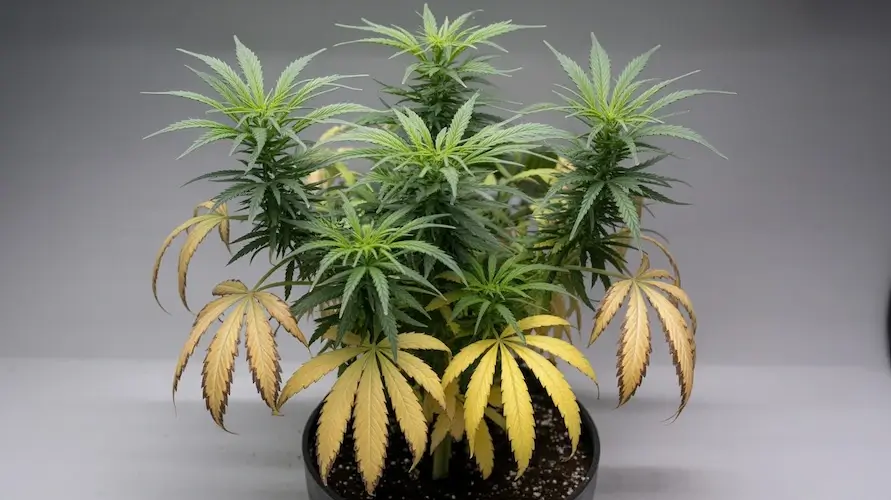
Signs of Nitrogen Deficiency
-
Pale green or yellowing leaves
-
Yellowing that starts on older, lower leaves
-
Slow or stunted growth
-
Thin stems and reduced vigor
Nitrogen deficiencies are common in underfed plants or when pH levels prevent proper uptake.
Signs of Nitrogen Toxicity
-
Very dark green leaves
-
Clawing or curling leaf tips
-
Excessive leafy growth
-
Delayed flowering and reduced bud development
Excess nitrogen late in flower often leads to harsh-tasting cannabis and poor final structure.
Nitrogen Through the Life Cycle
-
Seedlings require very small amounts.
-
Vegetative plants demand high nitrogen levels.
-
Flowering plants require reduced nitrogen to prioritize bud development over leaf growth.
Phosphorus: Energy Transfer and Flower Formation
Phosphorus plays a central role in root development, energy transfer, and flower production. It is a key component of ATP, the molecule plants use to store and transport energy.
Why Phosphorus Matters
Phosphorus supports strong root systems early in life and promotes flower formation during bloom. Without adequate phosphorus, plants struggle to convert nutrients into usable energy.
Signs of Phosphorus Deficiency
-
Dark green or bluish leaves
-
Purpling of stems or leaf veins
-
Slow growth and weak root systems
-
Small or underdeveloped buds
Cold temperatures and improper pH often contribute to phosphorus lockout.
Signs of Phosphorus Toxicity
-
Burnt leaf tips
-
Micronutrient lockout, especially zinc and iron
-
Brittle leaves and poor nutrient balance
Phosphorus Through the Life Cycle
-
Moderate levels during early growth support root development.
-
Increased levels during flowering promote bud size and density.
-
Excessive phosphorus late in flower can interfere with nutrient uptake.
Potassium: Strength, Resistance, and Yield
Potassium regulates water movement, enzyme activation, and nutrient transport within the plant. It plays a critical role in overall plant health and flower quality.
Why Potassium Matters
Potassium strengthens cell walls, improves drought resistance, and enhances terpene and cannabinoid production. Plants with adequate potassium produce denser flowers and stronger branches.
Signs of Potassium Deficiency
-
Yellowing or browning along leaf edges
-
Burnt leaf margins
-
Weak stems and branch breakage
-
Light, airy buds
Potassium deficiencies often appear during mid to late flowering when demand peaks.
Signs of Potassium Toxicity
-
Leaf tip burn
-
Calcium and magnesium lockout
-
Leaf curling and reduced growth
Potassium Through the Life Cycle
-
Moderate levels during vegetative growth support structure.
-
High levels during flowering increase bud density and resin production.
Calcium: Structural Support and Root Health
Calcium is essential for cell wall formation and new growth. Cannabis uses calcium heavily, particularly during rapid growth phases.
Why Calcium Matters
Calcium strengthens plant tissues, supports root development, and improves resistance to disease and stress. It is especially important in coco and hydroponic systems.
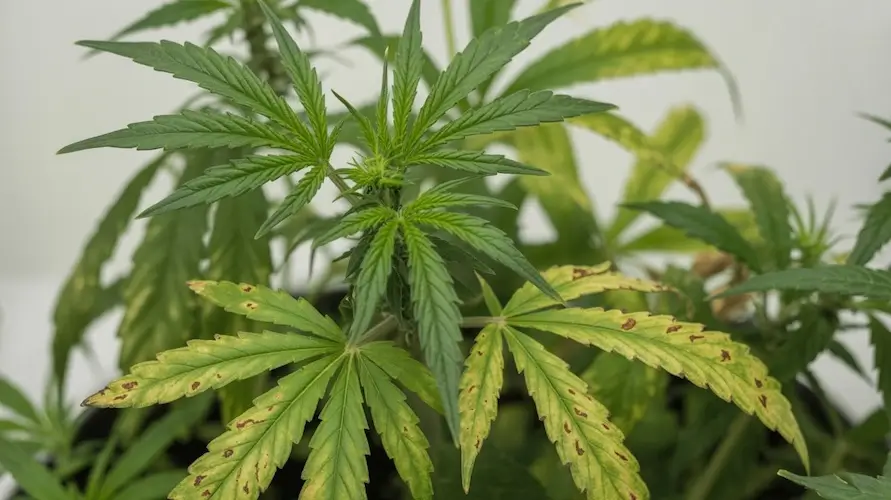
Signs of Calcium Deficiency
-
Deformed or twisted new growth
-
Brown or rust-colored spots on leaves
-
Weak stems
-
Poor root development
Calcium deficiencies are common when using reverse osmosis water without supplementation.
Magnesium: The Core of Photosynthesis
Magnesium sits at the center of the chlorophyll molecule, making it indispensable for photosynthesis and energy production.
Why Magnesium Matters
Without magnesium, cannabis cannot efficiently process light or produce sugars. Magnesium also assists with phosphorus uptake and enzyme activation.
Signs of Magnesium Deficiency
-
Yellowing between leaf veins
-
Red or purple stems
-
Leaf curling upward
-
Reduced growth during flowering
Magnesium deficiencies often appear in flowering plants when nutrient demand increases.
Sulfur: Aroma, Flavor, and Protein Production
Sulfur plays a role in amino acid production, enzyme formation, and terpene synthesis. Though often overlooked, it contributes directly to aroma and flavor.
Why Sulfur Matters
Sulfur supports chlorophyll production, improves plant metabolism, and enhances terpene expression, particularly in aromatic strains.
Signs of Sulfur Deficiency
-
Uniform yellowing of younger leaves
-
Stunted growth
-
Reduced vigor
Sulfur deficiencies are rare but can occur when pH is out of range or nutrients are imbalanced.
How Macronutrient Needs Change Throughout the Growth Cycle
Cannabis nutrient requirements shift significantly as the plant matures.
Seedling Stage
-
Very low nutrient demand
-
Excess nutrients can burn young roots
-
Focus on gentle, balanced feeding
Vegetative Stage
-
High nitrogen demand
-
Moderate phosphorus and potassium
-
Consistent calcium and magnesium
Flowering Stage
-
Reduced nitrogen
-
Increased phosphorus and potassium
-
Continued calcium, magnesium, and sulfur support
Late Flower
-
Gradual nutrient reduction
-
Focus on ripening and resin production
-
Avoid overfeeding to prevent harsh flavors
Diagnosing Deficiencies and Toxicities
Nutrient problems often look similar, making diagnosis challenging.
Common Deficiency Indicators
-
Yellowing leaves
-
Slow growth
-
Weak stems
-
Poor flower development
Common Toxicity Indicators
-
Burnt leaf tips
-
Leaf curling or clawing
-
Dark, rigid foliage
-
Nutrient lockout symptoms
Maintaining proper pH is critical. Most nutrient issues stem from poor pH rather than a lack of nutrients.
-
Soil: 6.0 to 6.5
-
Coco and hydroponics: 5.6 to 6.0
Organic vs. Synthetic Macronutrients
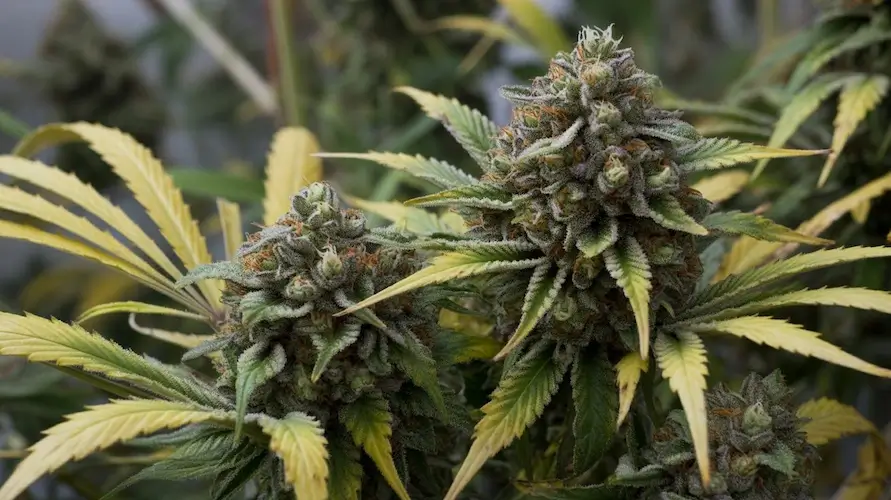
Both approaches can produce excellent cannabis when managed correctly.
Organic Nutrients
-
Improve soil biology
-
Support terpene complexity
-
Slower nutrient availability
-
Require microbial activity
Synthetic Nutrients
-
Fast-acting and precise
-
Ideal for hydroponics and coco
-
Easier to adjust and measure
-
Require careful monitoring
Many growers use a hybrid approach, combining organic inputs with mineral supplementation.
Building a Balanced Feeding Strategy
Start with cannabis-specific nutrients, monitor plant response closely, and make gradual adjustments. Avoid chasing deficiencies aggressively, and always verify pH before increasing feed strength.
Healthy cannabis plants should display steady growth, rich green foliage, and strong structure without excessive leaf burn or discoloration.
Final Thoughts on Macronutrients for Cannabis
Macronutrients for cannabis form the foundation of plant health, yield, and flower quality. By understanding how each macronutrient functions and how requirements change throughout the growth cycle, growers can prevent problems before they start and consistently produce better harvests.
When nutrition is balanced and environmental conditions are dialed in, cannabis plants reward growers with vigorous growth, dense flowers, and rich terpene profiles.
Want to learn more? Check out our blog for more expert insights on cannabis cultivation and plant nutrition.
Suggested Articles

 16 Dec 2025
  7 min read

;)
;)
;)
 December 16, 2025


RESPONSES (0)
No responses yet. Be the first to respond!