


How To Grow Cannabis Indoors: Complete Beginner’s Guide
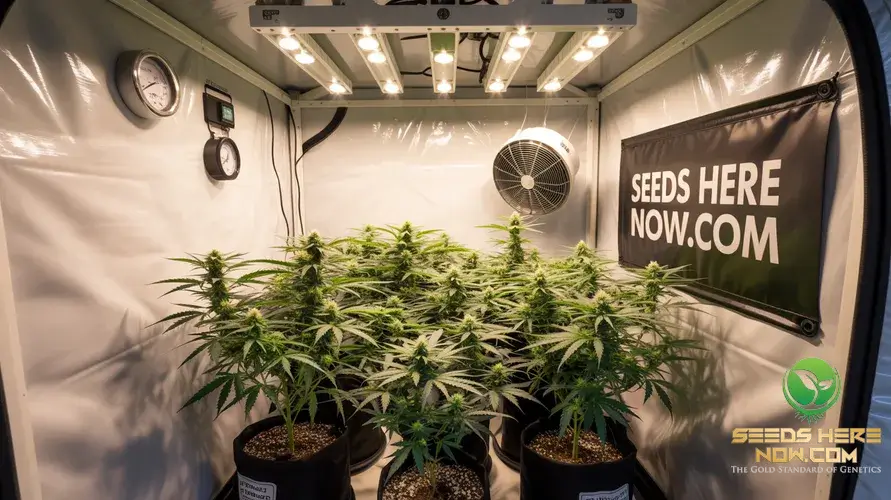
Want to learn how to grow cannabis indoors? It is not rocket science, but it is not exactly like growing tomatoes either. After 15 years in the cannabis genetics game and personally testing thousands of strains (tough job, I know), I am breaking down everything you need to transform your spare closet into a productive grow space.
Whether you are a complete beginner or someone who has killed more plants than they care to admit, this guide on how to grow cannabis indoors will get you from seed to harvest without the usual growing pains.
Why Grow Cannabis Indoors? (Spoiler: It’s About Control)
Indoor cultivation gives you superpowers that Mother Nature cannot match. You control the weather, the seasons, and every environmental factor influencing your harvest. No more worrying about a neighbor’s floodlights ruining your flowering cycle or unexpected storms destroying months of work.
The benefits add up quickly: year-round growing seasons, enhanced security, protection from pests that would otherwise treat your plants like an all-you-can-eat buffet, and consistent quality that makes dispensary weed look like amateur hour.
Cannabis Growing Fundamentals (The Science Behind the Buzz)
Essential Techniques for How To Grow Cannabis Indoors
Cannabis is a photoperiod plant, which means it is sensitive to light. The plant undergoes four distinct phases: germination, the seedling stage, vegetative growth, and flowering.
Cannabis plants are either male or female. Unless you plan to breed seeds, you want females only. Males pollinate your females and turn premium buds into seed-filled disappointment.
Your plants need five environmental factors: lighting, temperature, humidity, airflow, and nutrition. If you nail these basics, you are already ahead of 80% of new growers.

Essential Equipment for Indoor Cannabis Growing
Before you learn how to grow cannabis indoors successfully, you need the right gear. Here is what matters most.
Lighting Systems: Your Most Important Investment
LED lights dominate indoor cultivation because of their energy efficiency, long lifespan, and full-spectrum output. Beginners should target 30 to 50 watts per square foot of grow space. It is an investment, but high-quality LEDs pay for themselves in electricity savings and yields.
High-pressure sodium lights still work well for flowering, but they create excess heat and raise electric bills. Compact fluorescent lights are inexpensive but lack the intensity needed for strong yields.
Ventilation and Air Circulation: Keep It Fresh
Stagnant air is the enemy of healthy cannabis. Install an exhaust fan that replaces the air in your grow room every three to five minutes. Intake fans bring in fresh, CO2-rich air, and oscillating fans circulate it to strengthen plant stems.
Pro tip: Carbon filters eliminate odors. Your neighbors do not need to know about your horticultural hobbies.
Growing Medium Options: Soil vs. Soilless vs. Hydroponics
Soil remains the most forgiving option for beginners. High-quality potting soil designed for vegetables provides nutrients and buffers against mistakes. Avoid Miracle-Gro and time-release fertilizers.
Coco coir offers faster growth and stronger root development, but requires precise nutrient management. It is considered intermediate difficulty.
Hydroponic systems offer maximum control and rapid growth, but they demand constant monitoring. Save hydroponics for later grows.
Containers and Space Setup
Fabric pots and airpots promote healthier root systems than plastic containers. Choose three- to five-gallon containers for most indoor grows. Make sure your space is completely lightproof during dark periods and easy to clean because cannabis cultivation can get messy.

Step-by-Step Indoor Cannabis Growing Process
Now that your equipment is ready, here is how to grow cannabis indoors from seed to harvest in four phases.
Phase 1: Germination (3 to 7 days)
Start with high-quality genetics from reputable sources (cough Seeds Here Now cough). The paper towel method works well: Place seeds between damp paper towels, keep them warm and dark, and wait for taproots to emerge within 24 to 72 hours.
You can also plant seeds directly into small starter pots with light, airy soil. Maintain temperatures between 70 and 85 degrees Fahrenheit, and keep soil moist but not soaked.
Phase 2: Seedling Stage (2 to 3 weeks)
Once cotyledon leaves appear, provide gentle lighting for 18 to 24 hours per day. Too much intensity can burn delicate leaves quickly.
Maintain 65% to 70% humidity and temperatures between 68 and 75 degrees. Water sparingly. Overwatering kills more seedlings than any other mistake.
Phase 3: Vegetative Growth (3 to 8 weeks)
Plants focus on building stems, leaves, and roots. Keep lights on for 18 to 24 hours daily. Start Low-Stress Training to maximize light penetration.
Feed with nitrogen-rich nutrients designed for the vegetative stage. Maintain a pH of 6.0 to 7.0 in soil and 5.5 to 6.5 in coco or hydroponic systems.
Phase 4: Flowering (6 to 10 weeks)
Start a 12 to 12 light cycle—12 hours of light and 12 hours of darkness—to trigger flowering. Light leaks during dark periods can cause hermaphroditism.
Switch to nutrients high in phosphorus and potassium, and reduce nitrogen. Lower the humidity to 40% to 50% to prevent mold and bud rot.
Environmental Control and Monitoring
Knowing how to grow cannabis indoors means controlling temperature precisely. Maintain 65 to 80 degrees during lights-on hours and allow a 10- to 15-degree drop during lights-off hours.
Humidity requirements change throughout the grow:
- Seedlings: 65% to 70%
- Vegetative: 40% to 70%
- Flowering: 40% to 50%
Use a digital thermometer and hygrometer with min/max memory to track fluctuations.
Air circulation prevents hotspots and stagnant pockets that attract pests and mold.
Nutrition and Feeding Schedules
Cannabis needs different nutrients at each stage. During vegetation, it needs nitrogen. During flowering, it needs phosphorus and potassium.
Use a three-part nutrient system and begin at half strength to avoid nutrient burn.
Watch for signs of deficiency such as yellowing leaves, brown spots, curled edges, or slowed growth. Adjust promptly.
Water quality matters. Poor pH or high chlorine levels can cause nutrient lockout. Filtered or RO water can help if needed.

Common Beginner Mistakes To Avoid
- Overwatering
- Light burn
- Incorrect pH
- Nutrient burn
- Poor air circulation
- Light leaks
- Harvesting too early
Harvesting and Curing Your Cannabis
Harvest timing requires observing trichomes. Clear indicates immaturity, cloudy signals peak potency, and amber produces more sedating effects.
Most growers harvest when 70% to 80% of trichomes are cloudy with some amber.
Use a 60x jeweler’s loupe or digital microscope for accuracy.
Cut plants and hang them in a dark, ventilated area at 60 to 70 degrees and 45% to 55% humidity for 7 to 14 days or until small stems snap rather than bend.
After drying, trim buds and place them in glass jars for curing. Fill jars about three-fourths full and store them in a cool, dark space. Open jars daily during the first week, then gradually reduce frequency over the next two to eight weeks.
Legal Considerations and Safety
Check state and local laws before starting. Regulations vary widely regarding plant limits, security requirements, and grow locations.
Secure your grow area. Install locks and consider basic security measures.
Use GFCI outlets, avoid overloaded circuits, and manage heat output to prevent fire hazards.
Setting Realistic Expectations and Timeline
Your first indoor grow will be a learning experience. Do not expect perfection. Even experienced growers continue refining techniques.
From seed to harvest, expect a total timeline of three to six months, plus drying and curing time.
Yields vary based on genetics, equipment, environment, and experience. Under strong conditions, indoor growers can achieve 0.5 to 2 grams per watt of lighting. Beginners should expect the lower end.
Budget for electricity, nutrients, equipment replacement, and seeds for future grows.
Advanced Tips for Better Results
Once you master the basics of how to grow cannabis indoors, try:
- Low-Stress Training
- Screen of Green
- Topping
If you find strains you love, consider keeping mother plants for cloning and genetic consistency.
Expert Authority: Why Trust This Guide?
As the CEO and founder of Seeds Here Now, I have spent more than 15 years specializing in cannabis genetics and cultivation. I hold a Plant Science degree from Oaksterdam University and work with more than 80 breeders. I have tested thousands of strains and helped countless growers improve their harvests.
My experience includes:
- Operating the longest-running seed bank in the United States
- Appearing on major cannabis podcasts, including “The Adam Dunn Show,” “The Dude Grows Show,” and “The Pot Cast”
- Judging cannabis competitions nationwide
- Cultivating and testing more than 3,500 strains
This guide is based on field-tested, real-world experience. Now you know how to grow cannabis indoors—go put it into practice.
Frequently Asked Questions
1. How much will my first indoor cannabis grow cost?
Expect $500 to $1,500 for the initial setup and $50 to $100 per month for electricity and nutrients.
2. What is the biggest mistake beginners make?
Overwatering.
3. How do I know if seeds are high quality?
Buy from established breeders with verified genetics and germination guarantees.
4. Can I produce dispensary-quality cannabis on my first grow?
Probably not, but you can exceed bottom-shelf quality with proper technique and good genetics.
5. How much cannabis can I expect from my first grow?
Expect 0.5 to 1 gram per watt of lighting with proper technique.
6. Is growing cannabis indoors legal where I live?
Laws vary widely. Research thoroughly.
7. What happens if my plants are male?
Remove them immediately unless you want seeds.
8. How do I control the smell?
Use a properly sized carbon filter.
9. Why trust your advice?
I have more than 15 years of hands-on experience, academic training, strong breeder relationships, and a proven track record in the industry.
10. What is the most essential piece of equipment?
High-quality lighting.
Suggested Articles
 10 Apr 2026
  12 min read
;)
;)
;)
 December 01, 2025


RESPONSES (0)
No responses yet. Be the first to respond!