


How To Choose Cannabis Seeds: Complete 2026 Guide (10 Expert Tips)

TLDR: Quick Answers for Choosing Cannabis Seeds
-
Best seeds for beginners: Feminized seeds (about 99% female, so no males to remove). Popular starter strains include Wedding Cake, Gorilla Glue #4, and Blue Dream.
-
Seed types explained: Feminized (female only), regular (about 50/50 male and female), and autoflower (flowers automatically).
-
Good seed indicators: Dark brown to black color, firm texture, and a shiny surface. Avoid green, brittle, or cracked seeds.
-
Germination rates: Look for 85%-95% from reputable seed banks. Anything under 80% is a red flag.
-
Price range: About $5-$15 per seed for solid genetics, and $50-$150 for five- to 10-seed packs.
-
Where to buy: U.S. seed banks with germination guarantees, real customer reviews, and breeder verification.
-
Legal status: Seeds are typically sold as “collectibles,” but cultivation laws vary by state.
-
Indoor vs. outdoor: Feminized seeds or autoflowers for indoor grows. Photoperiod strains for outdoor grows (when your season supports them).
-
Common mistakes: Buying from Instagram, choosing the wrong strain for your climate, and skipping reviews.
-
Expert source: James Bean, Seeds Here Now CEO, with 15-plus years of experience, 80-plus breeder partnerships, and a catalog of 3,500-plus strains.
Look, I’ve sold more than 3,500 cannabis strains in 15 years running Seeds Here Now. I’ve seen every mistake in the book.
Growers waste hundreds of dollars on trash genetics. They get hit with Instagram seed scams. They end up with hermaphrodites that pollinate an entire grow. Or they buy seeds that never sprout.
This guide is what I tell every customer who calls and asks, “Which seeds should I buy?”
No fluff. No filler. Just 10 tips that actually matter.
1. Understand Seed Types (Don’t Waste Money on the Wrong Kind)
There are three main types of cannabis seeds. Each has specific use cases. Choose the wrong one, and you can waste time, money, and space.
Feminized Seeds (Best for Most Growers)
What they are: Seeds bred to produce almost all female plants through reversal.
How they’re made (high level):
-
A female plant is treated with a silver-based compound (often silver thiosulfate, also called STS).
-
The plant produces pollen with female genetics.
-
That pollen is used to pollinate another female plant.
-
The resulting seeds are overwhelmingly female (XX).
Advantages:
-
No male plants to remove (saves space).
-
Predictable growth patterns.
-
Consistent results.
-
Great for maximizing a limited canopy.
Disadvantages:
-
Higher risk of hermaphrodites if the plant is stressed.
-
Usually costs more than regular seeds.
-
Breeding requires reversal methods and tight pollen control.
-
Can be more sensitive to environmental swings.
Best for: Beginners, small grows, and anyone who doesn’t want to deal with males.
Typical price range: About $10-$20 per seed, or $75-$200 per 10-pack.
Regular Seeds (For Breeders)
What they are: Naturally produced seeds that can grow into male or female plants.
Advantages:
-
Higher genetic diversity.
-
Often better stress tolerance.
-
Required for traditional breeding projects.
-
Usually cheaper.
-
Often considered more stable over time.
Disadvantages:
-
You will likely cull males, which can eat up space.
-
Requires sexing plants around weeks 4-6 of growth.
-
More variability between plants.
-
Risk of accidental pollination if you miss a male.
Best for: Breeders, phenotype hunters, and experienced growers with space and a plan.
When to choose: You want to create your own strains or hunt for standout phenotypes.
Autoflowering Seeds (Easiest Option)
What they are: Hybrids that flower automatically after a few weeks, regardless of light schedule.
Advantages:
-
No need to flip lighting to 12/12.
-
Fast turnaround (often 8-10 weeks seed to harvest).
-
Smaller, more discreet plants.
-
Multiple outdoor harvests per season in many climates.
-
Beginner-friendly.
Disadvantages:
-
Lower yields than many photoperiod plants.
-
You can’t reliably clone and re-veg for repeated runs.
-
Typically less forgiving if you stunt them early.
-
Less control over veg time.
Best for: Beginners, stealth grows, and fast harvests.
Typical price range: About $8-$15 per seed.
Quick Comparison
| Factor | Feminized | Regular | Autoflower |
|---|---|---|---|
| Sex ratio | About 99% female | About 50/50 | About 99% female |
| Grow difficulty | Medium | Hard | Easy |
| Yield per plant | 2-8 oz. | 2-8 oz. | 1-4 oz. |
| Total time | 3-4 months | 3-4 months | 2-3 months |
| Light schedule | 18/6 veg, 12/12 flower | 18/6 veg, 12/12 flower | 18/6 or 20/4 start to finish |
| Price per seed | $10-$20 | $5-$10 | $8-$15 |
| Stress tolerance | Low | High | Medium |
| Best for | Most growers | Breeders | Beginners |
2. Match Seeds to Your Environment
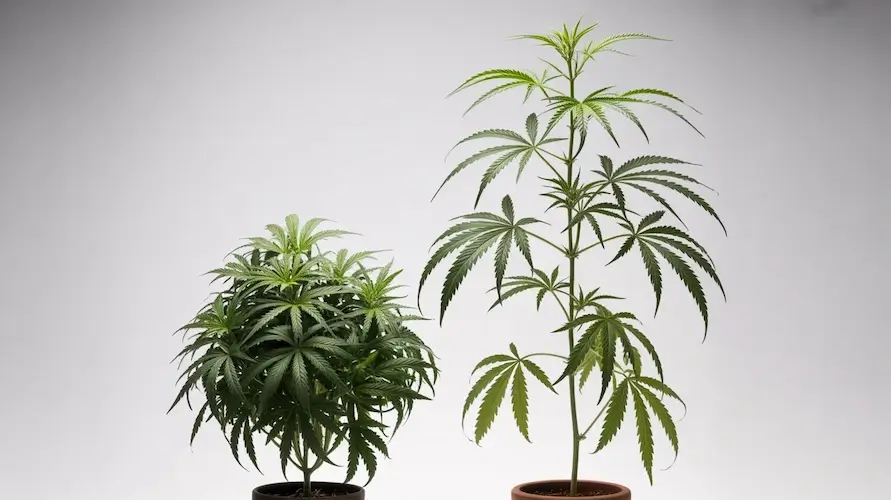
The wrong strain for your setup is a reliable path to disappointment.
I’ve had customers try growing 12-foot Thai sativa landraces in 4-foot tents. It does not work.
Indoor Growing Considerations
Space requirements by plant type:
-
Indica-dominant: About 2-by-2 feet per plant, 3-5 feet tall.
-
Hybrid: About 2-by-3 feet per plant, 4-6 feet tall.
-
Sativa-dominant: About 3-by-3 feet per plant, 6-10 feet tall.
-
Autoflowers: About 1-by-1 foot per plant, 2-3 feet tall.
Best seed types for indoor grows:
-
Feminized indica-leaning hybrids (compact and predictable).
-
Autoflowers (small, fast, and forgiving).
-
Purpose-bred compact strains.
Strains to avoid indoors:
-
Pure sativas (too tall, long flowering times).
-
Many landrace strains (unpredictable growth).
-
Very stretchy hybrids (extreme flower stretch).
Indoor environment checklist:
-
Tent or room is truly lightproof (no light leaks).
-
Ventilation can exchange air regularly.
-
You can hold temps around 68-78 degrees.
-
You can keep humidity around 40%-60%.
-
Lighting is adequate (often 30-50 watts per square foot, depending on fixture quality).
Outdoor Growing Considerations
Climate matching is critical.
Climate zones and strain fit:
| Climate type | Recommended strains | Traits needed |
|---|---|---|
| Hot and humid (southern U.S.) | Mold-resistant sativas | Airflow and mold resistance |
| Hot and dry (Southwest) | Drought-tolerant indicas | Heat tolerance, lower water needs |
| Temperate (Pacific Northwest) | Balanced hybrids | Finishes before fall weather |
| Cold or short season | Fast autos, early finishers | Finishes by early fall |
Outdoor factors that matter:
-
First frost date (finish early).
-
Peak summer temperatures (some strains crash above 95 degrees).
-
Rainfall and humidity (mold resistance matters).
-
Sunlight hours and darkness (photoperiod plants need long nights to flower).
-
Wind exposure (shorter, bushier plants handle it better).
Best seed types for outdoor grows:
-
Regular photoperiod strains (big plants and big yields, when the season allows).
-
Fast-finishing autoflowers (beat frost, multiple runs).
-
Region-specific varieties bred for your climate.
Container vs. Ground
Container growing:
-
Choose compact, bushy strains.
-
Five- to 15-gallon pots typically produce medium-sized plants.
-
Easier to move if needed.
-
Root space limits final size.
In-ground growing:
-
Supports large plants, including sativa-leaning strains.
-
Massive root systems can mean massive yields.
-
Permanent location (you can’t move it).
-
Potential for one- to two-pound plants in ideal conditions.
3. Research Strain Genetics (This Determines Everything)
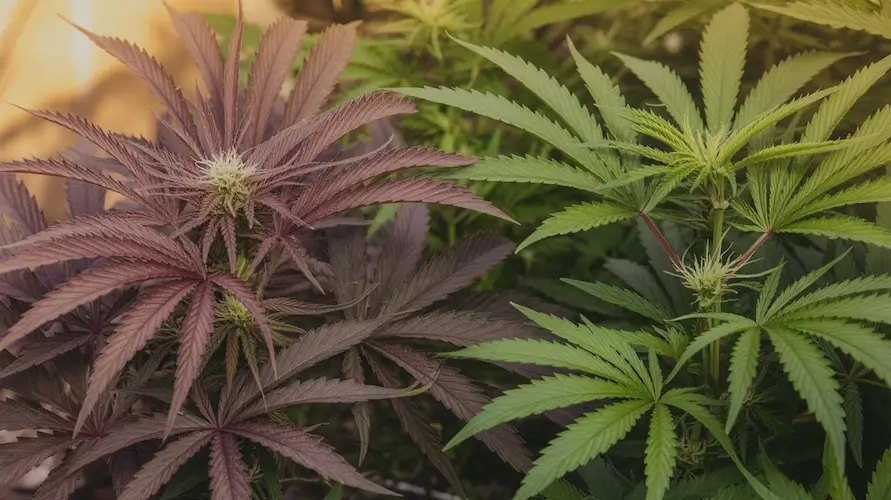
Genetics is the blueprint. You can’t outgrow weak genetics. You can, however, ruin strong genetics with a bad environment.
Indica, Sativa, and Hybrid Basics
Indica traits:
-
Short and bushy.
-
Often 7-9 weeks flowering.
-
Relaxing, sedating effects.
Sativa traits:
-
Tall and stretchy.
-
Often 10-14 weeks flowering.
-
Energizing, uplifting effects.
Hybrid traits:
-
Varies by lineage.
-
Often 8-10 weeks flowering.
-
Balanced effects.
Cannabinoids and Terpenes
THC: Psychoactive compound often ranging from 10%-30% in modern genetics. Higher THC is not automatically better.
CBD: Nonintoxicating compound associated with calming and anti-inflammatory effects, and it can soften THC’s edge.
Terpenes: Aromatic compounds that influence flavor, aroma, and perceived effects. Examples include myrcene (often relaxing), limonene (often uplifting), and pinene (often associated with focus).
Stability and Generations
-
F1 hybrids: Often the most uniform and beginner-friendly.
-
F2-F5: More variation, better for pheno hunting.
-
S1 (selfed): Can preserve traits but may reveal recessive issues.
-
Polyhybrids: Can be excellent, but variability is common.
Look for:
-
Clear lineage.
-
Established, tested genetics.
-
Breeder reputation.
-
Avoid “mystery” genetics and hype with no track record.
4. Verify Seed Bank Reputation (Don’t Get Scammed)
I’ve seen it all: fake seeds, non-delivery, dead seeds, and “feminized” packs that throw a bunch of males.
Quality Indicators
A reputable seed bank typically has:
-
A germination guarantee (80% minimum, 90% is better).
-
Clear contact info.
-
Secure payments.
-
Verified breeder partnerships.
-
Real reviews on third-party sites.
-
Discreet shipping.
-
A track record (three-plus years is a good baseline).
Red Flags
Avoid sellers that show these signs:
-
No germination guarantee.
-
Instagram-only presence.
-
Pricing far below market (like $2 feminized seeds).
-
No breeder info.
-
Sloppy website security or obvious errors.
-
Pressure tactics and “only two left” gimmicks.
-
Overseas-only shipping (higher seizure risk).
-
No clear replacement policy.
5. Identify Quality Seeds (Visual Quality Check)
You can often spot good seeds fast.
Healthy Seed Indicators
-
Dark brown to black color.
-
Shiny, waxy surface.
-
Hard and firm.
-
Intact shell with no cracks.
Bad Seed Indicators
-
Green, white, or very pale.
-
Dull, chalky appearance.
-
Soft, brittle, or crushable.
-
Cracked or damaged shells.
Simple Tests (Use Caution)
Squeeze test: Gently pinch. A healthy seed should resist pressure. Do not crush it.
Float test: Quick, but not definitive. Some viable seeds float, and some duds sink.
Seed Age and Viability
-
Under 1 year: often 90%-95% germination.
-
1-2 years: often 85%-90%.
-
2-5 years: often 70%-85%.
-
5-plus years: often 50%-70% (if stored well).
Storage matters: cool, dark, dry, and airtight.
6. Know the Legalities (Don’t Get in Trouble)
I’m not a lawyer. Laws change, and enforcement varies.
-
Seeds are commonly sold as “collectibles” because they contain negligible THC.
-
Cultivation laws vary widely by state.
-
If you grow, be aware of your local rules, plant limits, and security requirements.
7. Check Germination Rates (Don’t Buy Duds)
Industry benchmarks:
-
Excellent: 90%-95%.
-
Good: 85%-89%.
-
Acceptable: 80%-84%.
-
Poor: Below 80%.
Germination depends on factors such as seed age, storage, breeder quality control, and your technique.
8. Match Seeds to Your Skill Level (Don’t Overreach)
Beginner-Friendly Traits
-
Forgiving to overwatering and nutrient mistakes.
-
Pest and mold resistance.
-
Predictable growth.
-
Shorter flowering times.
-
Stable genetics.
Beginner Strains (Examples)
Northern Lights, Blue Dream, White Widow, Girl Scout Cookies, Gorilla Glue #4, Wedding Cake, and Skunk #1 are commonly recommended because they are proven and relatively forgiving.
9. Plan for Your Desired Yield
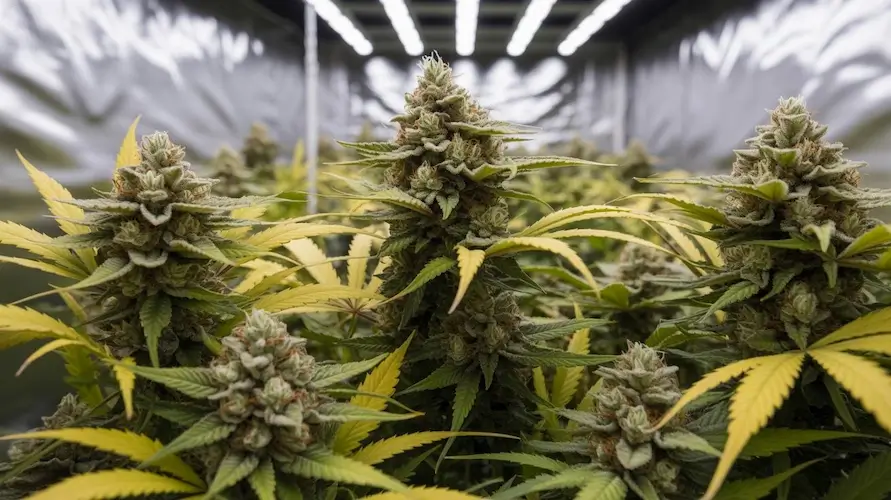
Set realistic expectations. Genetics matter, but so do lighting, environment, and experience.
-
Indicas often produce dense buds.
-
Sativas can produce large plants outdoors, but the buds may be more airy, and flowering can take longer.
-
Autos are fast, but yields are usually smaller.
10. Tap Into Grower Networks (Learn Faster)
You do not need to learn everything the hard way.
Where growers share real outcomes:
-
Reddit grow communities.
-
Dedicated forums.
-
Grow journals.
-
Local hydro shops and events.
When asking for help, include your setup details, strain, environment, and photos.
Best Strains for Beginners (Quick Reference)
Indoor
-
Northern Lights (feminized): forgiving and fast.
-
Blue Dream (feminized): flexible and resilient.
-
Girl Scout Cookies (feminized): stable and predictable.
Outdoor
-
Durban Poison (regular or feminized): tough and heat-friendly.
-
Super Silver Haze (feminized): big yields with the right season.
Absolute Beginner
-
Northern Lights Auto: fast, simple, and hard to mess up.
Seed Buying Red Flags (Warning Signs)
Do not buy if you see:
-
Instagram-only sellers.
-
No germination guarantee.
-
Too-good-to-be-true pricing.
-
No breeder info.
-
Fake-looking reviews.
-
Overseas-only shipping.
FAQ: Cannabis Seed Selection
Q: What’s the difference between feminized and regular cannabis seeds?
A: Feminized seeds produce almost all female plants. Regular seeds produce male and female plants, and males must be removed unless breeding.
Q: How much do quality cannabis seeds cost?
A: Feminized seeds are often $10-$20 each, regular seeds are often $5-$10 each, and autoflowers often run $8-$15 each.
Q: Where should I buy cannabis seeds?
A: Buy from established seed banks with germination guarantees, breeder verification, and third-party reviews. Avoid social media-only sellers.
Q: Are cannabis seeds legal to buy in the U.S.?
A: Seeds are often sold as collectibles, but cultivation laws vary by state. Check local regulations.
Q: How can I tell if cannabis seeds are high-quality?
A: Look for dark color, a firm feel, a shiny surface, and intact shells. Avoid pale, soft, or cracked seeds.
Key Takeaways: Choosing Cannabis Seeds
-
Beginners should usually start with feminized seeds or autoflowers.
-
Match genetics to your space, climate, and time.
-
Purchase from reputable seed banks that offer guarantees and have verified breeders.
-
Inspect seeds for maturity and damage.
-
Plan your grow around realistic yield expectations.
-
Learn from other growers to avoid costly mistakes.
Ready to buy verified genetics with a germination guarantee? Visit SeedsHereNow.com.
Questions about which seeds to choose? Email [email protected] and include your grow setup and climate, so you receive a personalized recommendation.
Suggested Articles

 14 Jan 2026
  10 min read

;)
;)
;)
 January 14, 2026


RESPONSES (0)
No responses yet. Be the first to respond!