


Blue Dream Strain: Review, Effects & Where To Buy Seeds [2026]

The Blue Dream strain proves a twenty-year run at the top of the market isn’t a fluke. Most cannabis trends have a shelf life of about three seasons before the community moves on. The Blue Dream strain has been the most searched strain in the US for most of the past decade, and it’s still there in 2026—not because of nostalgia, but because it keeps delivering what people actually want from a cannabis experience: balanced, clean, consistent.
I’ve been selling cannabis genetics since 2010, and Blue Dream strain seeds have been in the catalog from day one. I’ve watched growers discover it for the first time and experienced growers return to it after years of chasing newer genetics. Both outcomes are telling. Here’s the full review—genetics, effects, growing guide, and where to find legitimate Blue Dream strain seeds that actually grow true to type.
Blue Dream Strain Genetics and Lineage
The Blue Dream strain is a sativa-dominant hybrid—approximately 60% sativa, 40% indica—originating from California around the early 2000s. The parent strains are Blueberry Indica (DJ Short’s legendary indica, itself the product of careful selection from Thai, Purple Thai, and Afghani landrace genetics) and a Sativa Haze (the classic Haze lineage that forms the backbone of sativa breeding in California).
That pairing is why the Blue Dream strain works. DJ Short’s Blueberry brings the distinctive sweet-berry aroma, the indica structure that prevents the Haze genetics from making the plant unmanageable, and the physical relaxation component that makes the effects accessible rather than stimulating.
The Sativa Haze contributes cerebral lift, mood elevation, creative engagement, and the energy that makes Blue Dream function as a daytime strain when most high-THC genetics would end your productivity.
The genetic inheritance from these two parents is stable and expressed consistently, which is part of why the Blue Dream strain has become foundational material for other breeders. Strains like Lorans Dream (Blue Dream x Kush Cleaner from 707 Seed Bank), Lake Tahoe (Tahoe OG x Blue Dream x Blueberry Afghani), and dozens more use Blue Dream genetics precisely because the underlying qualities are reliable enough to build on.
Blue Dream Strain Aroma, Flavor, and Terpene Profile
The aroma of the Blue Dream strain is one of its defining characteristics, and it’s distinctive enough that experienced consumers can identify it before any introduction. Fresh, ripe blueberry is the dominant note—not artificial berry candy, but something closer to actual blueberries at peak ripeness. Underneath the fruit, there’s an earthy, loamy quality from the indica genetics and a hint of vanilla cream that softens the overall profile. The Haze parentage adds subtle pine and herbal complexity in the background, giving depth without overpowering the fruit-forward expression.
On combustion or vaporization, the blueberry flavor dominates the inhale and lingers through the exhale in a way that’s genuinely pleasant and not harsh. The vanilla note comes through most clearly in well-cured material—a good cure matters with this strain and rewards patience. The exhale settles into an earthy-sweet finish that leaves most users wanting another hit.
The Blue Dream strain’s dominant terpenes include myrcene, pinene, beta-caryophyllene, linalool, and limonene. Myrcene provides the earthy, musky base that enhances THC absorption and contributes to body relaxation. Pinene adds the fresh, coniferous note from the Haze side and may counteract THC-induced memory impairment. Beta-caryophyllene brings a spicy, peppery note with CB2 receptor activity, while linalool rounds out the calming effects with a floral element. Limonene contributes citrus lift and mood elevation.
Blue Dream Strain Effects: Why the Balance Is the Point
Blue Dream strain effects aren’t the most intense you can find. They’re not the heaviest, the most cerebral, or the most sedating. That’s not a flaw—it’s the entire value proposition. What the Blue Dream strain does better than most is deliver a balanced experience that works across a wide range of contexts, tolerance levels, and use cases without requiring the user to manage a difficult high.
The onset is uplifting and clear—mood elevation, mild creative engagement, a sense of focus and motivation that comes without the racy, anxious edge that some high-THC sativa-dominants produce. Most users describe the mental effects as functional: you can work, create, socialize, or just enjoy the experience without your capacity to engage with the world being compromised.
Within 15-30 minutes, the indica genetics add a gentle physical relaxation layer—not couch-lock, not sedation, but a comfortable body weight that rounds off the experience and prevents it from feeling purely stimulating.
THC content runs 17-24% across tested samples, with most well-grown plants landing in the 19-21% range. This is high enough to produce noticeable, enjoyable effects without the overcorrection into anxiety or paranoia that higher-percentage strains risk for sensitive users. The Blue Dream strain is one of the most consistently recommended strains for people new to cannabis or returning after a long break, precisely because this range is more manageable than 28-30% THC genetics that require more experience to navigate.
Duration: effects are long-lasting relative to many hybrids—2-4 hours is typical, with a gradual, gentle comedown rather than an abrupt drop. No harsh crash, no rebound anxiety. The experience just slowly winds down in a way that most users find pleasant.
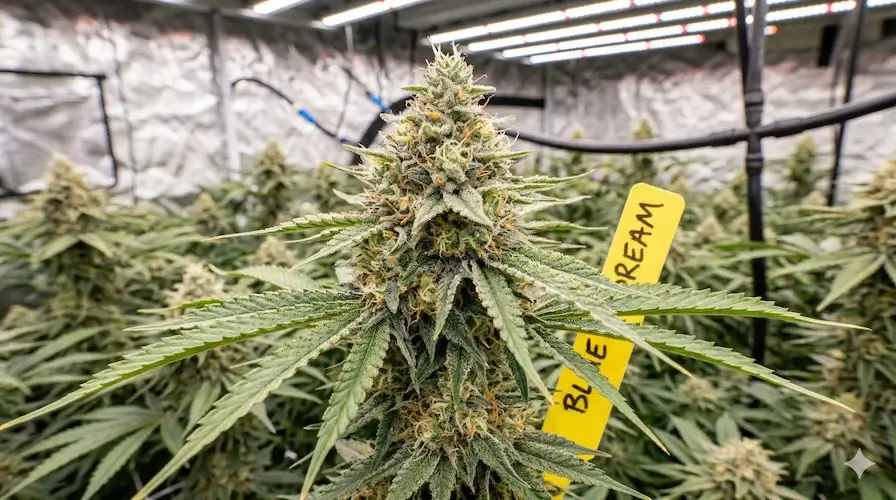
Growing the Blue Dream Strain: Indoor and Outdoor Guide
The Blue Dream strain’s genetics are forgiving enough to make it a genuinely beginner-friendly strain while still rewarding the extra care and attention that experienced growers bring to a run. It’s resistant to common molds and pests, produces generous yields, and grows with vigor, giving new cultivators confidence. The main management challenge is height—the sativa genetics cause significant stretch in early flowering, and indoor growers who aren’t prepared for it end up with plants hitting their lights.
Indoor Growing
Indoor cultivation is where most people run the Blue Dream strain, and it performs excellently in controlled environments. The key variables to manage are outlined in our How To Grow Cannabis Indoors: Complete Beginner’s Guide:
Height control: Blue Dream will stretch 50-100% during early flowering. If you’re working in a 4-foot tent and flip to flower at 18 inches, expect your plants to hit 3 feet or more. Start training early—low-stress training (LST) and topping during vegetative growth will help keep height manageable and create a more even canopy. SCROG (Screen of Green) setups work very well with Blue Dream’s branching structure.
Light: The Blue Dream strain is a heavy feeder for light as well as nutrients. Under quality LED or HPS lighting, it will produce significantly better results than under underpowered setups. Target 18/6 during veg, switch to 12/12 to trigger flowering. The strain responds to higher light intensity with improved yield and density.
Nutrition: Blue Dream is a heavier feeder than many strains. Nitrogen demand during vegetative growth is high—don’t be surprised if it shows deficiency signs on a nutrient schedule that works for lighter-feeding genetics. Scale up your nitrogen during veg and transition cleanly to a phosphorus and potassium-heavy flowering program. Support with adequate calcium and magnesium, especially under high-intensity lighting.
Humidity: Target 50-60% RH during vegetative growth, dropping to 40-50% during flowering. The bud structure is dense enough to create moisture retention issues if humidity stays too high in late flower.
Flowering time: 9-10 weeks indoors. Harvest when trichomes are 70-80% milky with some amber development. This is the sweet spot for the classic Blue Dream strain effect profile—peak THC with the beginning of CBN development that adds body depth.
Expected yield: 450-600g/m² under good conditions. The Blue Dream strain is a high-yielding plant when the environment supports it—one of the reasons it’s remained popular with commercial operations alongside home growers.
Outdoor Growing
Outdoor Blue Dream is a sight. In the right climate—warm, sunny, Mediterranean or similar conditions—these plants can reach 6-10 feet and produce 600+ grams per plant. The Haze genetics thrive in full sun with extended veg time, and the indica structure from Blueberry prevents the plant from becoming completely unmanageable in the way pure Haze genetics sometimes do.
Outdoor harvest timing in the Northern Hemisphere is early to mid-October. Watch trichomes for harvest readiness rather than relying solely on the calendar—phenotypic variation in outdoor Blue Dream can push harvest windows earlier or later depending on the specific expression and your local climate conditions. Provide structural support for heavy colas in the final weeks before harvest.
Blue Dream Strain Hybrids Worth Knowing
The Blue Dream strain’s genetics have served as foundational material for a significant number of quality modern hybrids. Several are available in our catalog at SeedsHereNow.com: For more options in premium breeding, explore our Exotic Feminized Cannabis Strains guide.
Lorans Dream (707 Seed Bank)—Blue Dream x Kush Cleaner. A 10-pack that adds Kush complexity to the Blue Dream foundation, with more potency and a different terpene direction.
Lake Tahoe (Best Coast Genetics)—Tahoe OG x Blue Dream x Blueberry Afghani. A big outdoor producer with blueberry, candied lemon peel, pine, and fuel terpene notes and heavy commercial yield potential.
Dream Shocker (Obsoul33t Genetics)—Blue Dream x High Octane. Indica-dominant, combines the Blue Dream berry sweetness with High Octane’s heavier, more sedating body effects.
Blue Dream Auto—Autoflowering Blue Dream genetics. Maintains the core Blue Dream strain effect profile in an 8-10 week autoflowering package, ready without a light cycle flip.
Where To Buy Blue Dream Strain Seeds
The Blue Dream strain is one of the most widely available strains in the seed market, which also means it’s one of the most counterfeited and misrepresented. Blue Dream strain genetics vary significantly in quality depending on the source—true-to-type Blue Dream that grows with the classic structure and delivers the characteristic terpene profile requires sealed packs from breeders who have maintained the lineage carefully.
SeedsHereNow.com carries Blue Dream strain seeds and Blue Dream-derived genetics in sealed breeder packs. Browse current availability at SeedsHereNow.com and filter by strain name or breeder. Our Grower’s Guarantee backs every pack—if your seeds don’t germinate following proper technique, we replace them. Check our Germination Guide to give every seed the best possible start.
— James Bean, Founder, SeedsHereNow.com
What is the Blue Dream strain?
Blue Dream is a sativa-dominant hybrid cannabis strain (about 60% sativa, 40% indica) created from Blueberry and Haze genetics. It’s known for its sweet blueberry aroma, balanced effects, and consistent performance, making it one of the most popular and widely searched strains in the United States.
Is Blue Dream indica or sativa?
Blue Dream is a sativa-dominant hybrid. It leans toward sativa effects like mental clarity and energy, while its indica genetics provide mild physical relaxation, creating a balanced and manageable experience.
How strong is the Blue Dream strain?
Blue Dream typically contains 17–24% THC, with most plants testing around 19–21%. This potency delivers noticeable effects without being overwhelming, making it suitable for both beginners and experienced users.
What effects does Blue Dream have?
Blue Dream produces a balanced high with uplifting, clear-headed cerebral effects and gentle body relaxation. Users often report improved mood, light creativity, and functional energy without the anxiety or heavy sedation found in stronger strains.
How long does Blue Dream take to flower?
Blue Dream usually flowers in 9–10 weeks indoors under a 12/12 light cycle. Outdoor plants are typically ready for harvest in early to mid-October, depending on climate and growing conditions.
Suggested Articles

 11 Apr 2026
  15 min read
;)
;)
;)
 May 15, 2023


RESPONSES (4)
No responses yet. Be the first to respond!