


Protecting Cannabis Plants From Bad Weather Conditions

Protecting cannabis plants from bad weather is one of the most important challenges outdoor and greenhouse growers face. Unlike indoor cultivation, where conditions are tightly controlled, outdoor cannabis is exposed to rain, wind, heat waves, cold snaps, hail, frost, and sudden storms that can damage plants or destroy an entire crop in a matter of hours.
This in-depth guide explains how bad weather affects cannabis, how to prepare your grow before problems arise, and practical strategies to protect cannabis plants from bad weather throughout every stage of growth. Whether you grow in the ground, raised beds, containers, or a greenhouse, understanding how to manage weather risks can mean the difference between a healthy harvest and a total loss.
Why Weather Protection Matters for Cannabis
Cannabis is a resilient plant, but it still has limits. Extreme or prolonged weather stress can slow growth, reduce yields, increase disease pressure, and negatively impact terpene and cannabinoid production.
Bad weather can cause:
-
Physical damage to branches and flowers
-
Root problems from overwatering or cold soil
-
Mold and mildew during flowering
-
Nutrient uptake issues
-
Delayed or premature flowering
Protecting cannabis plants from bad weather is not about eliminating exposure entirely. It is about minimizing stress, preventing damage, and helping plants recover quickly when conditions turn unfavorable.
Understanding How Cannabis Responds to Weather Stress
Cannabis reacts differently to the weather depending on its growth stage.
Seedlings and Young Plants
Seedlings are especially vulnerable. Heavy rain, strong wind, or cold temperatures can stunt growth or kill young plants outright. Their root systems are shallow, and their stems lack strength.
Vegetative Stage
Vegetative plants are more resilient but still susceptible to wind damage, heat stress, and prolonged wet conditions that can affect root health.
Flowering Stage
Flowering plants are the most sensitive to bad weather. Dense buds trap moisture, increasing the risk of mold and bud rot. Storm damage late in flower can significantly reduce quality and yield.
Understanding these differences helps you prioritize protection when it matters most.
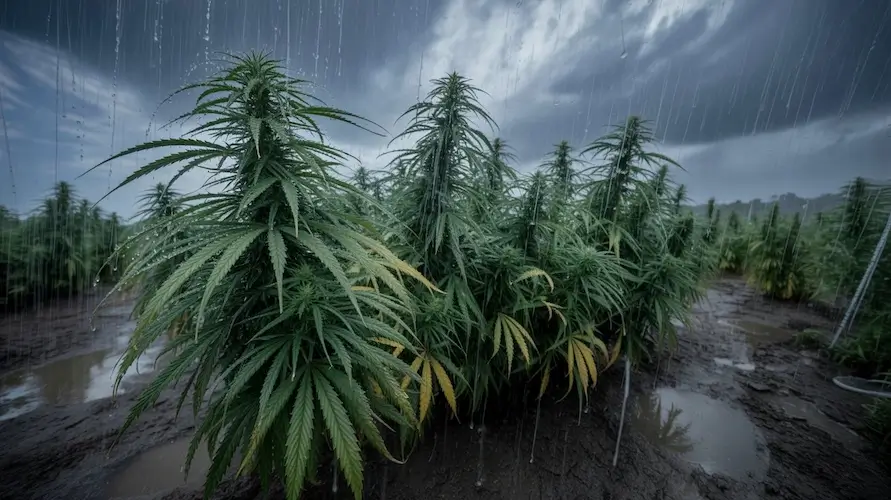
Protecting Cannabis Plants From Heavy Rain
Rain is one of the most common weather challenges for outdoor cannabis growers.
Problems Caused by Excessive Rain
-
Waterlogged soil and root rot
-
Nutrient leaching
-
Increased risk of powdery mildew and bud rot
-
Physical damage to branches and flowers
How To Protect Cannabis From Rain
Improve Drainage
Good drainage is essential. Grow in well-aerated soil, raised beds, or fabric pots to prevent standing water around roots.
Use Temporary Covers
Clear plastic sheeting, hoop houses, or greenhouse panels can shield plants during prolonged rain. Ensure there is adequate airflow to prevent humidity buildup.
Shake Off Excess Water
After rain, gently shake plants to remove pooled water from leaves and buds, especially during flowering.
Prune for Airflow
Strategic pruning and training enhance airflow, allowing plants to dry more quickly after rainfall.
Protecting Cannabis Plants From Wind
Wind can be beneficial in moderation, but strong or sustained winds cause serious problems.
Wind-Related Risks
-
Broken branches
-
Stem damage
-
Excessive transpiration
-
Stunted growth
Wind Protection Strategies
Use Windbreaks
Fences, trellises, hedges, or shade cloth can reduce wind intensity without blocking sunlight.
Stake and Support Plants
Use bamboo stakes, tomato cages, or trellis netting to support branches, especially during flowering.
Train Plants Early
Low-stress training and topping create bushier plants with stronger, more flexible structures that resist wind damage.
Protecting Cannabis Plants From Heat Waves
High temperatures can quickly stress cannabis plants, especially when combined with intense sunlight and low humidity.
Signs of Heat Stress
-
Wilting during the hottest part of the day
-
Leaf curling or tacoing
-
Bleached or burnt leaf tips
-
Slowed growth
Heat Protection Techniques
Provide Shade During Extreme Heat
Shade cloth rated at 30% to 50% can reduce heat stress without sacrificing too much light.
Water Properly
Water early in the morning so plants are hydrated before peak heat. Avoid watering during the hottest part of the day.
Mulch the Soil
Organic mulch helps regulate soil temperature and reduces moisture loss.
Increase Airflow
Good airflow helps plants cool themselves through transpiration.
Protecting Cannabis Plants From Cold Temperatures
Cold weather can slow growth, damage tissues, and disrupt nutrient uptake.
Cold Stress Risks
-
Slowed metabolism
-
Purple stems and leaves
-
Root damage
-
Reduced yield
How To Protect Cannabis From Cold
Monitor Nighttime Temperatures
Cannabis prefers nighttime temperatures above 55 degrees Fahrenheit. Below this range, growth slows significantly.
Use Row Covers or Frost Cloth
Lightweight frost cloth traps heat and protects plants during cold nights.
Move Containers
If growing in pots, move plants indoors or into a sheltered area during cold snaps.
Warm the Root Zone
Mulch and raised beds help insulate roots from cold soil.
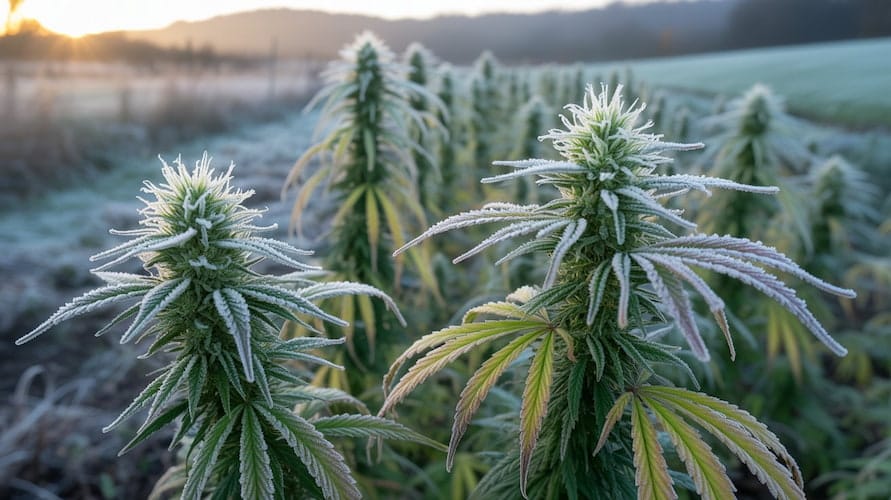
Protecting Cannabis Plants From Frost
Frost is one of the most dangerous weather events for outdoor cannabis, especially late in the season.
Why Frost Is So Dangerous
Frost forms when temperatures drop below freezing, causing ice crystals to form inside plant cells. This damages cell walls and can kill flowers and foliage overnight.
Frost Protection Methods
Cover Plants Overnight
Use frost blankets, sheets, or row covers to trap ground heat.
Harvest Early if Necessary
If frost is imminent late in flowering, harvesting early may preserve quality better than risking total loss.
Choose Cold-Resistant Genetics
Some strains tolerate cooler temperatures better than others, especially indica-dominant varieties.
Protecting Cannabis Plants From Hail and Storms
Hailstorms and severe weather can destroy plants quickly.
Storm Damage Risks
-
Shredded leaves
-
Broken stems
-
Bruised or destroyed buds
Storm Protection Tips
Use Overhead Protection
Greenhouses, hoop houses, or temporary shelters offer the best defense against hail.
Secure Plants
Anchor containers and secure tall plants to prevent tipping during storms.
Inspect and Repair Quickly
After a storm, remove damaged material and support broken branches immediately.
Protecting Cannabis Plants From High Humidity
High humidity often accompanies bad weather and creates ideal conditions for fungal diseases.
Humidity-Related Problems
-
Powdery mildew
-
Botrytis (bud rot)
-
Reduced transpiration
Humidity Control Strategies
Improve Airflow
Space plants properly and prune lower growth to improve circulation.
Avoid Overwatering
Wet soil combined with humid air increases disease risk.
Use Preventive Treatments
Organic fungicides and beneficial microbes can help prevent fungal outbreaks.
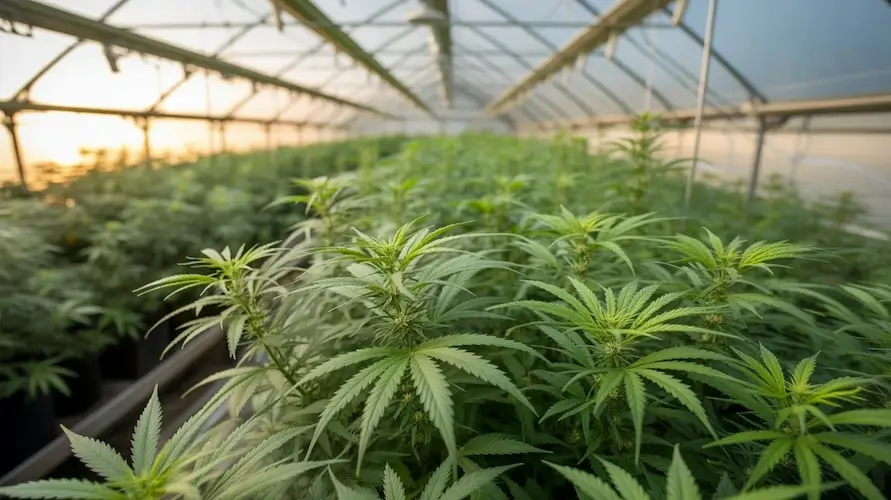
Greenhouses and Hoop Houses for Weather Protection
Greenhouses and hoop houses offer one of the most effective ways to protect cannabis plants from bad weather.
Benefits of Covered Growing
-
Protection from rain, wind, and frost
-
Extended growing season
-
Improved control over humidity and temperature
Important Considerations
-
Ventilation is critical to prevent overheating
-
Monitor humidity closely
-
Secure structures against strong winds
Even simple hoop houses can dramatically reduce weather-related problems.
Container Growing as a Weather Strategy
Growing cannabis in containers offers flexibility during bad weather.
Advantages of Containers
-
Plants can be moved to shelter
-
Better control over soil and drainage
-
Reduced risk from flooding
Container Considerations
-
Containers dry out faster in the heat
-
Roots are more exposed to temperature swings
Using large fabric pots helps balance mobility and root health.
Soil Health and Weather Resilience
Healthy soil improves a plant’s ability to withstand weather stress.
How Soil Helps Buffer Weather
-
Retains moisture during heat
-
Drains excess water during rain
-
Supports strong root systems
Adding compost, organic matter, and beneficial microbes increases soil resilience and plant recovery after stress.
Preventive Planning: The Best Defense Against Bad Weather
Preparation is the most effective way to protect cannabis plants from bad weather.
Planning Tips
-
Choose locations with good sun and airflow
-
Avoid low-lying frost pockets
-
Space plants properly
-
Select strains suited to your climate
Monitoring weather forecasts regularly allows you to act before damage occurs.
Common Mistakes When Protecting Cannabis From Weather
Avoid these common errors:
-
Waiting until damage occurs to act
-
Blocking airflow completely with covers
-
Overwatering before storms
-
Ignoring humidity during flowering
Balanced protection is key.
Emergency Response After Severe Weather
If bad weather strikes despite preparation, quick action helps plants recover.
Post-Storm Steps
-
Remove damaged leaves and branches
-
Improve airflow immediately
-
Check roots for waterlogging
-
Apply gentle nutrients or biostimulants
Cannabis is resilient, and timely care can prevent long-term damage.
Indoor Transition as a Last Resort
In extreme climates, some growers transition outdoor plants indoors late in the season.
Considerations
-
Requires strong lighting
-
Plants may experience stress
-
Must manage pests carefully
This option is best suited for container-grown plants.
Long-Term Strategies for Weather Protection
Over time, growers can reduce weather risk through:
-
Improved infrastructure
-
Climate-appropriate genetics
-
Seasonal planning
-
Soil improvement
Each season offers lessons that help refine future grows.
Final Thoughts on Protecting Cannabis Plants From Bad Weather
Protecting cannabis plants from bad weather is a critical skill for outdoor and greenhouse growers. Rain, wind, heat, cold, and storms all pose real threats, but with preparation, proper tools, and timely intervention, these challenges can be managed effectively.
By understanding how weather affects cannabis at each growth stage and implementing protective strategies early, growers can reduce stress, prevent damage, and preserve both yield and quality. Ultimately, thoughtful planning and adaptability are the most effective tools for maintaining the health, productivity, and resilience of cannabis plants in the face of unpredictable weather conditions.
FAQs: Protecting Cannabis Plants From Bad Weather
What weather is most harmful to cannabis plants?
The most damaging weather conditions for cannabis include heavy rain, high humidity, strong winds, heat waves, frost, and hail. Flowering plants are especially vulnerable to prolonged moisture and cold temperatures, which can cause mold and bud rot.
How much rain is too much for outdoor cannabis?
Occasional rain is fine, but prolonged or repeated rainfall can waterlog soil, wash away nutrients, and increase the risk of fungal diseases. Poor drainage combined with multiple days of rain is especially dangerous for cannabis plants.
Can cannabis plants recover from storm damage?
Yes, cannabis plants are resilient. If damage is addressed quickly—by supporting broken branches, improving airflow, and removing damaged material—plants often recover well. Severe damage late in flowering may still reduce yield or quality.
How do I protect cannabis plants from frost?
To protect cannabis from frost, cover plants overnight with frost cloth, sheets, or row covers, move container plants indoors if possible, and harvest early if a hard frost is unavoidable. Frost can destroy flowers in a single night.
Is it better to grow cannabis in containers or in the ground for bad weather?
Container growing offers more flexibility because plants can be moved during extreme weather. In-ground plants often grow larger but are harder to protect from flooding, frost, or sudden storms.
How do I prevent mold during rainy or humid weather?
Prevent mold by improving airflow, pruning dense foliage, avoiding overwatering, using raised beds or well-draining soil, and protecting flowering plants from prolonged rain. Monitoring humidity during late flower is critical.
Do greenhouses help protect cannabis from bad weather?
Yes, greenhouses and hoop houses are among the most effective tools for protecting cannabis plants from rain, wind, frost, and temperature swings. Proper ventilation is essential to prevent overheating and humidity buildup.
Can heat waves ruin a cannabis crop?
Extreme heat can stress cannabis plants, slow growth, reduce terpene production, and cause leaf damage. Providing shade, mulch, proper watering, and airflow helps plants survive heat waves with minimal impact.
What is the best temperature range for outdoor cannabis?
Cannabis grows best with daytime temperatures between 70 and 85 degrees Fahrenheit and nighttime temperatures above 55 degrees. Temperatures outside this range increase stress and slow growth.
Should I harvest cannabis early because of bad weather?
If severe weather such as frost, hail, or extended rain threatens mature plants, harvesting early may preserve more quality than risking total crop loss. This decision depends on plant maturity and forecast severity.
Suggested Articles
 13 Mar 2026
  13 min read
;)
;)
;)
 January 09, 2026


RESPONSES (0)
No responses yet. Be the first to respond!