


Jet Fuel Strain Review: Effects, Grow Tips & Where to Buy Seeds [2026]

About the Jet Fuel Strain
Jet Fuel Strain Profile
| Genetics | Aspen OG × High Country Diesel |
| Type | Sativa-dominant hybrid (70% sativa/30% indica) |
| THC Content | 20% to 25% (average: 22%) |
| CBD Content | Less than 1% |
| Breeder | 303 Seeds |
| Aroma | Diesel, pine, skunk, sweet |
| Flowering Time | 9 to 10 weeks |
| Yield | High (14 ounces outdoor, 10 to 12 ounces indoor) |
| Difficulty | Moderate to advanced |

Origins and Genetics
Jet Fuel is the result of crossing Aspen OG with High Country Diesel.
The resulting hybrid maintains strong genetic ties to legendary strains such as SFV OG Kush and East Coast Sour Diesel, ensuring a premium cannabis experience.
Appearance and Aroma
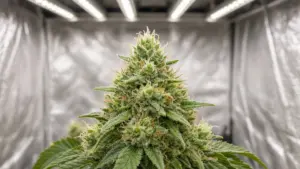
Jet Fuel weed features dense, light green buds with a generous coating of trichomes, giving them a frosty, crystalline appearance. The heart-shaped nugs are adorned with furry amber pistils throughout, creating an attractive visual profile that immediately signals premium quality.
Distinctive Aroma Profile
The Jet Fuel strain earned its name from its incredibly distinctive aroma profile.
- Diesel fuel (dominant): Sharp, pungent gasoline scent
- Pine: Fresh, forest-like undertones
- Skunk: Classic cannabis funk
- Sweet: Subtle candy-like notes
The aroma is both skunky and sweet, making it a standout strain in any cannabis garden.
Growing the Jet Fuel Strain
For cultivators, Jet Fuel presents a moderately challenging but rewarding growing experience. This strain requires a controlled environment to thrive, especially regarding humidity and temperature management.
Growing Characteristics
- Indoor height: 4 to 6 feet
- Outdoor height: 8 to 10 feet
- Flowering period: 9 to 10 weeks
- Yield potential: High production strain
- Climate preference: Controlled indoor environments
| Growth Factor | Indoor Conditions | Outdoor Conditions |
|---|---|---|
| Temperature | 68°F to 80°F (20°C to 27°C) | Warm, Mediterranean climate |
| Humidity | 40% to 50% during flowering | Low humidity preferred |
| Light Cycle | 18/6 vegetative, 12/12 flowering | Full sun exposure |
| Soil Type | Well-draining, nutrient-rich | Organic compost, balanced NPK |
| pH Level | 6.0 to 6.5 | 6.0 to 6.5 |
| Expected Yield | 10 to 12 ounces per plant | 14+ ounces per plant |
Cultivation Tips
Vegetative Stage: Provide strong structural support as plants grow tall. Regular pruning and training techniques such as LST (Low Stress Training) and SCROG (Screen of Green) are recommended. Monitor humidity carefully to prevent mold development.
Flowering Stage: Maintain optimal temperature and humidity levels consistently. Flush nutrients 1 to 2 weeks before harvest.
Customer Reviews
Real customer testimonials provide valuable insight into the Jet Fuel experience:
“Jet Fuel has been a game-changer for my daytime productivity.
The buds were dense and frosty, just as described.
“Growing Jet Fuel was challenging but totally worth it. The yield was impressive—over 12 ounces per plant indoors.
“This strain lives up to its name. Absolutely love the diesel aroma.”
Strain Comparisons
Jet Fuel vs. Similar Strains
Jet Fuel vs.
Jet Fuel vs.
Jet Fuel vs.
Purchase Jet Fuel Seeds
If you’re looking to experience this exceptional strain, Jet Fuel seeds and clones are available through reputable sources. Before ordering, read customer reviews to ensure you choose a trusted source for authentic genetics.
Recommended Seed Banks
- Established seed banks: Look for customer reviews and lab testing
Always verify the legitimacy of sellers and ensure you’re purchasing from sources that provide authentic genetics and proper storage conditions.

Usage Guidelines and Safety
- Moderate users: 2 to 4 puffs or 0.25 to 0.5 grams
- Experienced users: 0.5 to 1 gram or more as needed
Best Use Times
- Morning: Perfect wake-and-bake strain for starting the day
- Early evening: Great for social gatherings and activities
Pros
- Sustained energy without crash
- High yields for cultivators
- Distinctive, memorable aroma
Cons
- Challenging cultivation requirements
- Strong aroma lacks discretion
Comparing Jet Fuel With Related Lines
Before you choose a Jet Fuel pack, check the lineage printed by the breeder, because different releases of the same name can be built from different parents. Knowing the parents helps you predict structure, aroma and flowering behaviour, and it makes it easier to compare Jet Fuel with its relatives.
Breeders often work from different cuts or selections of the same parent, so read each label and note the exact cross as printed.
Reading a Jet Fuel Seed Pack Label
A breeder label usually shows the strain name, the breeder, the seed type and the seed count. Feminized packs are labelled as such, regular packs contain a natural mix of male and female seeds, and autoflower packs are marked “auto”. Many breeders also print the cross, for example “Parent A x Parent B”, plus a filial marker such as F1, F2, S1 or BX.
F1 means a first-generation cross of two distinct parents, S1 means seeds made from a single parent, and BX means a cross back to one of the original parents. When you compare Jet Fuel packs, these markers tell you how close each release is to the original line.
Feminized, Regular or Auto: Choosing a Jet Fuel Pack
Feminized seeds are bred to produce female plants, which keeps things simple when space is limited. Regular seeds produce males and females and remain the choice for anyone who wants to make their own crosses or keep a line going from seed. Autoflower versions flower on their own timeline regardless of light hours, which suits short outdoor seasons and quick indoor runs.
Match the seed type to your space, your season and how much time you have, then check the breeder’s notes on flowering time and plant size before you choose a Jet Fuel pack.
How to Spot a Genuine Jet Fuel Pack
Popular names get copied, and two packs called Jet Fuel can come from completely different parents. Genuine breeder packs have consistent printing, a clear breeder name or logo and a sealed closure, and many carry a batch code or security sticker. Blurry artwork, misspelled names or loose seeds in a plain bag are warning signs.
The simplest protection is buying sealed packs from a seed bank that names the breeder on every listing, like the ones linked above.
Storing Jet Fuel Seeds Until You Plant
Seeds stay viable longest when they are kept cool, dark and dry. Leave Jet Fuel seeds in their sealed pack, place the pack in an airtight container with a food-safe desiccant packet, and store it somewhere with a steady temperature, such as a refrigerator shelf that is not opened constantly.
Label the container with the strain, breeder and the date you bought it. When you are ready to plant, let the container warm to room temperature before opening it so moisture does not condense on the seeds.

Comparing Jet Fuel Releases From Different Breeders
When more than one breeder offers Jet Fuel, compare the published cross, the filial marker, the seed type and the breeder’s notes on structure and flowering time. One breeder may work from an original cut while another builds a new cross that shares only part of the family tree.
Reading those details side by side helps you pick the release that best fits your space and goals instead of choosing on the name alone.
Germinating Jet Fuel Seeds: A Simple Method
Most growers start Jet Fuel seeds with the paper towel method. Place the seeds between two damp (not dripping) paper towels, set them on a plate under an upturned bowl, and keep them somewhere warm, around 70°F to 80°F. Check once a day and keep the towels moist.
Once a taproot appears, plant the seed about a quarter to half an inch deep in a light, airy starter medium with the root pointing down, and handle it as little as possible. Give the seedling gentle light as soon as it breaks the surface so it does not stretch.
Planning a Jet Fuel Grow
Before you start, check the breeder’s notes for the version of Jet Fuel you bought: seed type, expected flowering time and how large the plant tends to get. A feminized photoperiod plant flowers when you switch to 12 hours of darkness, while an autoflower follows its own timeline.
Match those details to your space, your light and your season. Keep a simple journal with the start date, medium, feeding and photos, so you can repeat what works the next time you run Jet Fuel.
Indoor or Outdoor: Where Jet Fuel Fits
Indoors you control light, temperature and humidity, which makes it easier to keep dense flowers clean and to time the harvest. Outdoors you trade that control for free sunlight and bigger plants, but you need a season long enough for the variety to finish before cold, wet weather arrives.
Check the breeder’s flowering time for Jet Fuel seeds against your first expected autumn rain or frost. If the numbers are tight, an indoor run, a greenhouse or an autoflower version is usually the safer choice.
Seedling Care for Jet Fuel: The First Three Weeks
Seedlings need gentle light, mild warmth and a medium that is moist but never soggy. Water in small amounts around the stem, let the top of the medium dry slightly between waterings and keep a light breeze moving so stems thicken.
Hold off on strong nutrients until the plant has several sets of true leaves; most starter mixes carry enough food for the first couple of weeks. Pale, stretched seedlings usually want more light or a closer lamp, while drooping, dark leaves often mean too much water.
Feeding and Watering Jet Fuel Plants
Start feeding at a quarter to half of the label strength and increase slowly while watching the leaf tips. Burnt, crispy tips point to too much food; yellowing lower leaves in vegetative growth often point to too little nitrogen.
Water when the pot feels noticeably lighter rather than on a fixed schedule, and make sure excess water drains away. Consistent pH, roughly 6.0 to 7.0 in soil and 5.5 to 6.5 in hydro or coco, keeps nutrients available to the roots.

Training Options for Jet Fuel Plants
Low-stress training (bending and tying branches outward) and topping (removing the main tip so two colas form) both create a flatter, more even canopy. An even canopy shares light more fairly and usually improves the size of lower flowers.
Train during vegetative growth and stop major changes a week or so into flowering. Autoflowers have a short vegetative window, so stick to gentle bending rather than topping if you are unsure.
Knowing When Jet Fuel Is Ready to Harvest
The breeder’s flowering time is a starting estimate, not a deadline. Look at the trichomes with a jeweller’s loupe or a clip-on phone lens: clear heads mean the plant needs more time, cloudy heads mean it is close, and a share of amber heads shows it is fully mature.
Pistils darkening and curling in is another sign. Check several flowers from the top and the middle of the plant, because the top colas often mature a few days earlier.
Final Verdict
Jet Fuel stands out as one of the premier sativa-dominant hybrids available in 2025.
Our Rating: 9.2/10
Shop Premium Cannabis Seeds
Ready to experience the legendary Jet Fuel strain? Explore our comprehensive selection of premium cannabis genetics:
- Regular Cannabis Seeds – Traditional breeding options
- Feminized Seeds – Guaranteed female plants
- Autoflower Seeds – Easy-growing automatic varieties
Frequently Asked Questions About the Jet Fuel Strain
Jet Fuel Strain Review: Conclusion
For more information on growing techniques and to explore other exceptional strains, check out the extensive catalog at Seeds Here Now.
Now that you understand everything about the Jet Fuel strain, explore our complete collection of regular, feminized, and autoflower cannabis seeds at Seeds Here Now.
Disclaimer: This content is for educational purposes only.
Related strain reviews: Jet Fuel Runtz, Jet Fuel Gelato, Tractor Fuel
Suggested Articles

 09 Nov 2026
 7 min read
;)
;)
;)
 July 13, 2023


RESPONSES (0)
No responses yet. Be the first to respond!