


Fusarium Wilt in Cannabis: Signs and Prevention
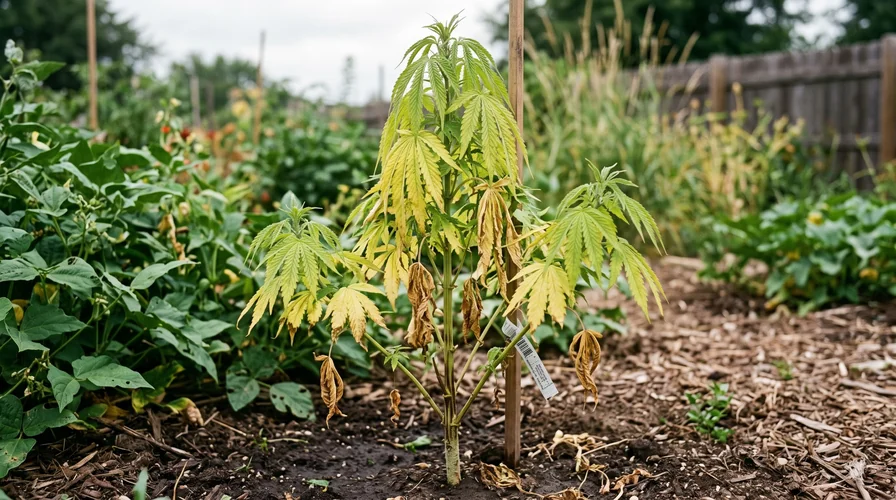
Here is a question worth sitting with before you ever reach for a spray bottle: What if the plant collapsing in front of you does not have a leaf problem, a nutrient problem, or a watering problem at all, but a plumbing problem? That reframe is the whole game with Fusarium wilt. The disease does not chew leaves or coat buds. It climbs the vascular system from the roots up and quietly clogs the pipes that carry water to the canopy, so the plant dies of thirst standing in wet soil. Understanding fusarium wilt cannabis growers keep misdiagnosing means learning to think like a plumber instead of a medic, and it starts with recognizing that the visible symptoms are the last chapter of a story that began weeks earlier in the root zone.
I have watched a healthy-looking plant go from proud to pitiful in a single afternoon, and the first three times it happened, I blamed everything except the culprit. This guide is the one I wish I had then: what Fusarium actually is, how to tell it apart from the half-dozen conditions it impersonates, why there is no rescue once it is systemic, and how to build a root zone the fungus never gains a foothold in.
A Disease of the Plumbing, Not the Leaves
Fusarium wilt in cannabis is caused by soil-dwelling fungi in the Fusarium genus, most often Fusarium oxysporum and Fusarium solani. These are not surface pests you can wipe off. They live in the growing medium as tough, long-lived spores, and they wait. When a root tip pushes past a spore, or when a bit of root damage opens a wound, the fungus enters and begins traveling upward inside the xylem, the tissue that moves water from roots to leaves. Wilting and mottled leaves can also point to a virus, so compare these signs with our TMV symptoms and control guide.
As the fungus colonizes those water-conducting vessels, two things happen at once. The plant’s own defensive response plugs the vessels with gums and gels, trying to wall off the invader, and the fungal growth physically blocks them too. The result is the same either way: water can no longer move freely up the stem. The canopy transpires moisture into the air faster than the clogged plumbing can replace it, and the plant wilts even though the medium is soaked. That single detail — wilting in wet soil — is the signature of a vascular disease and the clearest line between Fusarium and the ordinary problems it gets confused with.
Why Warmth and Stress Set the Trap
Fusarium is opportunistic, and it exploits conditions the grower controls. Warm root zones are its favorite. The fungi become aggressive when medium temperatures climb above roughly 80°F, which is exactly what happens to black pots sitting in direct light or reservoirs running warm in a hot room. Root damage is the second invitation: transplant shock, root-bound pots, physical breakage, and the tunneling of root aphids or fungus gnat larvae all create the wounds Fusarium slips through. Drought stress, followed by heavy watering swings, weakens roots further. None of these single-handedly causes the disease, but together they turn a dormant spore load into an active infection.
The Symptoms and Their Master of Disguise
The frustrating part of Fusarium wilt is that its early signs look like almost anything else. Learning the pattern, not any single symptom, is what lets you catch it.
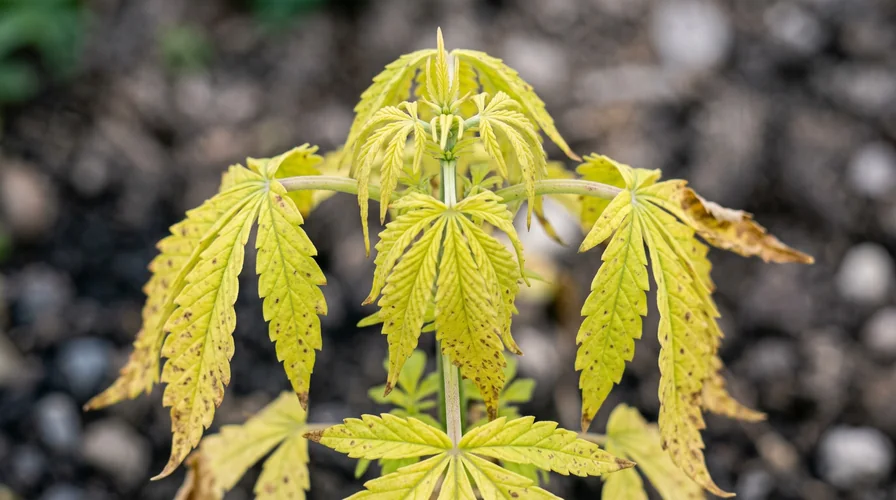
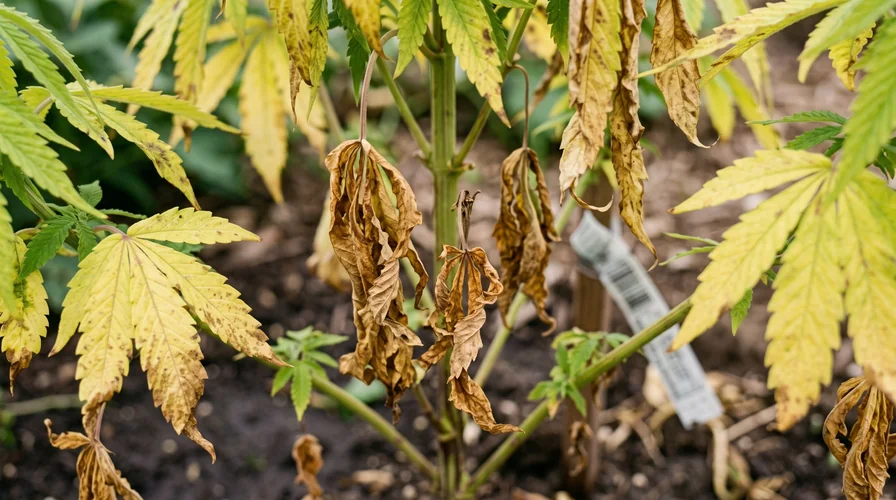
The classic progression starts with wilting that recovers overnight and then stops recovering. In the first days, leaves droop during the brightest, warmest hours and perk back up in the dark period, which fools growers into thinking the plant simply got thirsty. Within a week, the wilt becomes permanent. Yellowing often climbs from the bottom of the plant upward, and it frequently shows up on one side of the plant or even one side of a single leaf before the other, a lopsided pattern that healthy nutrient cycling almost never produces. Growth stalls, the lower leaves crisp and drop, and in a bad case, the whole plant can collapse in a day.
The one test that cuts through the confusion is internal. If you slice a suspect stem lengthwise near the base, Fusarium leaves a telltale brown or reddish-brown streaking inside the vascular ring, discoloration running up the channels that should be pale and healthy. That internal browning is your confirmation. Nothing about a feeding mistake stains the inside of the stem.
What Fusarium Pretends To Be
Before you commit to treating Fusarium, rule out its impersonators, because the response for each is completely different:
- Nitrogen deficiency: also yellows lower leaves, but it does so evenly across the plant and both sides of each leaf, and it corrects when you feed. Fusarium yellowing is lopsided and does not respond to nitrogen.
- Overwatering and root rot (Pythium): both produce droopy, sad plants in a wet medium. Pythium turns roots brown and mushy with a rotten smell, while Fusarium roots may look closer to normal on the outside, even as the stem browns internally. The stem cross-section is the decider.
- Heat stress: causes canopy-wide wilting and leaf taco-ing that recovers fully once the room cools. Fusarium wilt does not bounce back when you fix the temperature.
- Verticillium wilt: a genuinely similar vascular disease with overlapping symptoms. It prefers cooler soil than Fusarium, and the two are hard to separate by eye, but the prevention strategy is nearly identical, so the practical stakes of telling them apart are low.
The Hard Truth: There Is No Cure for an Infected Plant
This is the part nobody wants to read. Once Fusarium is systemic inside a plant’s vascular system, there is no fungicide, drench, or home remedy that will clear it and restore the plumbing. The vessels are already blocked, and the plant cannot unclog them. Products marketed as Fusarium cures for an actively wilting plant are selling false hope, and the time spent testing them is time the fungus uses to shed fresh spores into your medium and reach neighboring roots.
So the honest goal shifts from cure to containment. The moment you confirm Fusarium — lopsided yellowing, permanent wilt in moist medium, brown streaking in the stem — the correct response is to remove that plant from the grow entirely, pot and all, without shaking soil loose over your other containers. Bag it, take it out, and do not compost it; those spores survive composting and come back to haunt the next cycle. Cutting your losses early is not giving up. It is the single most effective thing you can do to protect the plants that are still clean.
Handling the Aftermath
After you pull an infected plant, treat everything it touched as contaminated. Sterilize pruners, scissors, and stakes with a 10% bleach solution or 70% isopropyl alcohol before they go near a healthy plant. Wash your hands. If the plant was in soil, discard that medium rather than reusing it. In a shared reservoir hydroponic system, an infected plant means the whole reservoir is suspect, and you will need to dump it, sterilize the lines and pump, and start fresh. The fungus spreads through water, tools, hands, and moving soil, so breaking every one of those pathways is how you keep an isolated case from becoming an outbreak.
Prevention Is the Only Real Treatment
Because you cannot cure it, every meaningful strategy against Fusarium happens before symptoms appear. The good news is that the same practices that block Fusarium also crowd out most other root-zone diseases, so this is high-leverage work. Think of prevention in three layers: keep the fungus out, keep the roots strong, and keep the root zone hostile to the pathogen.
Keep the Spores Out
Fusarium has to get into your space before it can infect anything. Start every cycle with fresh, sterile growing medium rather than reusing old soil that may carry a spore load from a previous problem. Buy clones and seedlings from clean sources and quarantine incoming plants for a week or two before introducing them to your main space. Sanitize pots, trays, and tools between runs, and do not let untreated outdoor soil, garden runoff, or dirty footwear track spores into the grow. Water quality matters too, since Fusarium travels in water; clean reservoirs and clean lines are part of the barrier.
Keep the Roots Strong and Unwounded
A vigorous, undamaged root system is far harder to infect. Transplant gently and at the right time so roots are not left circling in a too-small pot, which stresses them and invites wounds. Avoid the drought-then-flood watering swings that shock roots; aim for a steady wet-to-dry cycle that lets the medium breathe between waterings. Control root-zone pests aggressively, because root aphids and fungus gnat larvae open the exact wounds Fusarium exploits — the linked problems compound each other. Do not overfeed, since salt buildup burns root tips and creates entry points.
Make the Root Zone Hostile to Fusarium
You can stack the odds against the fungus even where a few spores exist. The most reliable lever is temperature: keep medium and reservoir temperatures in the 65 to 75°F range and out of the 80°F-plus zone where Fusarium turns aggressive. Shade pots from direct light, insulate reservoirs, and do not let a hot room cook the root ball. Beneficial microbes are the second lever. Inoculating the medium with Trichoderma fungi and mycorrhizae builds a living defense that competes with Fusarium for space and root real estate, and many growers who have fought the disease treat these inoculants as standard practice rather than an add-on. Well-draining, aerated media discourage the saturated, low-oxygen conditions the pathogen prefers, and a stable, slightly acidic root-zone pH keeps that beneficial community thriving.
Genetics: The Choice You Make Before Planting
Not every plant is equally vulnerable, and some of your resistance is determined the day you pick your seeds. Vigorous, healthy genetics with strong root systems shrug off pressure that overwhelms a weak, stressed plant. While marketing rarely promises Fusarium resistance outright for cannabis, the way it does for tomatoes, choosing robust, reputable genetics and starting them in ideal conditions gives you a plant that is simply harder to knock down. Starting with quality seeds from a trusted source is a prevention step, not just a quality-of-harvest step, because a strong start is the foundation everything else in this article is meant to protect.
Frequently Asked Questions
Can Fusarium Wilt Be Cured Once a Plant Shows Symptoms?
No. Once the fungus is inside the plant’s vascular system and the plumbing is blocked, no fungicide or drench can reverse it. The right move is to remove and bag the infected plant to protect the rest of your grow, then focus on prevention for the next cycle.
How Do I Tell Fusarium Wilt Apart From Overwatering?
Both leave plants droopy in a wet medium, so look inside the stem. Slice it lengthwise near the base: Fusarium leaves brown or reddish streaking in the vascular tissue. Overwatering and root rot instead produce brown, mushy, foul-smelling roots without that internal stem staining.
What Temperature Does Fusarium Prefer?
It becomes aggressive when the root zone climbs above roughly 80°F. Keeping medium and reservoir temperatures in the 65 to 75°F range is one of the most effective ways to keep spores dormant instead of active.
Does Fusarium Survive in Soil After I Remove the Plant?
Yes, and this is why it is so persistent. Fusarium forms durable spores that live in soil and debris for years and survive composting. Discard infected medium, never reuse it, and never compost infected plant material.
Can Beneficial Microbes Really Prevent Fusarium?
Trichoderma and mycorrhizae do not cure an infected plant, but as a preventive, they colonize the root zone and compete with Fusarium for space and resources, making it harder for the pathogen to establish. Many growers who have dealt with the disease consider these inoculants standard practice.
Is Fusarium Wilt the Same as Bud Rot?
No. Bud rot is Botrytis, a different fungus that attacks flowers from the inside during late bloom and is driven by humidity and poor airflow in the canopy. Fusarium is a soil-borne vascular disease that starts in the roots. They are separate problems with separate prevention strategies.
Protect the Root Zone and the Rest Takes Care of Itself
Fusarium wilt rewards the grower who thinks upstream. There is no bottle that saves an infected plant, so the whole battle is won or lost before the first leaf droops, in the choices you make about clean media, steady watering, cool roots, and a living microbial defense. Confirm it by the lopsided wilt and the browning inside the stem, pull and bag anything that has it, and pour your energy into a root zone the fungus cannot get comfortable in. Do that, and Fusarium becomes a disease you read about rather than one you fight. Ready to start your next cycle on the strongest possible footing? Explore quality genetics from a source that stands behind them at Seeds Here Now and give your grow the healthy start that prevention depends on.
Suggested Articles
 10 Nov 2026
 12 min read

;)
;)
;)
 September 23, 2026


RESPONSES (0)
No responses yet. Be the first to respond!