


Tobacco Mosaic Virus (TMV) in Cannabis: Symptoms and Control
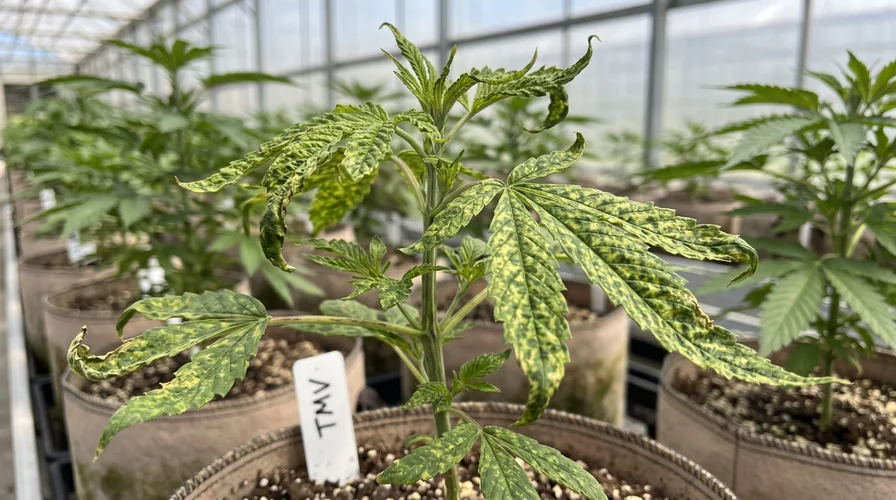
Have you ever leaned in close to a plant, seen a strange patchwork of light and dark green spreading across the leaves, and felt that small drop in your stomach that says something is wrong, but you cannot name it? That mottled, mosaic-like pattern is the single most common reason growers start typing the letters T, M, and V into a search bar. Tobacco mosaic virus has a fearsome reputation, and the mystery around whether it truly infects cannabis only makes people more anxious. I have chased this exact question through my own garden more than once, and what I learned is that the smartest response to suspected TMV is not panic, and it is not a miracle spray. It is careful looking, honest identification, and a containment plan you can actually stick to.
This guide walks through what growers really mean when they talk about TMV cannabis symptoms, how to tell a genuine viral pattern from the many things that imitate it, how the virus spreads from plant to plant, and what you can and cannot do once it shows up. There is no tidy cure at the end, and I would rather tell you that upfront than sell you false hope. What there is instead is a set of habits that keep a suspected infection from becoming a garden-wide disaster.
Table of Contents
What Growers Mean When They Say TMV
Tobacco mosaic virus is one of the most studied plant viruses in the world. It earned its name in tobacco, where it produces the classic mottled, mosaic discoloration that gave the whole family of tobamoviruses their label. It is famous among plant scientists for being remarkably tough: it can stay infectious on surfaces, on dried plant material, and even in some processed tobacco products for a long time, which is a big part of why it spreads so easily by touch.
Here is the honest complication. Whether classic TMV reliably infects and reproduces in cannabis is a genuinely debated question, and the reports are not as clear-cut as forum threads make them sound. What is not debated is that cannabis plants can and do show mosaic-style symptoms, and that related tobamoviruses and other pathogens can produce leaf patterns that look the part. Because the visible symptoms overlap so heavily, most growers use “TMV” as shorthand for that mosaic-mottle appearance rather than a confirmed lab diagnosis. I will use the term the same way here, while being clear that a leaf pattern alone is a clue, not a verdict.
Why does this distinction matter to you at the plant level? Because it changes your goal. You are not trying to identify a virus down to its genome in your grow tent. You are trying to answer three practical questions: is this pattern likely infectious, is it spreading, and what should I do to protect the rest of the garden? Those questions have useful answers even when the precise pathogen does not.
Reading the Leaf: Mosaic Patterns and Their Look-Alikes
The reason suspected TMV trips up so many growers is that its calling card, the mosaic, is one of the least specific symptoms a plant can show. Learning to read it carefully is the difference between a measured response and a needless cull.
Mottling Versus True Mosaic
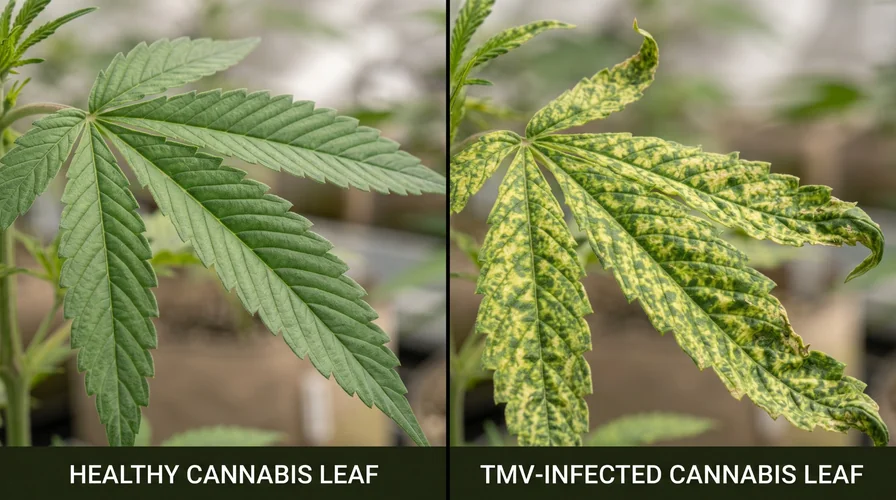
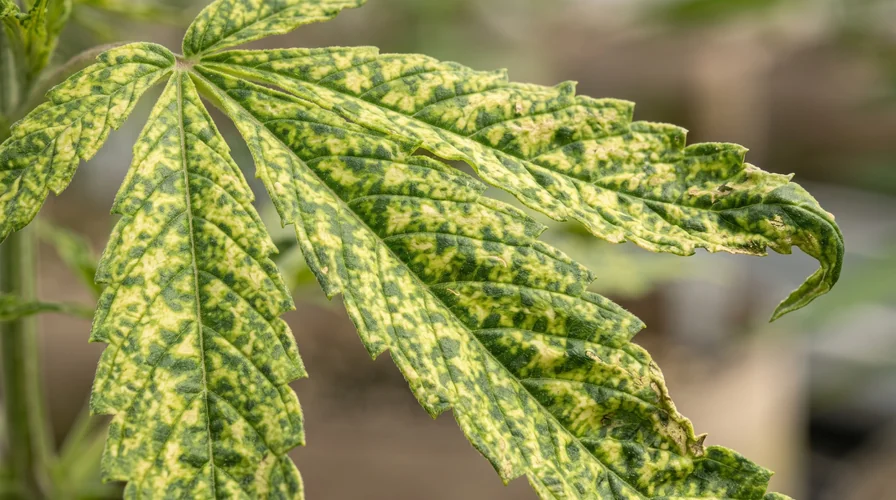
A true mosaic is an irregular, patchy mix of lighter and darker green zones that do not respect the veins. The boundaries look blotchy and random, almost like camouflage, and the pattern often repeats on new growth as it comes in. You may also see puckering, wrinkling, or a slightly rough, uneven leaf surface, and in some cases twisted or strap-like new leaves. Growth can slow, internodes can shorten, and flowers may come in smaller or oddly shaped. None of these signs on its own proves a virus, but the combination of a random light-dark mosaic plus distorted new growth is the pattern that most often points toward a viral cause rather than something environmental.
The Impostors: Deficiencies, Heat, and Genetics
Before you decide a plant is infected, rule out the far more common culprits. A magnesium deficiency creates interveinal yellowing that can look mottled, but it typically follows a more even, vein-framed pattern and shows up first on older, lower leaves. Nutrient lockout from a pH that has drifted out of the 6.0 to 7.0 range in soil, or the 5.5 to 6.5 range in hydroponics, can mimic patchy discoloration across several leaves at once. Heat stress and intense light can bleach and mottle the upper foliage nearest the lamp. Even harmless genetic variegation shows up in some cultivars as stable, symmetrical light-and-dark zones that never worsen and never spread.
The tests that separate these from a virus are simple. Environmental problems usually appear in a pattern tied to a cause: the hottest spot under the light, the driest or most overfed plants, the older leaves that store mobile nutrients. A virus tends to ignore that logic, showing up on new growth, distorting leaf shape, and refusing to respond when you correct pH, feeding, and temperature. If you fix the obvious inputs and the mosaic keeps marching into fresh leaves, you have moved from “probably a deficiency” to “possibly infectious,” and your behavior around that plant should change accordingly.
How the Virus Moves From Plant to Plant
Tobamoviruses are spread mainly by mechanical transmission, and that phrase is worth unpacking because it explains almost every prevention step that follows. Mechanical transmission means the virus does not need an insect vector to travel; it moves when infected sap physically contacts a wound or a fresh cut on a healthy plant. That contact happens through the most ordinary garden activities you can imagine.
- Hands and clothing: Handling a symptomatic plant and then touching a healthy one can carry sap on your fingers, gloves, or sleeves.
- Tools: Scissors, snips, and blades used to top, prune, or take clones move sap directly into open cuts, which is one of the highest-risk moments in the whole grow.
- Tobacco products: Because these viruses are notoriously stable in cured tobacco, smoking or handling tobacco and then touching plants is a classic and preventable transmission route.
- Cloning and grafting: Taking cuttings from an infected mother copies the problem into every clone, and those clones can look healthy for a while before symptoms surface.
- Contaminated surfaces: Trays, pots, and bench tops that held infected material can pass the virus to the next plant that gets a fresh wound nearby.
Notice what is missing from that list: wind, casual air movement, and, for the most part, simply being in the same room. Tobamoviruses are not airborne pathogens the way powdery mildew spores are. They need a physical bridge of sap into a wound. That is genuinely good news, because it means transmission is something you control with your own habits rather than something you are helpless against.
There Is No Cure, So the Plan Is Containment
I want to be as direct as the science allows: there is no spray, systemic treatment, or product that cures a plant of a virus once it is infected. Antifungals do nothing to a virus. Neem, soaps, and pesticides target pests, not viral particles inside plant cells. Anyone selling you a “virus cure” for your plants is selling you a story. A plant that is truly infected stays infected for its whole life.
What you can do is manage the outcome. A mildly affected plant late in flower may still finish an acceptable harvest, because the virus reduces vigor and yield rather than producing anything unsafe in the way a bud mold does. A heavily distorted plant early in its life is usually not worth the space, the risk, and the chance it becomes a reservoir that infects everything you touch afterward. Containment, in other words, is the entire game: keep the suspected virus from reaching healthy plants, and make a clear-eyed decision about whether each affected plant earns its keep.
Sanitation Habits That Break Transmission
Because these viruses travel by sap and touch, your sanitation routine is your real line of defense. None of this is exotic. It is the same discipline a careful grower uses to keep any pathogen in check, applied with a little extra respect for how stable and touch-borne this one is.
- Isolate first, diagnose second. The moment a plant looks suspicious, move it away from the others or handle it last in your workflow so you are never carrying sap from a sick plant to a healthy one.
- Sterilize cutting tools between plants. Wipe or dip blades in a disinfecting solution as you move from plant to plant, and be especially rigorous during topping and cloning, when you are creating fresh wounds. A 10% bleach solution or a dedicated tool sanitizer works; let tools sit wet for a minute rather than a quick swipe.
- Wash hands and change gloves. Treat your hands like tools. Wash thoroughly, or swap gloves, after handling a suspect plant and before touching anything healthy.
- Keep tobacco out of the grow. Do not smoke around plants, and wash up before working if you have handled tobacco. This single habit closes one of the oldest transmission doors there is.
- Clean surfaces and reused containers. Disinfect trays, pots, and bench tops before reusing them, since the virus can persist on hard surfaces far longer than most pathogens.
- Do not clone from anything questionable. A mother plant with unexplained mosaic is not a candidate for cuttings, full stop. You would only be mass-producing the problem.
When To Cull and When To Watch
Deciding the fate of a suspected plant is where growers freeze, so give yourself a simple framework. If a plant shows a mild, stable mottle, is well into flower, and is physically isolated from the rest of your garden, watching it to harvest while handling it last is a reasonable call. The downside is limited, and the upside is a finished harvest.
If a plant is young, badly distorted, stalled in growth, and sitting in a dense canopy where you are constantly brushing against neighbors and reaching past it with tools, the math flips. That plant is both a poor producer and a rolling transmission risk, and removing it protects the 5, 10, or 20 healthy plants around it. When you do remove one, bag it before you carry it out so you are not shedding sap across the room on the way to the door, then sanitize everything the plant contacted. Culling one plant to save a whole garden is not defeat; it is the most experienced move in the book.
Start With Clean Genetics, and You Skip the Whole Fight
The most reliable way to deal with viral trouble is to keep it out of the garden in the first place, and that begins with where your plants come from. Clones are the classic entry point, because a cutting from an infected or unknown mother can carry a virus into a spotless room while looking perfectly healthy for weeks. Every clone you accept from a friend, a dispensary shelf, or a swap is a genetic unknown you are trusting on faith.
Growing from seed sidesteps a large part of that risk. Starting fresh each cycle from quality seed means you are not inheriting a mother plant’s hidden history, and it lets you build a garden whose health you actually understand from day one. Pair clean genetics with the sanitation habits above, quarantine anything new before it joins your main space, and keep tobacco far from your plants, and the odds of ever facing a real outbreak drop dramatically. Prevention here is not glamorous, but it is the only approach that works reliably, because the cure simply does not exist.
Frequently Asked Questions
Can cannabis actually get tobacco mosaic virus?
It is debated. Cannabis clearly shows mosaic and mottle symptoms, and related tobamoviruses and other pathogens can produce that appearance, but whether classic TMV reliably reproduces in cannabis is not settled science. For practical purposes, treat a persistent, spreading mosaic on distorted new growth as a possible infectious virus and manage it with containment, regardless of the exact name.
Is a plant with suspected TMV safe to smoke?
A plant virus is not the same category of problem as bud rot or mold. The main effect of a viral infection is reduced vigor, yield, and quality rather than a moldy, contaminated flower. Many growers finish a mildly affected plant late in flower. Use your own judgment on quality, but the concern with a virus is your garden’s health, not toxicity in the way rot is.
How can I tell it apart from a magnesium deficiency?
A magnesium deficiency usually starts on older, lower leaves with fairly even interveinal yellowing, and it improves once you correct the pH and feeding. A virus tends to hit new growth, distort leaf shape, and ignore your corrections. If you fix pH into the 6.0 to 7.0 range in soil and the mottling keeps advancing into fresh leaves, you are likely looking at something more than a deficiency.
Will neem oil or a fungicide fix it?
No. Neem targets pests, and fungicides target fungi; neither touches a virus living inside plant cells. There is no product that cures a plant of a virus. Those tools are worth keeping for the pests and molds they are made for, but not for this.
Can the virus survive in my grow room after I remove the plant?
Yes, which is exactly why sanitation matters so much. Tobamoviruses are unusually stable on surfaces, tools, and dried plant material. After removing a suspect plant, disinfect anything it touched, sterilize your cutting tools, and clean reused pots and trays before the next crop goes in.
Should I throw away seeds from an affected plant?
Seed transmission for this group of viruses is generally low compared to mechanical spread through tools and hands, but it is not always zero, and a stressed plant makes lower-quality seed anyway. If you want certainty, start from fresh, reputable seed rather than saving seed from a plant whose health you are unsure of.
Look Closely, Act Calmly, and Protect the Rest
Suspected TMV rewards the grower who slows down. Rule out the deficiencies, heat, and genetics that imitate a mosaic, decide honestly whether a plant is a keeper or a risk, and lean on sanitation and clean genetics rather than a cure that does not exist. Handle sick plants last, sterilize your tools, keep tobacco out of the room, and start each cycle from stock you trust. Do that, and a scary-looking leaf becomes a manageable decision instead of a garden-wide emergency. When you are ready to build that garden on a healthy foundation, browse the quality cannabis seeds at Seeds Here Now and start clean, so the only patterns on your leaves are the ones you meant to grow.
Suggested Articles
 10 Nov 2026
 12 min read

;)
;)
;)
 September 25, 2026


RESPONSES (0)
No responses yet. Be the first to respond!