


Grow Tent Heater Guide: Keeping Your Grow Warm This Winter
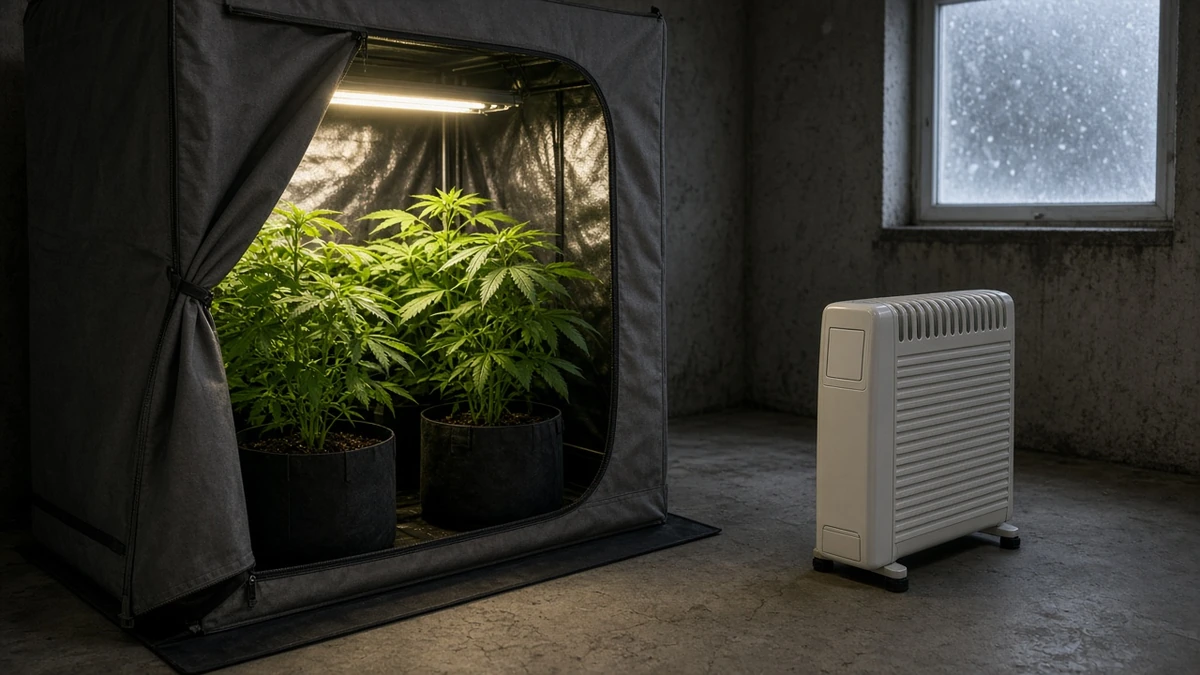
A grow tent heater is often the piece of gear that decides whether a winter grow cruises or crawls. When the lights shut off in a cold garage or basement, the warmth your lamp was throwing disappears, and the tent can slide well below the range your plants like. This guide covers when you actually need a heater, which types make sense for a tent, how to size and place one, and how to run it safely without overloading a circuit.
If you are still diagnosing a plant that already got chilled, start with our guide to cold shock in cannabis. This post is about the equipment and setup that keep cold from getting in at all.
Do You Need a Grow Tent Heater?
Not every winter grow needs extra heat. A tent inside a heated living space often holds steady on its own, because the light runs warm and the room around it rarely drops far. The tents that struggle are the ones in garages, basements, sheds, attics, and spare rooms with the vents closed.
The only way to know is to measure. Put a thermometer with a min/max memory at canopy height and a second probe near the pots, then let it run for a few nights. The number that matters is the overnight low during lights-off, not the reading you see when you check on the plants in the afternoon.
If the lows hold close to your targets, you probably do not need a heater. If the tent regularly falls into the low 60s or below during lights-off, or the root zone reads much colder than the air, a grow tent heater (or one of the cheaper fixes below) is worth adding.
What Temperature Should a Grow Tent Be in Winter?
Winter does not change what the plant wants. It only makes the right grow tent temperature harder to hold. Our full breakdown of the best temperature for cannabis goes stage by stage, but these are the working ranges most growers aim for at canopy height:
| Stage | Lights on | Lights off |
|---|---|---|
| Seedlings and clones | 72F to 78F | 68F to 72F |
| Vegetative | 72F to 82F | 65F to 72F |
| Early flower | 70F to 80F | 62F to 70F |
| Late flower | 65F to 75F | 58F to 65F |
Two rules matter more than any single number. First, keep the drop from lights-on to lights-off around 10 degrees. A gentle drop is normal, but a 20-degree crash every night is stress. Second, watch the root zone. Pots sitting on a cold concrete floor can run noticeably colder than the air, and cold roots slow water and nutrient uptake long before the leaves show it.
How To Keep a Grow Tent Warm Before You Buy a Heater
The cheapest heat is the heat you already have. Before you add a heater, work through these fixes. Together they can close much of the gap.
Flip Your Light Schedule
Run the lights during the coldest hours. On an 18/6 veg schedule, for example, lights on from midnight to 6 p.m. put the lamp’s warmth into the coldest part of the night and move lights-off into the warmer evening hours. The same idea works on a 12/12 flowering schedule: Start the lights in the evening so they run through the night. This is one of the simplest ways to keep a grow tent warm in winter, and it costs nothing.
Get Pots off the Floor
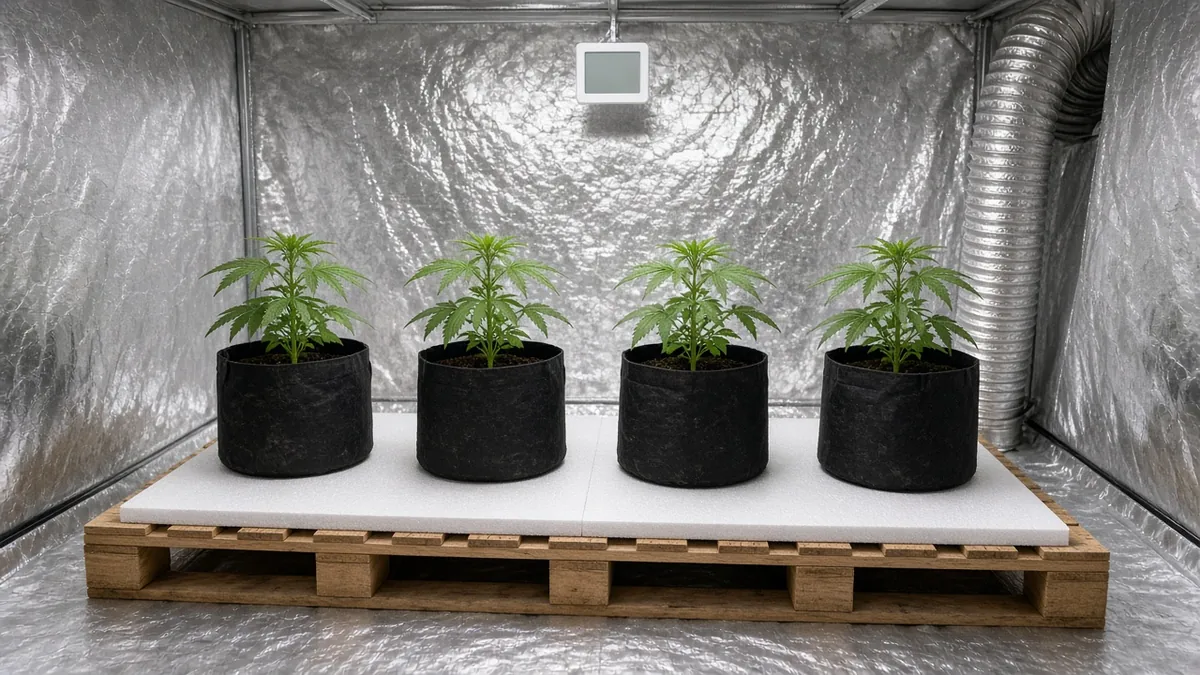
Lift containers onto a shelf, a pallet, or a sheet of rigid foam insulation board. Breaking contact with cold concrete or tile is one of the most effective ways to protect the root zone.
Pull Intake Air From a Warm Space
If your tent draws intake air from a cold garage or straight from outside, every minute of exhaust pulls in more cold air. Draw from the warmest available space instead, and put your exhaust fan on a speed controller or a temperature controller so it slows down when the tent is already cool. Our guide to grow room ventilation covers how to balance airflow without overcorrecting.
Choose a Warmer Spot
A tent against an exterior wall or near a drafty window will always fight the cold. If you can move it a few feet toward the middle of the home, or into a room on the main heating system, do it. Sealing obvious drafts around doors and vents helps too.
Types of Grow Tent Heaters
If the fixes above are not enough, you have a few heater styles to choose from. Each has trade-offs for a small, enclosed grow space.
Oil-Filled Radiators
Oil-filled radiators heat slowly and evenly, with no fan and no exposed glowing element, which suits a grow room well. They take a while to warm up, and their surfaces still get hot, so they need the same clearance as any other heater.
Ceramic Fan Heaters
Ceramic heaters warm a space quickly and blow the heat around, which helps mix air. The downside is that moving hot, dry air can push humidity down fast, and a heater pointed at plants can dry or stress the leaves nearest to it. Aim the airflow away from the canopy.
Infrared and Radiant Heaters
Radiant heaters warm the surfaces they face rather than the air, so leaves in the direct line of fire can get much warmer than the rest of the tent. If you use one, keep it well back and never pointed at the canopy.
Seedling Heat Mats
Heat mats warm the root zone, not the room. Under a tray of seedlings or clones, a mat paired with its own thermostat probe keeps young roots in range without heating the whole space. They are not a substitute for room heat with larger plants in bigger pots. Our guide to temperature control during germination covers the early stage in more detail.
Fuel-Burning Heaters
Propane, kerosene, and other unvented fuel-burning heaters do not belong in a tent or a closed grow room. They burn oxygen, add moisture, and can produce carbon monoxide. Stick with electric heat indoors.
How To Size a Heater for Your Grow Tent
Most tents need less heat than people expect. A 2-by-4-foot or 4-by-4-foot tent holds a small volume of air, and the goal is usually to lift lights-off temperatures by a few degrees, not to heat a whole house. If you are still choosing a tent, our guide to what size grow tent you need lays out common footprints.
Pick a heater with an adjustable thermostat or low setting so it can deliver small amounts of heat instead of running full blast. A heater that is too big will overshoot, cycle hard, and dry out the air.
Then do the electrical math. A standard 15-amp, 120-volt household circuit can supply about 1,800 watts, and continuous loads are generally kept to about 80% of a circuit’s rating, or roughly 1,440 watts. Many plug-in space heaters draw up to 1,500 watts on high. Add that to a 400- to 600-watt LED, an exhaust fan, and a circulation fan, and one circuit can be overloaded quickly. Total up the wattage of everything in your grow, check which outlets share a circuit, and talk to a licensed electrician if your setup is near the limit. Our guide to building a cannabis grow room has a section on electrical safety and power requirements.
Where To Put a Grow Tent Heater
In most home setups, the safest approach is to heat the room, not the tent. The U.S. Fire Administration advises keeping anything that can burn at least 3 feet from all heat sources, including space heaters. Tent fabric, reflective liners, ducting, and dry plant material can all burn, and in a typical home tent there is no spot inside that is 3 feet from every wall.
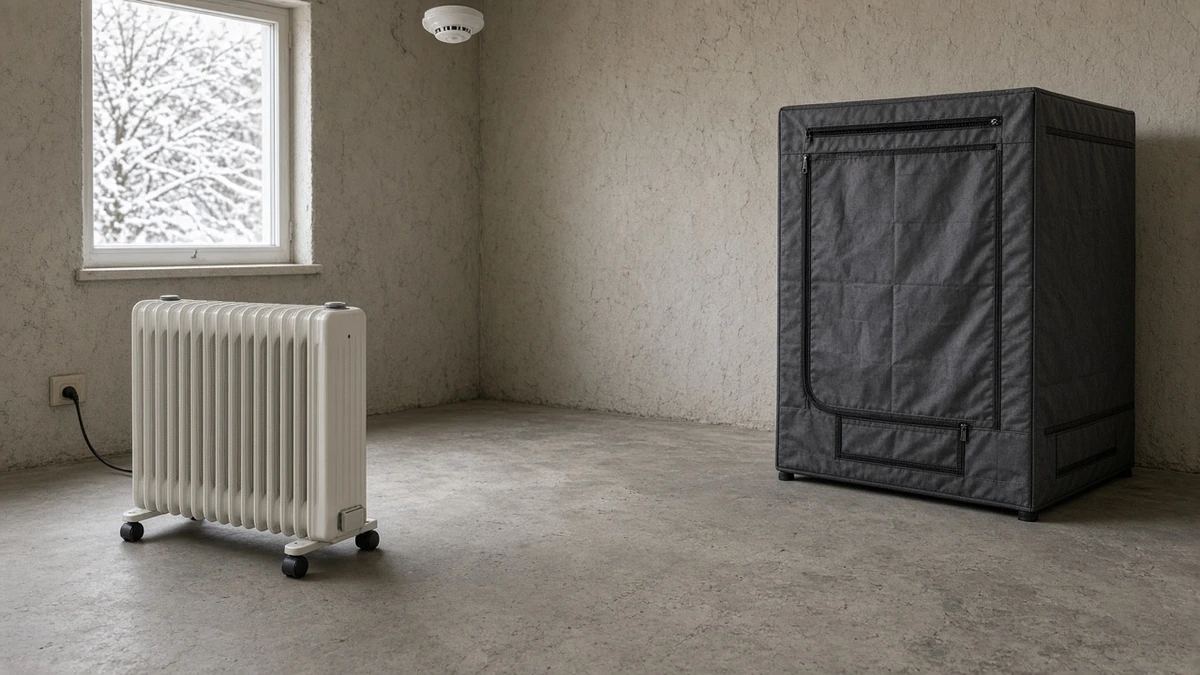
So for most growers, the better setup is to warm the room the tent sits in and let the tent’s intake draw that warmer air. Place the heater on a hard, level floor, with clear space all around it, well away from the tent walls, curtains, cardboard, and anything else that can burn. Keep cords out of walkways.
If you have a large walk-in space where the manufacturer’s clearance distances and the 3-foot rule can genuinely be met, read the heater’s manual for indoor placement limits before you set it up. When in doubt, keep the heater outside the tent.
Thermostats, Controllers, and Monitoring
A heater without a thermostat is a guessing game. Prefer a unit with a built-in adjustable thermostat, and plug it directly into a wall outlet. A separate plug-in controller can help you hold a set point, but only if it is rated for the heater’s full wattage and amperage and the manufacturer’s instructions allow it. Do not use an ordinary extension cord or power strip.
A thermostat is not a substitute for turning a portable heater off when you leave the room or go to sleep, which the U.S. Fire Administration advises. Use the heater while you are present and awake if you need it. For overnight warmth, lean on the light-schedule flip, insulation, and the home’s own heating system first.
Pair any heater you use with a thermometer and hygrometer that records daily highs and lows. Check those numbers every few days, especially when the weather turns. If lights-off temperatures still fall short, the problem is often a cold-air leak or a cold floor, not a heater that is too small.
Grow Tent Heater Safety Checklist
The Electrical Safety Foundation International and other fire-safety groups give consistent advice on space heaters. Add a few grow-specific points, and the list looks like this:
- Buy a heater listed by a recognized testing laboratory, such as UL, ETL, or CSA, with tip-over and overheat protection
- Read the manufacturer’s instructions and warning labels before you use it
- Plug the heater directly into a wall outlet, never into an extension cord or power strip, and do not share that outlet with other devices
- Keep at least 3 feet of clearance from tent fabric, liners, ducting, and anything else that can burn
- Set it on a hard, level floor, never on carpet, furniture, or a table
- Inspect the cord and plug before each use, and retire any heater with a frayed or damaged cord
- Make sure working smoke alarms cover the grow area, and test them monthly
- Turn the heater off when you leave the room or go to sleep
- Never use unvented fuel-burning heaters in a grow space
Safety groups also advise against leaving a space heater running when no one is around or while you sleep, and that is exactly when grow rooms get coldest. That is one more reason to lean on the light-schedule flip, insulation, and the home’s own heating system first, and to treat a portable heater as backup rather than the whole plan.
Winter Side Effects: Dry Air and Light Leaks
Warm air holds more moisture than cold air, so heating a space usually drops the relative humidity. Combine that with winter air that is already dry, and seedlings or vegging plants can end up in air that is too dry for comfort. Keep an eye on the hygrometer and see our guides to growing cannabis in low humidity and cannabis humidity management for fixes.
Flowering plants need real darkness during lights-off. If a heater or controller with a bright display sits inside or near the tent, cover the display or move the unit so it cannot shine on the plants. Our guide to cannabis light leaks explains why stray light matters.
Growing Cannabis in Winter: Genetics That Make It Easier
Equipment does most of the work indoors, but genetics can make growing cannabis in winter more forgiving. Autoflowers finish on their own clock and often wrap up in a shorter total time than photoperiods, which means fewer cold nights to manage. Browse our autoflower cannabis seeds or our guide to autoflower seeds for cold climates.
If you want strains with a reputation for handling cooler conditions, our roundup of the best cannabis strains for cold climates is a good place to start, even though it was written with outdoor growers in mind.
Frequently Asked Questions
Do I Need a Heater in My Grow Tent?
Only if your lights-off temperatures fall below your targets. Measure the overnight low at canopy height for a few nights first. Many tents inside heated homes never need one, while tents in garages and basements often do.
What Temperature Is Too Cold for a Grow Tent?
Sustained temperatures below about 60 degrees start to slow growth, and the risk climbs as you approach 50 degrees. Most growers try to keep lights-off temperatures in the mid-60s or warmer for veg and early flower, with a little more room to cool down late in flower.
Can I Put a Space Heater Inside a Grow Tent?
In most home tents, it is not a good idea. Fire-safety guidance calls for at least 3 feet of clearance from anything that can burn, and tent fabric counts. Heating the room around the tent is usually the safer setup.
How Can I Keep My Grow Tent Warm Without a Heater?
Run your lights during the coldest hours, lift pots off cold floors, draw intake air from a warm room, slow down your exhaust fan when the tent is cool, and move the tent away from exterior walls and drafts.
Is It Safe To Leave a Grow Tent Heater On Overnight?
Fire-safety groups advise turning space heaters off when you leave the room or go to sleep, so do not build a plan around a portable heater running unattended all night. Lean on the light-schedule flip, insulation, and your home’s own heating system for overnight warmth, and follow the manufacturer’s instructions for any heater you use.
Does a Heater Dry Out a Grow Tent?
Usually, yes. Warming air lowers its relative humidity, and fan heaters move that dry air around quickly. Watch your hygrometer and add humidity if it drops below your target for the stage.
Keep Your Winter Grow Warm and Steady
A grow tent heater works best as one part of a plan: measure your real overnight lows, use the cheap fixes first, add thermostat-controlled heat only while you are present and awake if it is truly needed, and keep every heater well clear of anything that can burn. Do that, and winter becomes just another season in the tent.
When your setup is dialed in, browse our autoflower cannabis seeds and feminized cannabis seeds to find your next winter run. Seeds Here Now sells authentic breeder packs to adults 21 or older as novelty items and souvenirs. Laws vary by state and locality, so check the rules where you live.
Suggested Articles
 17 Nov 2026
 13 min read

;)
;)
;)
 November 17, 2026


RESPONSES (0)
No responses yet. Be the first to respond!