


Growing Autoflower Seeds Indoors: 5 Tips That Actually Work [2026]
Growing autoflowering cannabis indoors is one of the more forgiving approaches in the hobby—but forgiving doesn’t mean foolproof. Autos have a compressed timeline, which means mistakes you could recover from in a 16-week photoperiod run can’t be walked back in an 8-week auto. The good news is that once you dial in a handful of fundamentals, autos are remarkably consistent.
These five tips aren’t theory. They’re the things that actually move the needle from a mediocre auto grow to one you’re proud of at harvest.
1. Germinate Correctly and Don’t Transplant Twice
Autoflowers are on a clock from the moment they pop. Every day spent recovering from transplant shock is a day of potential growth wasted. That’s a bigger deal for autos than photoperiods, which have the luxury of an extended veg period to bounce back.
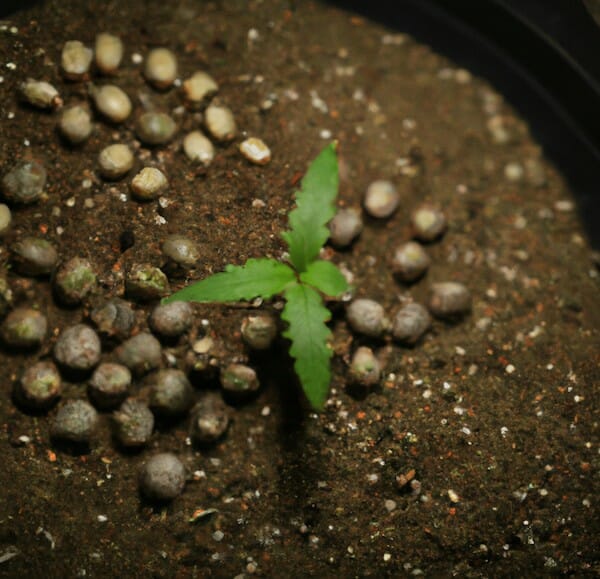
The best approach: germinate directly in your final container. Use the paper towel method or soak seeds in a glass of water for 12–18 hours, then plant the germinated seed directly into your final pot—no solo cup start, no transplant stress.
If you do start in a small container (some growers prefer it for environmental control during the seedling stage), limit yourself to one transplant and do it early—before the roots circle the bottom of the container. Waiting too long means disturbing an established root system during a window when the plant can’t afford the setback.
Ideal germination conditions: 72–80°F, high humidity, dark or indirect light. Seeds should pop their taproot within 24–72 hours under these conditions. If a seed doesn’t show a taproot within five days, it’s likely not viable. Seeds Here Now’s Grower’s Guarantee covers germination failures when you follow standard protocol.
2. Use the Right Container and Growing Medium
Container choice matters more for autos than most people realize. Autos have compact root systems—they don’t need a 10-gallon pot, and they’ll actually perform worse in oversized containers where the growing medium stays wet and restricts oxygen to the roots.
Container size by plant size:
- Compact auto strains (under 2 feet): 1–2 gallon containers
- Medium auto strains (2–3 feet): 3–5 gallon containers
- Larger auto strains (3+ feet): 5–7 gallon containers
Fabric pots are the standard recommendation for a reason—they air-prune the roots, prevent root circling, and improve drainage compared to plastic. The tradeoff is that they dry out faster, which means more frequent watering, but that’s a manageable adjustment.
Growing medium: A well-aerated mix is essential. Something like 50% quality potting soil, 25% perlite, and 25% coco coir hits the right balance of water retention and drainage. Avoid dense, water-retentive mixes that stay wet for days—autos don’t like wet feet and their short timeline means root issues develop faster than you can address them.
3. Keep Nutrients Light, Especially Early
Nutrient burn is one of the most common mistakes growers make with autoflowering seeds. Autos are inherently light feeders compared to photoperiod plants, and the seedling stage is especially sensitive. Starting with a hot, nutrient-heavy mix or feeding aggressive amounts of grow nutes in week one is a reliable path to stunted early growth.
A practical nutrient schedule for most autoflowering genetics:
- Weeks 1–2 (seedling): No added nutrients if your soil contains any baseline feeding. Just water. Watch the plant for signs of deficiency before adding anything.
- Weeks 3–4 (early veg): Introduce a mild vegetative nutrient solution at 25–50% of the recommended dose. Nitrogen is the primary need here.
- Weeks 5–7 (pre-flower and early flower): Transition to a bloom formula. Reduce nitrogen, increase phosphorus and potassium. This is when the plant sets up its bud sites.
- Weeks 7–9 (peak flower): Continue bloom feeding at full or near-full strength. Watch for signs of overfeeding—dark, clawing leaves indicate nitrogen toxicity.
- Final week: Flush with plain water to clear residual salts. Improves flavor and smoothness of the finished product.
If you’re using a quality amended soil that’s already buffered with nutrients, you can often run weeks 1–4 on water alone. Read the plant—it’ll tell you what it needs before a deficiency becomes a problem.
4. Use Low-Stress Training (LST)—Skip the High-Stress Stuff
Training your autoflowers pays off in yield, but the method matters. High-stress training techniques—topping, fimming, super-cropping—work well with photoperiod plants because those plants have the vegetative time to recover. Autos don’t. Topping an auto in week three means you’re rolling the dice on whether it recovers before it locks into flower. Some strains handle it; many don’t. It’s not worth the gamble unless you’re running a strain you’ve grown before and know it’s resilient.
Low-stress training (LST) is the move for autoflowering plants. The technique is simple: tie down the main stem or dominant branches to flatten the canopy and bring lower bud sites up toward the light. This exposes more bud sites to direct light, encourages lateral growth, and improves even distribution of buds across the plant.
How to LST an auto:
- Start LST when the plant has 3–4 nodes, usually around week 2–3.
- Use soft plant ties, pipe cleaners, or LST clips—nothing that cuts into the stem.
- Gently bend the main stem horizontally and secure it to the pot’s rim or a support stake.
- As new growth rises toward the light, continue bending and securing to maintain an even canopy.
- Stop heavy LST once the plant shows pre-flowers—you’re in flower now and the structure is set.
Done right, LST can increase your yield by 20–40% over an untrained plant by maximizing light penetration across the entire canopy. It’s one of the highest-return techniques you can apply to an auto grow with essentially zero risk.
5. Watch Your Harvest Window—Autos Don’t Wait
Autoflowering plants have a shorter and less forgiving harvest window than photoperiod plants. Leave a photoperiod in flower too long and you’ll get amber trichomes and a more sedative effect. Leave an auto too long and you’ll get degraded cannabinoids, reduced potency, and a flavor profile that doesn’t represent what the strain actually delivers.
The trichome inspection protocol is non-negotiable:
- Clear trichomes: Not ready. Cannabinoid production is still ramping up.
- Milky white (cloudy) trichomes: Peak THC. Harvest here for maximum potency and more energetic, cerebral effects.
- Amber trichomes: THC converting to CBN. More sedative, body-heavy effects. Harvest here if that’s your preference, but this is past peak for most use cases.
Most growers target 10–20% amber alongside a majority of milky trichomes for a balanced effect profile. Use a jeweler’s loupe (30x minimum) or a digital microscope for a clear look—the naked eye won’t cut it.
Also watch the pistils as a secondary indicator. When 70–80% of pistils have turned from white to orange/red, you’re in the harvest window. Combine pistil observation with trichome inspection for the most accurate timing.
The Strains Make a Difference
These tips work best when you’re starting with quality genetics. A poorly bred auto will underperform regardless of how well you execute the grow. Seeds Here Now carries autoflowering seeds from proven breeders—FastBuds 420, Mephisto Genetics, Night Owl Seeds, and more—in sealed breeder packs that guarantee you’re getting authentic, uncompromised genetics.
We’ve been in business since 2010. We carry 80+ breeders. Our Grower’s Guarantee covers germination. Fast USA shipping on every order.
Shop autoflowering seeds at Seeds Here Now →
FAQ: Growing Autoflowering Seeds Indoors
What light schedule should I use for autoflowering seeds indoors?
18 hours light, 6 hours dark is the standard starting point and works well for most genetics. Some growers push to 20/4 for slightly more growth. Running lights 24/0 is possible but can stress some plants and doesn’t always translate to better yields—the plant benefits from some dark period for metabolic processes. Start with 18/6 and adjust based on your results.
How many autoflowering plants can I fit in a 2×4 tent?
With proper LST, 4–6 plants in 2–3 gallon containers typically work well in a 2×4 tent. You can push to 8–9 plants in a Sea of Green setup with 1-gallon pots, but that requires more attention to air circulation and light penetration between plants.
Should I top my autoflowering plants?
Generally no, unless you’ve grown that specific strain before and know it recovers well. Use LST instead—same yield improvement, zero recovery time required. Topping autos is a risk-reward calculation that doesn’t usually pay off with new genetics.
Why are my autoflowering plants flowering so early?
Autos start flowering based on age, not light cycle—typically around weeks 3–5 from germination. Early flowering is normal and expected. Don’t try to extend the vegetative period by adjusting your light schedule; it won’t work and might stress the plant. Just let it run its course.
Get in there and grow something.
Jb @the_real_james_bean
James Bean is the owner of Seeds Here Now, a USA seed bank established in 2010. Seeds Here Now carries sealed breeder packs from 80+ breeders with fast USA shipping and a Grower’s Guarantee.
Suggested Articles
 10 Apr 2026
  12 min read

;)
;)
;)
 April 26, 2023


RESPONSES (0)
No responses yet. Be the first to respond!