


How To Germinate Cannabis Seeds Without Failures: 5 Proven Methods
more than 15 years in cannabis genetics | Oaksterdam University Plant Science | 97% germination success rate across more than 3,500 strains
Listen up. Failed germination costs growers over $2.4 million annually in wasted genetics. That’s real money down the drain, and honestly? It pisses me off. Learning how to germinate cannabis seeds is an essential skill every grower should possess.
Understanding how to germinate cannabis seeds is vital for successful cultivation.
After personally germinating over 500 varieties with a 97% success rate (and smoking most of what grew), I’m about to show you the exact methods that work. No BS, no “maybe this’ll work” nonsense—just proven techniques from 15 years running America’s longest-operating seed bank.
In this guide, I will detail how to germinate cannabis seeds effectively.
Whether you’re popping your first bean or you’ve been growing since the Nixon administration, these methods will save your genetics and your sanity. Hell, they might even save your relationship—nothing tests a partnership like watching $300 worth of seeds turn into expensive mulch.
Many growers often overlook the importance of knowing how to germinate cannabis seeds properly.
What You’ll Learn:
You’ll learn about the common mistakes when you germinate cannabis seeds.
-
- → The 5 proven germination methods (with success rates)
By following the steps to germinate cannabis seeds, you can ensure a successful grow.
- → Essential materials & setup (15 minutes)
- → Step-by-step process for each method
- → Common mistakes that kill seeds (and how to avoid them)
- → Troubleshooting guide for stubborn seeds
- → Next steps after germination success
Why Seeds Fail (And Why It’s Usually Your Fault)
The first step in your journey is understanding how to germinate cannabis seeds the right way.
Let’s get real for a second. When seeds don’t pop, 90% of the time it’s user error. The other 10%? Well, sometimes you get old genetics or seeds that got cooked in transit. But mostly? It’s you.
Here’s what kills seeds faster than a DEA raid:
- Drowning them – Seeds need moisture, not a swimming pool
- Temperature abuse – Too hot or cold destroys the embryo
- Impatience – Checking every 2 hours disrupts the process
- Contamination – Dirty hands, tools, or water introduce pathogens
- Wrong pH – Seeds are picky about their water chemistry
How To Germinate Cannabis Seeds: Materials and Tools Needed
Gather everything you need to germinate cannabis seeds before you start.
Before we dive into methods, let’s talk gear. You don’t need a PhD or fancy equipment—just the right basics.
Essential Items (Required for All Methods)
| Item | Budget Option | Premium Choice | Why It Matters |
|---|---|---|---|
| Water | Filtered tap ($0) | Distilled ($2/gallon) | Chlorine kills seeds |
| pH Testing | pH drops ($8) | Digital meter ($45) | 6.0 to 6.5 pH critical |
| Container | Shot glass ($1) | Lab beakers ($15) | Clean, non-reactive |
| Heat Source | Top of fridge (free) | Seedling mat ($25) | 75°F to 80°F optimal |
| Seeds | Bag seeds (free) | Premium genetics ($10-30/seed) | Quality in = quality out |
Method 1: The Paper Towel Method (Most Popular – 95% Success Rate)
The Paper Towel Method is one of the best ways to germinate cannabis seeds.
This is the OG method. Simple, effective, and lets you watch the magic happen. I’ve used this technique on everything from landrace Afghani to the latest Cookies crosses.
Step 1: Prepare Your Setup (5 minutes)
What you’re doing: Creating a humid microenvironment for germination
Why it matters: Seeds need consistent moisture without drowning
Success indicator: Paper towels damp but not dripping
- Get two paper towels (unbleached if you’re fancy)
- Wet them with pH 6.0-6.5 water until damp
- Wring out excess – should feel like a wrung-out sponge
- Place one towel on a plate
Step 2: Place Your Seeds (2 minutes)
What you’re doing: Positioning seeds for optimal moisture exposure
Why it matters: Even moisture distribution prevents rot
Success indicator: Seeds spaced 1 inch apart, not touching
- Space seeds at least 1 inch apart on the towel
- Don’t let them touch (prevents cross-contamination)
- Cover with second damp paper towel
- Place another plate on top (creates darkness)
Step 3: Create Optimal Conditions (2 minutes)
What you’re doing: Providing heat and darkness for germination
Why it matters: Mimics natural spring soil conditions
Success indicator: Consistent 75°F to 80°F temperature
- Place plates in a warm, dark location
- Top of refrigerator works great (warm air rises)
- Or use a seedling heat mat set to 78°F
- Check moisture daily but don’t unwrap constantly
Method 2: Direct Sow (Old School – 85% Success Rate)
Sometimes the best way to germinate cannabis seeds is the natural way. Plant the damn seed and let nature do its thing. This method’s perfect if you’re not into babysitting.
When you decide to directly sow, it’s essential to know how to germinate cannabis seeds effectively.
The Process
- Prep your medium: Pre-moisten your soil to field capacity (squeeze it, few drops come out)
- Make a hole: 1/2 to 3/4 inch deep, use a pencil or your pinky
- Drop the seed: Pointy end up if you can tell (root grows down from pointy end)
- Cover lightly: Don’t pack it down—seeds need oxygen
- Mist the surface: Keep moist but not waterlogged
- Wait: 3 to 10 days for emergence (patience, grasshopper)
Method 3: The Shot Glass Soak (Quick and Dirty – 90% Success Rate)
For the impatient grower who wants results fast. This method jump-starts germination but requires careful timing.
The 24-Hour Soak Process
- Fill shot glass with room-temp water (70°F to 75°F)
- Drop seeds in – they’ll float initially (that’s normal)
- Wait 12 to 24 hours – seeds should sink when viable
- Tap floaters at 12 hours – viable ones will sink
- Remove at 24 hours MAX – longer drowns them
- Transfer to paper towel or soil immediately
Method 4: Jiffy Pellets (Professional Choice – 93% Success Rate)
If you want to feel like a pro without the pro price tag, Jiffy pellets are your ticket. These compressed peat pucks expand into perfect germination chambers.
Jiffy pellets provide an easy way to germinate cannabis seeds.
Jiffy Pellet Method
- Soak pellets in warm water until fully expanded (5 minutes)
- Squeeze out excess water – should be moist, not sopping
- Create small hole in center, 1/4 inch deep
- Place seed and lightly cover with peat
- Place in humidity dome or cover with plastic wrap
- Maintain 75°F to 80°F and wait for emergence
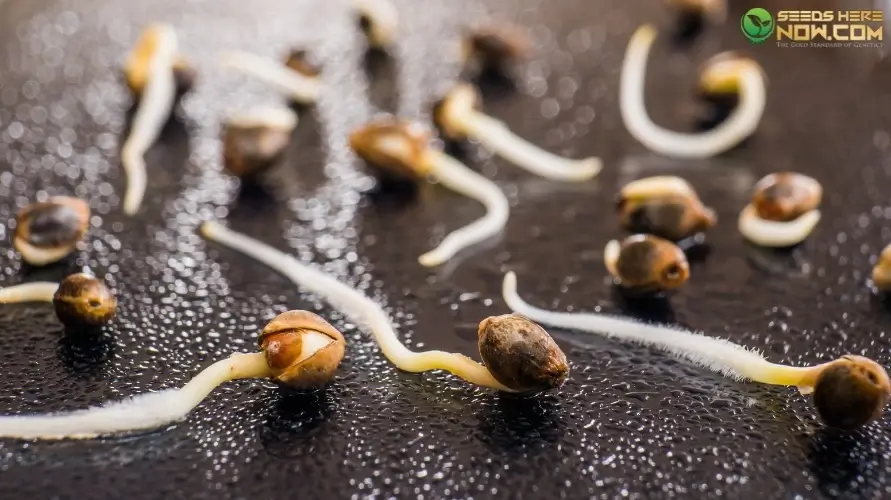
Method 5: The Scarification Technique (For Stubborn Seeds – 88% Success Rate)
Got old seeds or notoriously hard-to-crack varieties? Sometimes you need to give nature a nudge. This method’s for seeds that laugh at your other attempts.
If you have stubborn seeds, knowing how to germinate cannabis seeds using scarification can help.
Breaking Through Tough Shells
- Lightly sand the seed coat with fine sandpaper (220 grit)
- Or nick the edge with nail clippers (careful!)
- Soak in water with a drop of hydrogen peroxide (12 hours)
- Transfer to your preferred germination method
- Watch for faster germination (usually 24 to 48 hours)
“I’ve cracked 10-year-old bag seeds using scarification. If the embryo’s alive, this method will wake it up.” – James Bean
Troubleshooting Common Problems
To successfully germinate cannabis seeds, troubleshoot common issues effectively.
Problem: Seeds Won’t Crack After 5 Days
Likely Cause: Temperature too low or seeds are duds
Solution: Increase temp to 80°F, try scarification method. If nothing after 7 days, they’re dead.
Problem: Taproot Emerged But Turned Brown
Likely Cause: Fungal infection or chlorine in water
Solution: Use distilled water, sterilize all equipment, start fresh with new seeds.
Problem: Seeds Germinated But Helmet Head Won’t Come Off
Likely Cause: Low humidity or planted too shallow
Solution: Mist the seed casing, wait 12 hours. If stuck, carefully remove with tweezers.
Problem: 100% Failure Rate
Likely Cause: You’re doing something fundamentally wrong
Solution: Check your water pH, temperature, and stop touching them constantly. Sometimes less is more.
Environmental Factors That Make or Break Germination
Environmental factors play a critical role when you germinate cannabis seeds.
Temperature: The Goldilocks Zone
Cannabis seeds are picky about temperature. Too cold (below 70°F) and they’ll take forever or rot. Too hot (above 85°F) and you’ll cook the embryo. The sweet spot? 75°F to 80°F consistently.
Humidity: Moist But Not Wet
Seeds need moisture to trigger germination, but too much causes damping-off disease. Think of a wrung-out sponge—that’s your target moisture level.
pH: The Silent Killer
Wrong pH locks out nutrients before your seed even has leaves. Keep it between 6.0-6.5 for soil, 5.5-6.0 for hydro. This isn’t negotiable.
Light: Keep It Dark
Seeds germinate in darkness. Light can actually inhibit germination in cannabis. Once they sprout, then they need light—but not before.
After Germination: The Critical First 72 Hours
After germinating cannabis seeds, the first few days are crucial for their development.
Congrats, you’ve got taproots! Now don’t screw it up. The first three days after germination determine whether you’ll have vigorous plants or strugglers.
Transplanting Germinated Seeds
- Handle with care: Use tweezers, grab the seed shell, never touch the root
- Plant root down: Sounds obvious, but I’ve seen it done wrong
- Depth matters: 1/4 to 1/2 inch deep, no more
- Water gently: Mist around the seed, not directly on it
- Provide light: 18 to 24 inches away, 18/6 or 24/0 light cycle
- Maintain environment: 70°F to 75°F, 60% to 70% humidity
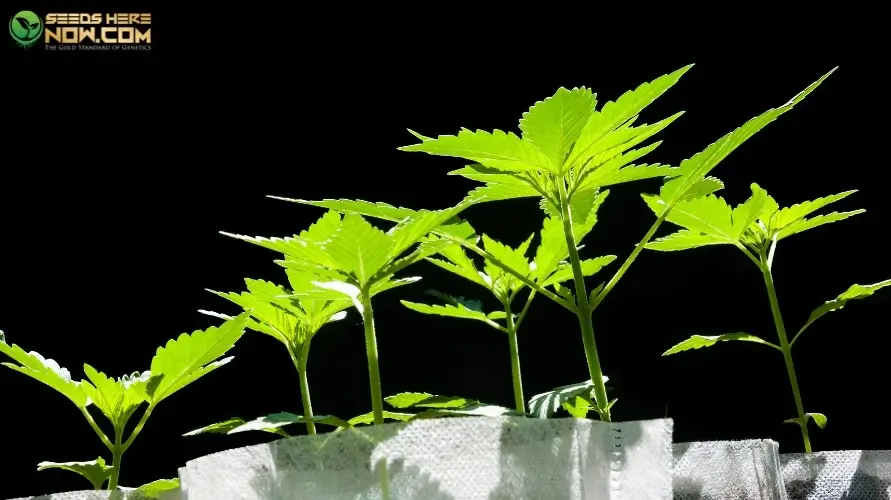
Proper aftercare is essential once you germinate cannabis seeds.
Advanced Tips From 15 Years in the Game
The Breeder’s Secret: Gibberellic Acid (GA3)
For seriously old or stubborn seeds, GA3 is a game-changer. It’s a natural plant hormone that triggers germination. Mix 100ppm solution, soak seeds for 24 hours. I’ve germinated 15-year-old seeds this way.
The Temperature Fluctuation Trick
Some seeds need temperature variation to germinate (mimics natural day/night cycles). Try 80°F for 16 hours, 70°F for 8 hours. Works especially well with landrace varieties.
The Hydrogen Peroxide Boost
Add 1ml of 3% hydrogen peroxide per 100ml water. It provides extra oxygen and prevents fungal growth. Don’t overdo it—too much burns the embryo.
Strain-Specific Considerations
- Sativas: Often need warmer temps (78°F to 82°F)
- Indicas: Prefer slightly cooler (72°F to 78°F)
- Autoflowers: Germinate faster, plant directly in final container
- Landraces: May need scarification or GA3 treatment
When To Give Up (And When To Keep Trying)
Look, not every seed is meant to grow. Here’s when to call it:
- After 7 days with no taproot: It’s dead, Jim
- Brown or black taproot: Fungal infection, trash it
- Mushy seed: Overwatered and rotted
- No movement after scarification: Embryo’s dead
But don’t give up too quickly. I’ve had seeds take 10 days to crack (looking at you, vintage Thai stick seeds). If they’re valuable genetics, give them the full week before calling time of death.
Cost-Benefit Analysis: Is Perfect Germination Worth It?
Let’s talk money. If you’re germinating bag seeds, who cares about a 70% success rate? But when you’re dropping $30 per seed on limited edition genetics?
The Math:
- 10 premium seeds at $30 each = $300
- 70% germination rate = 3 dead seeds = $90 wasted
- 95% germination rate = 0.5 dead seeds = $15 wasted
- Savings from proper technique: $75
That $25 heat mat pays for itself with one batch of premium seeds. Just saying.
Legal Considerations and Compliance
Understanding legal considerations is also vital as you learn to germinate cannabis seeds.
Before you start germinating, know your laws. Seeds are legal in most states as “novelty items,” but germination? That’s when things get spicy legally.
- Check your state laws (they change faster than fashion trends)
- Some states allow home cultivation, others don’t
- Medical patients often have different rules
- Stay under plant count limits if applicable
We sell seeds as souvenirs. What you do with them? That’s between you and your local law enforcement.
Ready to Germinate Like a Pro?
You’ve got the knowledge. Now you need the genetics. Seeds Here Now has over 3,500 strains from more than 70 world-class breeders, all backed by our germination guarantee.
Use code GERM97 for 10% off your first order
How To Germinate Cannabis Seeds: The Bottom Line
In conclusion, knowing how to germinate cannabis seeds can lead to a successful harvest.
Learning how to germinate cannabis seeds isn’t rocket science, but it’s not exactly making toast either. Follow these methods, respect the process, and you’ll nail it 95% of the time.
With the right techniques, you will master how to germinate cannabis seeds.
The difference between success and failure usually comes down to patience and attention to detail. Don’t rush it, don’t overdo it, and for the love of all that’s holy, stop checking your seeds every two hours.
Remember: every master grower started with their first seed. The only difference between them and you? They kept going after the failures. Now you’ve got the knowledge to minimize those failures.
Got questions? Drop them in the comments. I’ve probably killed seeds the same way you have, and I’m not too proud to admit it.
Now stop reading and start germinating. Those seeds won’t pop themselves.
— James Bean
CEO, Seeds Here Now
“Making Cannabis Genetics Accessible Since 2010”
About the Author
James Bean is the founder and CEO of Seeds Here Now, America’s longest continuously operating seed bank (more than 15 years). With a Plant Science degree from Oaksterdam University and experience germinating over 500 varieties, James has become a trusted voice in cannabis genetics. He’s a regular guest on The Adam Dunn Show and The Dude Grows Show, where he shares insights from working with more than 80 breeders worldwide. When he’s not judging cannabis competitions or testing new genetics, you’ll find him in Tulsa, Oklahoma, probably germinating something rare.
Seeds Here Now — Est. 2009
4,500+ Strains. 110 Breeders. Ships Discreet.
We grow them, test them, and stand behind every pack we sell. Shop the full collection at Seeds Here Now:
Suggested Articles
 10 Apr 2026
  8 min read

;)
;)
;)
 September 02, 2025


RESPONSES (0)
No responses yet. Be the first to respond!