


How Long Do Cannabis Clones Take to Root?
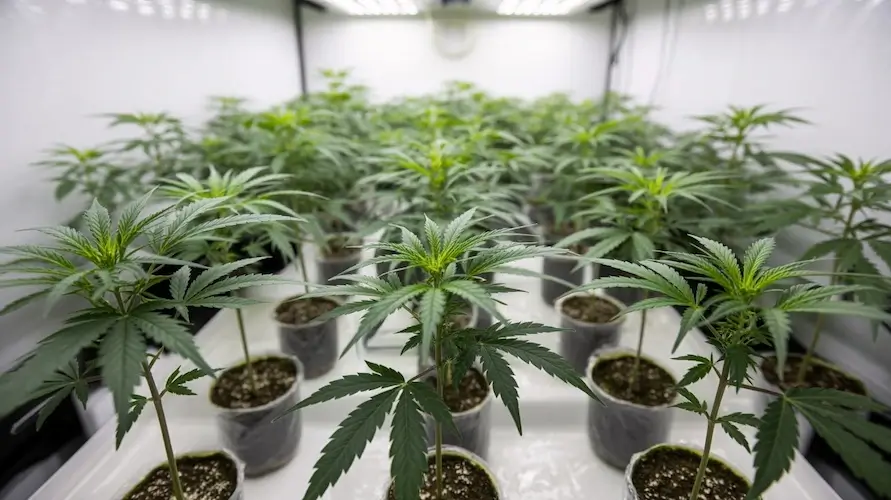
I’ve been running a seed bank for 16 years, and the question I get more than almost any other is dead simple: how long do cannabis clones take to root? Short answer, most healthy cuttings throw roots in 7 to 14 days. But that number hides everything that actually matters. Genetics, mother health, your environment, and whether the plant is carrying something it shouldn’t all move that window around. So let me give you the real timeline, and more importantly, tell you what’s happening under the surface so you stop guessing.
The Honest Timeline: 7 to 14 Days
Under decent conditions, a cannabis cutting develops usable roots in one to two weeks. I say “usable” on purpose. A couple of white nubs poking through a plug is not the same as a root system that can support the plant. So here’s how the two weeks actually break down.
Days 1 to 3: shock and hold. The cutting has no roots and can’t drink normally. It’s living off stored moisture and whatever it pulls through the stem and leaves. You’ll see it look a little sad. That’s fine. Your only job here is to keep it turgid and stop it from transpiring itself to death. High humidity, gentle light.
Days 4 to 7: callus formation. The cut end forms a callus, a mass of undifferentiated cells. This is the plant deciding to become a root factory. Nothing visible is happening above the medium, and this is exactly where impatient growers panic and start yanking cuttings to “check.” Don’t. You’re tearing off the tissue that’s about to become roots.
Days 8 to 14: root emergence. Roots push out of the callus and stem. Once you see white roots reaching for the edge of a plug or dangling in your cloner, you’re basically there. When roots hit the sides of the medium and the plant perks up on its own, it’s ready to move up.
Some cuts root in 5 days. Some take 21. Both can be normal depending on the cultivar and setup. If nothing is happening past day 21 and the stem is going mushy, that batch is likely done.
What Actually Controls Rooting Speed
The timeline isn’t magic. It’s the sum of a handful of variables, and you control most of them.
Genetics
This is the one people underrate, and it’s the one I care about most as a seedsman. Different cultivars root at wildly different speeds because that trait is heritable, same as flower structure or terpene profile. Broadly, sturdy indica-leaning plants tend to callus and root faster, while some lanky, sativa-dominant lines drag their feet and want another few days. There’s no fixing slow-rooting genetics with a better dome, that’s just what that plant does. If you’re selecting mothers to keep, rooting vigor is a legitimate thing to select for.
Mother plant health
A cutting is only as strong as the plant it came from. Take clones from a mother that’s nitrogen-loaded and pushing hard, and rooting stalls because the plant is prioritizing green growth over root initiation. Take them from a healthy, slightly hardened, well-fed but not overfed mother and they root faster and cleaner. Lower and mid-plant growth often roots better than the whippy tops, too.
Growing medium
Rockwool, peat plugs, aeroponic cloners, and plain water all work, and each has a slightly different feel. Aeroponic and deep-water cloners are often fastest because the cut end sits in high oxygen and constant moisture. Plugs are more forgiving and harder to screw up. Water rooting on a windowsill works but tends to be slower and gives you weaker, more brittle roots. Pick the one you can keep consistent, consistency beats the “best” method every time.
Environment
This is where most failed clones die. Cuttings want:
- Temperature: roughly 72 to 78 F at the root zone. A seedling heat mat under the tray is the single best upgrade for most home setups.
- Humidity: high to start, 70 to 90 percent, then vented down over the first several days so you don’t cook them in a swamp.
- Light: low and soft. Cuttings don’t need blazing light with no roots to feed it. Gentle T5s or a dimmed LED a good distance away is plenty.
Rooting hormone
Cloning gels and powders contain auxins, the plant hormones that trigger root initiation. They genuinely speed things up and improve strike rates, and there’s no reason not to use one. Dip the fresh cut, tap off excess, into the medium.
Water quality and pH
People forget the water. If you’re running an aeroponic or deep-water cloner, your reservoir is the whole environment for that cut end, and garbage water gives you garbage results. Keep the pH in the roughly 5.5 to 6.0 range for hydro-style cloners, use clean water without a heavy chlorine load, and change or refresh the reservoir so it doesn’t turn into a bacterial soup. Slimy, brown, funky-smelling water is a rooting killer, and it’ll rot the very stems you’re trying to save. Even in plugs, watering with wildly off-pH water slows things down. It’s a small detail that quietly decides a lot of batches.
How to Read the Plant Instead of the Calendar
Stop counting days and start watching the cutting. Here’s what tells you it’s rooting:
- New growth up top. A cutting can’t push fresh leaf tips without a water supply, and it can’t get water without roots. New growth is a strong tell.
- The plant holds itself up. Rooted clones stop wilting between mistings because they’re finally drinking on their own.
- White roots at the edges. In a plug, you’ll see them stitch out the sides and bottom. In a cloner, they’ll hang down visibly.
- Resistance to a gentle tug. Very gently, roots grip. I’d rather you use the visual cues than tug-test, but a light test won’t kill an established clone.
Yellowing lower leaves during rooting is usually normal, the plant is cannibalizing old leaves for nutrients it can’t yet absorb from the medium. That’s not a crisis.
The Clean-Stock Angle Nobody Talks About
Here’s the part most rooting guides skip, and it’s the part that’s cost commercial growers millions. Rooting time isn’t just about speed, it’s about what you’re propagating.
If your mother plant is carrying Hop Latent Viroid (HpLVd) or another pathogen, every clone you cut carries it too. Cloning is copying. You are making genetic photocopies, and a photocopy of a sick plant is a sick plant. HpLVd is especially nasty because it’s often “latent,” the mother looks fine, roots fine, and then your clones root slow, grow stunted, and flower with weak, low-potency buds, and you spend a season blaming your nutrients.
Slow or inconsistent rooting across a batch from a mother that “should” be vigorous is one of the early flags that something’s wrong at the stock level. That’s why I hammer clean genetics constantly. Start from tested, healthy stock, whether that’s a screened clone or a plant you grew from quality seed, and keep your tools sterile between cuts. A clean razor and a wipe of alcohol between plants costs nothing and stops you from spreading a problem through an entire tray.
If you want the cleanest possible start with zero pathogen baggage, popping quality seed sidesteps the whole clone-borne disease problem. That’s the genetics-first argument in one sentence: you can’t inherit a viroid from a seed the way you inherit it from an infected cutting.
Speeding Things Up Without Cutting Corners
Want the fast end of that 7-to-14 window? Do the boring stuff right:
- Take cuttings from a healthy, appropriately fed mother, not one that’s starving or overloaded with nitrogen.
- Use a clean, sharp blade and cut at a 45-degree angle to expose more surface area.
- Dip in rooting hormone immediately, don’t let the cut sit and dry.
- Keep root-zone temps in the low-to-mid 70s F with a heat mat.
- Start humid, then vent the dome down over several days.
- Keep light soft and don’t overwater the medium, roots reach for oxygen and moisture, not a flood.
Do those six things consistently and most cultivars will reward you inside two weeks.
Common Reasons Clones Fail to Root at All
Sometimes it’s not slow rooting, it’s dead cuttings. When a whole batch fails, it’s almost always one of these:
- Rot from overly wet, oxygen-starved medium. Soaked plugs and stagnant cloner water suffocate the cut end and rot it before roots form. Damp, not drowning.
- Cold feet. Root-zone temps in the 60s stall rooting hard. That heat mat isn’t optional in a cool room.
- Cuttings dried out before they went in. A cut end that sits exposed for even a couple minutes can embolize, air locks the stem and blocks water uptake. Cut and dip fast.
- Too much light, too soon. Blasting rootless cuttings with intense light forces transpiration they can’t support, and they fry. Soft light until roots show.
- Contaminated tools or medium. Dirty blades and reused, unsterilized plugs introduce pathogens that kill cuttings and spread through the tray.
Fix the environment and your sanitation and most “bad luck” rooting failures disappear.
FAQ
Why are my clones taking longer than 14 days to root?
Usually cold root-zone temps, slow-rooting genetics, an unhealthy or over-fertilized mother, or a medium that’s too wet and oxygen-starved. Check your heat mat and your watering first, that’s where most of the fix lives. Genetics you can’t change mid-batch.
Can I clone autoflowers, and do they root differently?
You can take the cutting and it’ll root on a normal timeline, but it’s not worth it. Autoflowers run on an internal clock, so a clone is already the same age as the mother and will flower almost immediately as a tiny plant. Autos are meant to be grown from seed, full stop.
Do rooting hormones really make a difference?
Yes. Auxin-based gels and powders meaningfully improve both rooting speed and success rate. They’re cheap. Use them.
Is it normal for lower leaves to yellow while rooting?
Yes. Without roots, the cutting pulls stored nutrients from its oldest leaves. Mild yellowing on the bottom is expected and reverses once roots establish and the plant starts feeding.
Start From Genetics You Can Trust
Rooting time is downstream of stock quality. Fast, uniform, healthy roots come from healthy genetics, and healthy genetics is the whole reason Seeds Here Now exists. We’ve spent 16 years curating breeder stock so you’re not gambling on what you propagate. Whether you want a proven clone-only cut or you’d rather sidestep pathogen risk entirely by starting from seed, browse the shop and build from clean stock forward.
🌱 New to this? Start with our complete guide: What Are Cannabis Clones (Complete Guide).
Suggested Articles

 06 Oct 2026
 16 min read


;)
;)
;)
 February 18, 2026


RESPONSES (0)
No responses yet. Be the first to respond!