


Best Cannabis Strains for Humid Climates: 7 Mold-Resistant Seeds for the Southeast

The best cannabis strains for humid climates are mold- and bud-rot-resistant varieties with airy, open buds, especially sativa-leaning lines like Durban Poison, Green Crack and Ghost Train Haze. Dense indicas trap moisture and rot more easily, so in humid states like Georgia, Tennessee and the Carolinas choose airy genetics and give plants plenty of airflow.
Quick answer: The best cannabis strains for humid Southeast climates — Georgia, Tennessee, and the Carolinas — are mold- and bud-rot-resistant varieties with airy, open bud structure. Sativa-leaning strains like Durban Poison, Green Crack, and Ghost Train Haze breathe better in humidity, dramatically lowering the risk of rot late in flower.
In the humid Southeast, the make-or-break factor isn’t potency or yield — it’s whether your buds survive to harvest without rotting. Dense indicas trap moisture and rot; airy sativas breathe. These seven strains, all at Seeds Here Now, are chosen for resilience in heat and humidity. Each links to its full review. Strain choice is half the battle; the other half is managing high humidity in the flowering room.
Best mold-resistant strains for humid climates — compared
| Strain | Type | Outdoor finish | Climate fit | Why it works |
|---|---|---|---|---|
| Durban Poison | Sativa | Early–mid Oct | Top humid-climate pick | A landrace sativa with loose, airy buds and natural vigor — one of the most rot-resistant strains you can grow in the Southeast. |
| Green Crack | Sativa | Late Sep–Oct | Mildew & pest resistant | Fast, hardy, and resistant to powdery mildew, making it a reliable producer in muggy summers. |
| Ghost Train Haze | Sativa | Mid–late Oct | Airy structure, potent | Long, open colas resist trapped moisture, and the high potency rewards the longer flowering time. |
| AK-47 | Sativa-hybrid | Late Sep–Oct | Resilient & forgiving | Vigorous and tolerant, with a looser structure than most hybrids — a dependable Southeast all-rounder. |
| Strawberry Cough | Sativa | Early Oct | Airy & uplifting | Open, breezy bud structure plus solid resilience make it a humidity-friendly, mood-lifting choice. |
| Gorilla Glue #4 | Hybrid | Early Oct | Robust (give airflow) | High-yield and tough; its buds are denser, so prioritize airflow and defoliation in humid spots. |
| GMO (Garlic Cookies) | Indica-hybrid | Early Oct | Hardy, potent | Vigorous and pungent; best for experienced growers who can manage canopy airflow in humidity. |
The strains in detail
Durban Poison
Sativa · Finishes Early–mid Oct · Top humid-climate pick
A landrace sativa with loose, airy buds and natural vigor — one of the most rot-resistant strains you can grow in the Southeast. Read the full Durban Poison review →
Green Crack
Sativa · Finishes Late Sep–Oct · Mildew & pest resistant
Fast, hardy and resistant to powdery mildew, making it a reliable producer in muggy summers. Read the full Green Crack review →
Ghost Train Haze
Sativa · Finishes Mid–late Oct · Airy structure, potent
Long, open colas resist trapped moisture, and the high potency rewards the longer flowering time. Read the full Ghost Train Haze review →
AK-47
Sativa-hybrid · Finishes Late Sep–Oct · Resilient & forgiving
Vigorous and tolerant, with a looser structure than most hybrids — a dependable Southeast all-rounder. Read the full AK-47 review →
Strawberry Cough
Sativa · Finishes Early Oct · Airy & uplifting
Open, breezy bud structure plus solid resilience make it a humidity-friendly, mood-lifting choice. Read the full Strawberry Cough review →
Gorilla Glue #4
Hybrid · Finishes Early Oct · Robust (give airflow)
High-yield and tough; its buds are denser, so prioritize airflow and defoliation in humid spots. Read the full Gorilla Glue #4 review →
GMO (Garlic Cookies)
Indica-hybrid · Finishes Early Oct · Hardy, potent
Vigorous and pungent; best for experienced growers who can manage canopy airflow in humidity. Read the full GMO (Garlic Cookies) review →

Why bud structure matters in humid climates
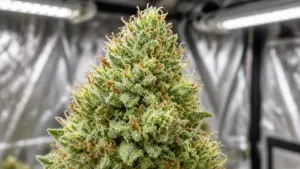
In the humid Southeast, warm air holds moisture that settles into dense flower clusters, creating perfect conditions for botrytis (bud rot) and powdery mildew. The single biggest defense is genetics, with an airy, open bud structure that lets moisture escape.
That’s why sativa-leaning strains outperform dense indicas here, even though indicas are popular elsewhere. Pair resistant genetics with good spacing, pruning and defoliation for airflow, and read our mold-prevention tips.

Growing tips for Georgia, Tennessee & the Carolinas
Give plants plenty of space for airflow, prune lower growth, and consider a spot with morning sun to dry overnight dew quickly. Defoliate to open the canopy as buds form, and scout daily for the first signs of rot in late flower.
Harvest timing is critical: a stretch of warm rain late in flower can ruin a crop, so favor strains that finish before peak fall humidity, and don’t be afraid to harvest a little early if rot appears. See our outdoor growing guide.
Growing Cannabis Strains for Humid Climates: A Step-by-Step Bud Rot Plan
Choosing airy, resistant cannabis strains for humid climates is the first step. The rest of the plan is about airflow, moisture and daily scouting.
- Spacing: give each plant enough room that branches never touch neighboring plants, usually at least 4 to 6 feet between large outdoor plants.
- Site: choose the sunniest spot available, preferably with morning sun and a steady breeze. Avoid low corners where cool, damp air collects at night.
- Training: top and spread plants in veg so you get many medium colas instead of one huge main cola, which is the most likely place for rot to start.
- Lollipopping: before flowering, remove the small, shaded growth on the bottom third of the plant.
- Defoliation: thin large fan leaves in the middle of the plant just before flowering and again about three weeks into flower.
- Support: use stakes, cages or trellis netting so heavy branches stay upright and dry quickly.
- Watering: water at the base early in the day, never over the canopy, and let the top inch of soil dry between waterings.
Pruning and Defoliation Schedule for the Southeast
| Timing | What to do |
|---|---|
| Mid-veg (June to early July) | Top once or twice; begin low-stress training to open the center. |
| Late veg (late July) | Lollipop the bottom third; remove inward-growing shoots. |
| First week of flower | Light defoliation of large fan leaves blocking bud sites. |
| About 3 weeks into flower | Second defoliation to clear the interior of the canopy. |
| Late flower | Remove only yellowing or damaged leaves; avoid heavy stripping. |
How to Spot Bud Rot and Powdery Mildew Early
- Bud rot (botrytis): a single sugar leaf or pistil cluster that turns brown or yellow and dries out while the rest of the bud looks healthy. Gently open the bud; inside you may see grey, brown or mushy tissue.
- Powdery mildew: white, flour-like spots on upper leaf surfaces, often first on lower or shaded leaves.
- When to check: every morning in late flower, especially after rain, heavy dew or a muggy night.
- What to do: cut out rotting buds well below the visible damage with clean shears, bag them before carrying them past other plants, and sterilize the shears afterwards. For powdery mildew, remove badly affected leaves and improve airflow; treat in veg or very early flower only with products labeled for that use.
Working Around Late-Summer Storms and Hurricanes
The Southeast often sees tropical storms in late August through October, right when plants are in flower. Before storm season, install sturdy stakes or a trellis cage around each plant. When a storm is forecast, tie down branches, move container plants to a sheltered spot such as a garage or carport for the worst of it, and afterwards shake water off the colas and inspect them closely for the next several days. If buds are close to ready and several days of rain are forecast, an early harvest often saves the crop.
Drying Your Harvest in High Humidity
Humidity does not stop being a problem at harvest, even with the best cannabis strains for humid climates. Dry buds indoors in a dark room at about 60 to 65°F (16 to 18°C) and around 55 to 60% relative humidity, with gentle air movement that does not blow directly on the buds. In humid homes, a small dehumidifier in the drying room is almost essential. Hang whole branches, check the stems after 7 to 14 days (they should snap rather than bend), and then cure in airtight jars, opening them briefly each day for the first week.
Shop mold-resistant genetics at Seeds Here Now
Feminized seeds | Outdoor growing guide | Defoliation guide
Frequently Asked Questions
What cannabis strains are most resistant to mold and bud rot?
Strains with airy, open bud structure resist mold best — typically sativa-leaning varieties like Durban Poison, Green Crack, and Ghost Train Haze. Their loose buds allow moisture to escape, reducing the risk of botrytis and powdery mildew in humid climates.
What strains grow best in humid Southeast states like Georgia and the Carolinas?
Airy, vigorous, sativa-dominant strains do best in the humid Southeast. Durban Poison, Green Crack, Ghost Train Haze, and AK-47 all breathe well and tolerate heat and humidity better than dense indicas.
How do I prevent bud rot in a humid climate?
Choose mold-resistant genetics with airy buds, space plants for airflow, defoliate to open the canopy, pick a spot with morning sun, and harvest before peak fall humidity. Scout daily for rot in late flower and remove any affected buds immediately.
Are indica strains bad for humid climates?
Not bad, but riskier. Dense indica buds trap moisture and are more prone to bud rot in high humidity. If you grow them in the Southeast, prioritize airflow, pruning, and defoliation, or choose airier sativa-leaning strains instead.
Cannabis strains for humid climates: Further Reading
For more on cannabis strains for humid climates, these related Seeds Here Now guides go deeper: autoflowering cannabis strains, cannabis strains for beginners, autoflower CBD seed strains. For background reading, see Plant breeding (Wikipedia).
To put this into practice, browse our feminized cannabis seeds, autoflower seeds, cannabis clones. Every listing names the breeder and lineage so you can match the genetics to your space and your goals.
Key Facts About Strains for Humid Climates
| What to look for | Airy, open bud structure and mold resistance |
|---|---|
| Top picks | Durban Poison, Green Crack, Ghost Train Haze, AK-47 |
| Riskier choice | Dense indicas, which trap moisture |
| Bud rot prevention | Spacing, defoliation, morning sun, airflow |
| Region | Humid Southeast: Georgia, Tennessee, the Carolinas |
| Where to buy | Seeds Here Now, authentic breeder packs for adults 21+ |
Suggested Articles

 12 Nov 2026
 11 min read

;)
;)
;)
 July 18, 2026


RESPONSES (0)
No responses yet. Be the first to respond!