


Gas Monkey Strain Review: Genetics, Effects & Growing Tips

Gas Monkey has become one of those strains that serious growers keep coming back to. We’ve grown it, tested it, and talked to dozens of cultivators about their experience—and the consensus is clear: Gas Monkey deserves a spot in your seed library.
In this guide, we’re walking you through everything you need to know about Gas Monkey: where it comes from, what to expect when you grow it, and why it’s gained such a loyal following in the cannabis community. Let’s dig in.
| Type: | Indica-dominant hybrid |
| THC Content: | 22% to 28% |
| Aroma: | Gas, Cream, Fuel, Diesel |
| Flowering Time: | 8 to 9 weeks |
What Is the Gas Monkey Strain?
Gas Monkey is a carefully crafted hybrid that combines two powerhouse genetics: Gorilla Glue #4 (GG4) and Cookies & Cream. If you’re familiar with either of these parent strains, you already know you’re dealing with something special—but the cross creates a unique profile that stands on its own.
Gas Monkey is classified as a hybrid, leaning slightly indica-dominant at around 55% to 60% indica and 40% to 45% sativa.
Gas Monkey Appearance, Aroma and Flavor
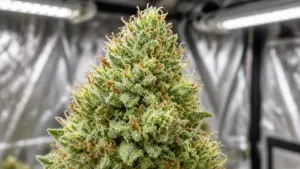
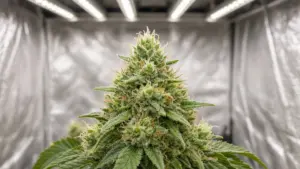
One thing you’ll notice immediately when you crack open a jar of Gas Monkey is the bag appeal. The buds are dense, chunky, and absolutely coated in trichomes—that frosty, crystalline appearance that GG4 genetics are known for. Thick white trichomes catch the light and make the buds look almost glowing.
The color profile is striking. Gas Monkey displays deep greens and forest tones, with darker leaves threading through the lighter bud structure. Some phenos show purple undertones, especially when grown in cooler conditions. The orange to reddish pistils contrast beautifully against the green and white—visual confirmation of genetic expression and ripeness.
When it comes to aroma, Gas Monkey lives up to its name. You’re getting that signature pungent, fuel-forward smell straight from the Gorilla Glue genetics—sharp, almost solventy, that gasoline/diesel quality that makes people stop and ask what you’re growing. But it’s not just raw fuel. The Cookies & Cream side brings vanilla, cream, and subtle cookie-like notes that round out the profile. It’s a complex smell that evolves as the buds cure.
The flavor is where Gas Monkey really shines. Many growers report that gas phenotypes come through stronger in some plants while others express more of the creamy cookie side, so there’s genuine variation to hunt for if you’re growing multiple seeds.
Gas Monkey Strain Grow Guide
Here’s where we get into the practical side—and why many experienced growers come back to Gas Monkey repeatedly. This strain is relatively forgiving while delivering exceptional results, whether you’re running your second grow or your two-hundredth.
Difficulty Level and Phenotype Expression
The Gas Monkey strain is rated moderate to moderately easy. The genetics are stable, and most seeds produce plants that reliably express the strain’s intended traits. There is phenotypic variation in seed runs—some plants lean more GG4 (heavier, more resinous, fuel-forward), others lean more Cookies & Cream (lighter structure, more refined flavor). If you’re growing multiple seeds, hunt your favorite pheno and clone it.
Vegetative Stage
Gas Monkey responds well to standard care during veg. Medium stretch, manageable height, typical hybrid structure. You get a plant that naturally fills a canopy without requiring heavy LST or defoliation, though strategic topping can improve yields. Follow your base nutrient manufacturer’s recommendations—nothing special required.
Flowering Stage and Timeline
Flowering time is approximately 8 to 9 weeks. Gas Monkey can stretch 50% to 100% from flip to finish—plan your canopy height accordingly. Bud structure develops consistently with tight, dense flowers and heavy resin production from week 4 onwards. By week 6, trichomes begin clouding.
Indoor Growing
Indoors: 18/6 during veg, 12/12 during flower. Keep your grow space between 65 to 80°F during veg and 60 to 75°F during flower. Humidity: 40% to 60% during veg, dropping to 40% to 50% during flower. The heavy resin production means good air circulation is critical—static, humid conditions and dense buds can invite mold.
Outdoor Growing
The Gas Monkey strain adapts well to outdoor cultivation in temperate climates. It finishes by early-to-mid October in the northern hemisphere—practical for most growing regions. Plant in full sun (minimum 6 hours, ideally 8+). The plant’s structure generally doesn’t require extensive support, though staking heavy branches in late flower is smart preventative maintenance.
Yield Expectations
Indoors: expect 1.5 to 2.5 oz per square foot under optimized conditions. Outdoors: mature plants yield 2 to 4 oz each depending on climate, timing, and growing skill. The yield-to-effort ratio is solid—this isn’t a strain that demands excessive work for modest returns.
Nutrients and Soil
For soil, the Gas Monkey strain does well in high-quality cannabis-specific mixes. For nutrients, follow your base formula for a hybrid strain. Gas Monkey doesn’t show deficiency issues at standard feeding rates. Some growers reduce nitrogen slightly in late flower to boost terpene expression.
Harvesting and Curing
Harvest when trichomes are mostly cloudy with 10% to 20% amber. Dense buds dry slower than airier strains—hang dry in cool (65 to 70°F), dark conditions with good air circulation for 7 to 10 days. Cure in glass jars with daily burping for the first week, then several times weekly for 2 to 4 weeks. Gas Monkey’s terpene complexity really develops during a proper cure; flavor and aroma improve noticeably after the first few weeks in jars.
Reading a Gas Monkey Seed Pack Label
A breeder label usually shows the strain name, the breeder, the seed type and the seed count. Feminized packs are labelled as such, regular packs contain a natural mix of male and female seeds, and autoflower packs are marked “auto”. Many breeders also print the cross, for example “Parent A x Parent B”, plus a filial marker such as F1, F2, S1 or BX.
F1 means a first-generation cross of two distinct parents, S1 means seeds made from a single parent, and BX means a cross back to one of the original parents. When you compare Gas Monkey packs, these markers tell you how close each release is to the original line.

Feminized, Regular or Auto: Choosing a Gas Monkey Pack
Feminized seeds are bred to produce female plants, which keeps things simple when space is limited. Regular seeds produce males and females and remain the choice for anyone who wants to make their own crosses or keep a line going from seed. Autoflower versions flower on their own timeline regardless of light hours, which suits short outdoor seasons and quick indoor runs.
Match the seed type to your space, your season and how much time you have, then check the breeder’s notes on flowering time and plant size before you choose a Gas Monkey pack.
How to Spot a Genuine Gas Monkey Pack
Popular names get copied, and two packs called Gas Monkey can come from completely different parents. Genuine breeder packs have consistent printing, a clear breeder name or logo and a sealed closure, and many carry a batch code or security sticker. Blurry artwork, misspelled names or loose seeds in a plain bag are warning signs.
The simplest protection is buying sealed packs from a seed bank that names the breeder on every listing, like the ones linked above.
Storing Gas Monkey Seeds Until You Plant
Seeds stay viable longest when they are kept cool, dark and dry. Leave Gas Monkey seeds in their sealed pack, place the pack in an airtight container with a food-safe desiccant packet, and store it somewhere with a steady temperature, such as a refrigerator shelf that is not opened constantly.
Label the container with the strain, breeder and the date you bought it. When you are ready to plant, let the container warm to room temperature before opening it so moisture does not condense on the seeds.

Comparing Gas Monkey Releases From Different Breeders
When more than one breeder offers Gas Monkey, compare the published cross, the filial marker, the seed type and the breeder’s notes on structure and flowering time. One breeder may work from an original cut while another builds a new cross that shares only part of the family tree.
Reading those details side by side helps you pick the release that best fits your space and goals instead of choosing on the name alone.
Germinating Gas Monkey Seeds: A Simple Method
Most growers start Gas Monkey seeds with the paper towel method. Place the seeds between two damp (not dripping) paper towels, set them on a plate under an upturned bowl, and keep them somewhere warm, around 70°F to 80°F. Check once a day and keep the towels moist.
Once a taproot appears, plant the seed about a quarter to half an inch deep in a light, airy starter medium with the root pointing down, and handle it as little as possible. Give the seedling gentle light as soon as it breaks the surface so it does not stretch.

Gas Monkey Strain Review: Final Thoughts
For growers, it hits that sweet spot between performance and manageability—reliable structure, solid yields, and just enough variation to make each run engaging.
If you’re building out a garden with genetics that have staying power, Gas Monkey earns its place. It’s not just a strain you grow once—it’s one you come back to, refine, and keep in rotation because it consistently delivers where it counts.
Frequently Asked Questions: Gas Monkey Strain
What is the Gas Monkey strain?
Gas Monkey is a hybrid cannabis strain bred from Gorilla Glue #4 and Cookies & Cream genetics.
What is the Gas Monkey strain THC content?
Gas Monkey typically tests in the 22% to 28% THC range. Exact content varies based on growing conditions, harvest timing, and phenotype expression.
Is the Gas Monkey strain indica or sativa?
Gas Monkey is a hybrid that leans indica-dominant, approximately 55% to 60% indica and 40% to 45% sativa.
How do you grow the Gas Monkey strain?
Gas Monkey is moderately easy to grow, suitable for both indoor and outdoor cultivation. Maintain 65 to 80°F during veg, 60 to 75°F during flower, and standard feeding for a hybrid. Flowers in 8 to 9 weeks. Good air circulation is important due to dense bud structure. Yields are 1.5 to 2.5 oz/sq ft indoors and 2 to 4 oz per plant outdoors.
What is the flowering time for Gas Monkey?
Approximately 8 to 9 weeks indoors. Outdoor harvest falls in early-to-mid October in northern hemisphere climates.
Suggested Articles
 10 Nov 2026
 12 min read

;)
;)
;)
 April 06, 2026


RESPONSES (0)
No responses yet. Be the first to respond!