


Hash Seeds for Sale: Buy Hash Plant Cannabis Seeds Online
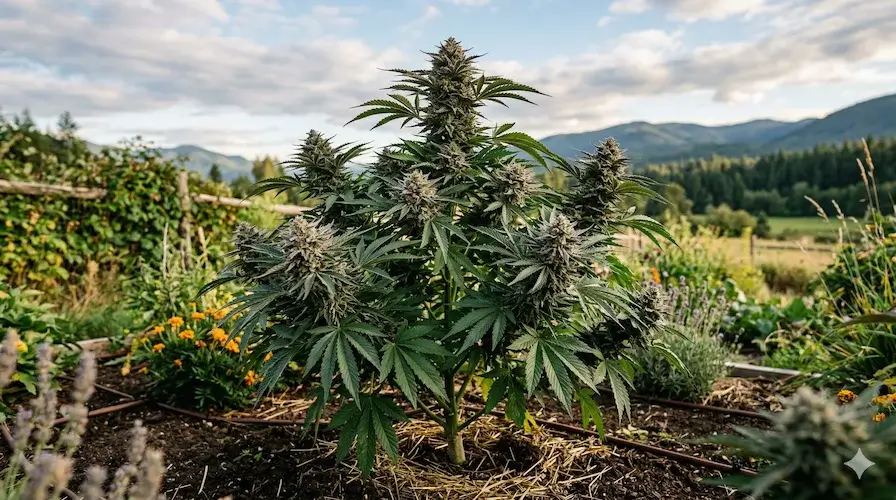

Hash seeds is the buyer’s shorthand for hash plant genetics: resin-heavy lines descended from the Afghani and Pakistani traditions where hashish was made for centuries.
I’m James Bean, founder of Seeds Here Now since 2010. This guide explains what makes a hash plant line, what buyers look for, and six hash seeds worth knowing. It covers genetics and history only, not processing or growing.
Seeds Here Now sells authentic breeder packs to adults 21+. We do not provide growing instructions, and nothing here is a medical claim.
What Are Hash Seeds?
Hash plant lines trace back to the Hindu Kush region of Afghanistan and Pakistan, where farmers selected plants for heavy resin over many generations. Read our guide to heritage strains for the background.
Most hash seeds today are indica-leaning, compact lines with dense, resinous flowers and earthy, spicy, incense-like aromas.
The phrase hash seeds is a buyer’s shorthand. It does not describe a separate kind of seed. It describes seeds from lines that breeders selected for heavy resin, usually with Afghani or Pakistani ancestry. On a pack, you will most often see these lines sold under the name Hash Plant or with Afghan in the title.
Because the term is informal, it covers both old heritage lines and modern crosses. A classic Afghan Hash Plant and a new hash-leaning hybrid can both be called hash seeds, even though their aromas and histories are very different.
A Short History of Hash Plant Genetics
Resin-focused cannabis has a long history across Central and South Asia, North Africa and the Middle East. In the Himalayan foothills of India and Nepal, hand-rubbed resin known as charas has a deep tradition. In Afghanistan, Pakistan, Morocco and Lebanon, sieved resin known as hashish became a regional specialty. Over generations, farmers in those regions kept seeds from the plants that served that tradition best.
In the Hindu Kush mountains along the Afghanistan and Pakistan border, that selection produced compact, broad-leaf plants with dense, resinous flowers. Those plants became the foundation for what buyers now call hash plant genetics. Our guide to landrace and heritage strains covers how regional lines like these formed.
That background is why heritage and lineage matter so much when you collect hash seeds. A pack that traces back to Hindu Kush stock connects your collection to a selection history that is centuries old.
How Afghan Genetics Reached the West
In the 1960s and 1970s, travelers on the overland route through Afghanistan and Pakistan, often called the Hippie Trail, brought Afghan seeds home to North America and Europe. Breeders in California, the Pacific Northwest and the Netherlands began working with that material.
Afghan stock went on to shape many of the most famous lines in modern cannabis. Northern Lights, Skunk #1 and many Kush lines carry Afghan ancestry, and Hash Plant became a breeding name in its own right. Our Northern Lights #10 review covers one of the best-known Afghan-heavy families.
When you hold a Hash Plant pack today, you are holding a line shaped by that exchange between traditional farmers and Western breeders.
What the Name Hash Plant Means
Hash Plant is used two ways. Sometimes it names a specific line, like the Hash Plant cut often linked to the Pacific Northwest that Sensi Seeds later worked with Northern Lights. More often, it is a general label breeders use for resin-heavy, Afghani-leaning lines.
That is why several breeders can sell an Afghan Hash Plant or a Hash Plant cross that are not the same line. The breeder name on the pack tells you whose selection you are holding. For buyers, that is the most useful detail on any pack of hash plant seeds.

Heritage Lines vs. Modern Hash Crosses
Hash seeds fall into two broad groups, and most collections benefit from holding both.
Heritage lines stay close to the original Afghani template. They tend to be compact, broad-leaf, indica-leaning lines with earthy, spicy and incense-like aromas. Their appeal is authenticity. They show what resin-focused selection looked like before modern hybrids arrived.
Modern hash crosses take that resin-heavy base and pair it with newer families. Strawberry Hash Plant adds fruit, Hash Face adds OG gas, and other breeders pair hash plant stock with dessert or Cookies lines. Their appeal is range. They show how breeders keep the hash plant character while chasing new aromas.
| Heritage hash lines | Modern hash crosses | |
|---|---|---|
| Ancestry | Mostly Afghani and Pakistani | Hash plant plus newer families |
| Typical format | Often regular | Often feminized |
| Aroma | Earth, spice, incense | Fruit, gas, dessert notes over earth |
| Authenticity and history | Range and new directions |
What Buyers Look For in Hash Seeds
- Trichome density: breeders select for heavy resin coverage.
- Trichome head size: large, uniform resin heads are prized in hash plant lines.
- Heritage: Afghani and Pakistani ancestry is the classic marker.
- Aroma: earth, spice, incense and sometimes fruit in modern crosses.
- Breeder transparency: clear lineage and selection history.
Trichomes Explained
Trichomes are the tiny resin glands on cannabis flowers and sugar leaves. Under magnification, the best-known type looks like a small stalk topped with a round head. Those heads hold most of a plant’s cannabinoids and terpenes, which is why breeders pay so much attention to them.
Breeders of hash plant lines look at three things. The first is density, meaning how thickly the resin covers the flower. The second is head size, since larger heads are a classic marker of Afghani-derived lines. The third is consistency, meaning how evenly those traits show up across a line.
None of those traits can be seen on a seed. That is why breeder transparency matters. A clear lineage and selection history is the best way to know what a pack of hash seeds represents.
Our guide on what terpenes are explains the aroma compounds that trichomes carry.
The Aroma of Hash Plant Lines
Classic hash plant lines are known for a distinctive aroma family. Buyers usually describe it as earthy, woody, spicy and incense-like, sometimes with a sweet, resinous edge. Many people say it smells like the traditional hashish it was selected for.
Those notes come from the terpenes in the line’s resin, and they vary from one breeder’s selection to the next. Modern crosses shift the profile. A fruit-forward parent can add berry or citrus over the earthy base, while an OG parent adds fuel and pine.
When you compare hash seeds, aroma is one of the clearest ways to tell a heritage line from a modern cross, even when both carry Hash Plant in the name. We describe aroma only and make no claims about effects.

6 Best Hash Seeds to Collect
| Line | Breeder | Seed type |
|---|---|---|
| Afghan Hash Plant | Best Coast Genetics | Regular |
| Afghan Hash Plant | Barney’s Farm | Regular |
| Ethos Hash Plant BX1 | Ethos Genetics | Feminized |
| Strawberry Hash Plant | Crockett Family Farms | Feminized |
| Hash Face | Thug Pug Genetics | Regular |
| PistHash | T.H. Seeds | Feminized |
1. Afghan Hash Plant (Best Coast Genetics)
A direct expression of traditional Afghani hash plant genetics in regular seed form, with reported THC around 15% to 20%. See Afghan Hash Plant seeds and our Afghan Hash Plant review.
2. Afghan Hash Plant (Barney’s Farm)
Another take on the classic Afghani template from one of Europe’s longest-running seed companies. Browse the Barney’s Farm catalog.
3. Ethos Hash Plant BX1 (Ethos Genetics)
A backcross that reinforces hash plant traits with the consistency Ethos is known for. Browse the Ethos Genetics catalog.
4. Strawberry Hash Plant (Crockett Family Farms)
A modern twist that adds strawberry sweetness to the hash plant base.
5. Hash Face (Thug Pug Genetics)
A contemporary regular line from a breeder known for resin-heavy work. See Hash Face regular.
6. PistHash (T.H. Seeds)
From the Amsterdam breeder behind decades of hash-focused work. See T.H. Seeds PistHash.
Notes on Each Line
Afghan Hash Plant from Best Coast Genetics
This is the most direct link to traditional Afghani hash plant genetics on the list. It is sold as regular seeds, which keeps the full genetic range of the line intact. Expect the classic earthy, spicy and incense-like Afghani aroma. It is the natural anchor for any hash seeds collection.
Afghan Hash Plant from Barney’s Farm
Barney’s Farm is a long-running Amsterdam seed company, and its Afghan Hash Plant is its own selection of the same classic template. Holding both Afghan Hash Plant packs side by side shows how two breeders interpret one heritage line. Browse the Barney’s Farm catalog for current listings.
Ethos Hash Plant BX1 from Ethos Genetics
BX1 means first backcross generation. A breeder crosses offspring back to a parent to lock in that parent’s traits. For buyers, a backcross signals deliberate work to reinforce the hash plant character rather than dilute it.
Strawberry Hash Plant from Crockett Family Farms
Crockett Family Farms is a California breeder known for Tangie lines, and Strawberry Hash Plant shows its fruit-forward style meeting a hash plant base. It adds strawberry and berry sweetness to an earthy Afghani backbone. Check the Crockett Family Farms catalog for what is in stock.
Hash Face from Thug Pug Genetics
Thug Pug Genetics is best known for its Breath lines, including Meat Breath. Hash Face brings Face Off OG into the hash plant lineage for a gassier, fuel-forward aroma. It is sold as regular seeds.
PistHash from T.H. Seeds
T.H. Seeds is an Amsterdam breeder working since the early 1990s. PistHash is a feminized hash-leaning line from that long breeding history. See the T.H. Seeds catalog for its other lines.
Hash Seeds at a Glance
| Line | Style | Aroma direction | Why collect it |
|---|---|---|---|
| Afghan Hash Plant (Best Coast Genetics) | Heritage | Earth, spice, incense | The classic Afghani template |
| Afghan Hash Plant (Barney’s Farm) | Heritage | Earth and spice | A European take on the same template |
| Ethos Hash Plant BX1 | Backcross | Earthy hash | Reinforced hash plant traits |
| Strawberry Hash Plant | Modern cross | Strawberry over earth | Fruit meets heritage |
| Hash Face | Modern cross | Gas and fuel | OG character on a hash base |
| PistHash | Modern feminized | Earthy hash | A long-running Amsterdam breeder |
Breeder availability changes, so some of these lines may be between restocks. The breeder catalogs linked above show what is listed now.
Regular vs. Feminized Hash Seeds
Traditional hash plant lines are often sold as regular seeds, which preserve the full genetic range for breeders. Modern hash crosses are increasingly available as feminized seeds. Browse our feminized cannabis seeds and Best Coast Genetics.

Reading a Hash Seeds Label
Hash plant seeds come with a few labels worth knowing.
- Regular: seeds that can be male or female, preserving the full genetic range. Many heritage hash lines are sold this way. Browse our regular cannabis seeds.
- Feminized: seeds bred to produce female plants. Many modern hash crosses use this format.
- BX: a backcross, where offspring are crossed back to a parent to reinforce its traits.
- IBL: an inbred line, worked over many generations for consistency.
- S1: a selfed line, made from a single parent.
Knowing those labels makes it easier to compare two hash seeds listings that share a name but come from very different breeding work.
Building a Hash Plant Seeds Collection
A strong hash seeds collection tells the story from heritage to modern breeding. A simple plan is to start with one heritage Afghan Hash Plant, add a backcross like Ethos Hash Plant BX1, then add one or two modern crosses such as Hash Face or Strawberry Hash Plant to show where breeders have taken the line.
Keep notes on each pack, including the breeder, the format, the lineage and the release date. Store sealed packs somewhere cool, dark and dry, in their original breeder packaging. That keeps a collection organized and easy to verify.
We sell seeds to adults 21+ and do not provide growing or processing instructions.
Why Hash Seeds Matters
Hash seeds are one of the few categories that connect a modern seed collection directly to a centuries-old farming tradition. Many famous modern lines carry some Afghan ancestry, so a heritage hash plant pack is a window into the roots of today’s catalog.
They also make a good teaching set. Holding a heritage Afghan Hash Plant, a backcross and a modern cross side by side shows how breeders preserve a trait, reinforce it and then push it in new directions. That story is easy to see in hash plant lines because the resin-heavy character is so central to them.
For a broader look at the breeders in our catalog, browse the Thug Pug Genetics catalog and the Ethos Genetics catalog.
Quick Facts About Hash Seeds
- Hash seeds is an informal name for seeds of resin-heavy lines, not a separate kind of seed.
- Most hash plant genetics trace back to the Hindu Kush region along the Afghanistan and Pakistan border.
- Afghan seeds reached Western breeders in the 1960s and 1970s and shaped lines like Northern Lights and Skunk #1.
- Hash Plant can name one line or serve as a general label, so the breeder name is the key detail.
- Heritage hash lines are often sold as regular seeds, while many modern crosses are feminized.
- Classic hash plant aromas are earthy, woody, spicy and incense-like.
- Seeds do not show resin traits, so lineage and breeder transparency are how buyers judge a pack.
Seeds, the Law and Our Rules
Cannabis laws differ by state, and federal hemp and seed rules are changing under Section 781. Check the law where you live before you buy anything. Our cannabis seeds by state guide links every state and its official sources, and our explainer on what Section 781 is covers the federal side.
Every buyer must be 21 or older. We sell seeds only to adults 21+.
Ready To Grow Your Own Hash?
The path from seed to smoke is one of the most satisfying things a cannabis enthusiast can do—and when that smoke passes through a bowl of your own hand-pressed hash made from plants you grew from seed, that satisfaction is hard to describe to anyone who hasn’t experienced it.
Shop hash seeds at Seeds Here Now and get started. Browse the full feminized cannabis seed catalog for convenient, guaranteed-female hash plant options, or explore the SHN blog for in-depth strain reviews, grow tips, and everything else you need to succeed.
Frequently Asked Questions
What are hash seeds?
Seeds of hash plant lines: resin-heavy genetics descended from Afghani and Pakistani traditions.
What are the best hash seeds?
Are hash plants indica?
Most hash plant lines are indica-leaning because of their Hindu Kush heritage.
Do you give growing or hash-making advice?
No. We sell seeds to adults 21+ and do not provide growing or processing instructions.
Where do hash plant genetics come from?
Mostly from the Hindu Kush region along the Afghanistan and Pakistan border, where farmers selected resin-heavy plants for generations.
Is Hash Plant one strain or many?
Both. It can name a specific line, but breeders also use it as a general label for resin-heavy Afghani lines, so the breeder name matters.
What does BX1 mean on hash seeds?
First backcross generation, where offspring are crossed back to a parent to reinforce its traits.
Are hash seeds regular or feminized?
Both formats exist. Heritage hash lines are often regular, while many modern crosses are feminized.
Which hash seeds should a new buyer start with?
A heritage Afghan Hash Plant is the natural first pack, followed by a backcross and a modern cross.
Do hash seeds grow differently from other cannabis seeds?
Hash plant strains tend to grow more compact and bushy than most contemporary hybrid strains, reflecting their indica-dominant Afghani heritage. They generally have shorter internodal spacing, thicker stems, and wider leaves. Flowering times are often faster (7 to 8 weeks for some), and they tend to be quite resilient plants—bred for mountain conditions means they handle stress well.
Can I use any cannabis strain to make hash?
Technically, yes, but results vary significantly. Strains specifically selected for hash production—those with dense trichome coverage, large trichome heads, and the right resin morphology—will give you dramatically better yields from your processing. Low-resin strains will produce very little hash no matter how well you execute the process. Starting with the right genetics makes everything downstream more efficient and rewarding.
Bottom Line
Hash seeds connect a collection to one of cannabis’ oldest traditions. For adults 21+, a classic Afghan Hash Plant next to a modern cross tells the whole story.
Sources
Key Facts About Hash Seeds
| What they are | Resin-heavy hash plant lines |
|---|---|
| Ancestry | Afghani and Pakistani (Hindu Kush) traditions |
| Type | Mostly indica-leaning |
| Heritage lines | Often regular; earth, spice, incense |
| Modern crosses | Often feminized; fruit, gas, dessert notes |
| Where to buy | Seeds Here Now, authentic breeder packs for adults 21+ |
Last updated October 7, 2026 by James Bean, founder of Seeds Here Now. Nothing here is legal advice. See our disclaimer, terms of use and shipping policy.
Suggested Articles

 09 Nov 2026
 7 min read
;)
;)
;)
 April 05, 2026


RESPONSES (0)
No responses yet. Be the first to respond!