


Top CBG Strains for Growers: A Seed Comparison Guide


CBG strains are one of the most interesting corners of modern cannabis breeding. Instead of chasing THC, breeders select lines where cannabigerol (CBG) stays the dominant cannabinoid.
I’m James Bean, founder of Seeds Here Now since 2010. This guide explains what makes CBG strains different, compares the best-known CBG lines, and lists the CBG seeds we carry. We describe chemistry and lineage only and make no health claims.
Seeds Here Now sells authentic breeder packs to adults 21+. We do not provide growing instructions, and nothing here is a medical claim.
What Makes CBG Strains Different
In most cannabis, CBGA is an early building block that the plant converts into THCA or CBDA. CBG strains carry genetics that limit that conversion, so CBG remains the main cannabinoid. Our CBG seeds page covers the basics.
That is why CBG strains typically report very low THC. Breeders achieved it through careful selection over many generations, much like the work behind CBD-rich strains.
| Chemotype | Dominant cannabinoid | Example |
|---|---|---|
| THC-dominant | THC | Most dessert and gas lines |
| CBD-dominant | CBD | CBD-rich lines |
| CBG-dominant | CBG | White CBG, Jack Frost CBG |
How Buyers Compare CBG Strains
- Reported CBG level: lab figures vary by sample, so treat percentages as ranges.
- Reported THC level: CBG lines are bred for very low THC; check the breeder’s figures.
- Aroma: terpenes still matter. Read what terpenes are.
- Breeder and stability: named breeders and stable lines are worth more to a collection.
- Local law: rules for low-THC and CBG genetics differ by state; check before you buy.

Top CBG Strains Compared
| Strain | Reported CBG | Notes |
|---|---|---|
| White CBG | About 15% to 20% | Frosty, one of the best-known CBG lines |
| Stem Cell CBG | About 15% to 18% | Known for consistency |
| Jack Frost CBG | Up to about 20% | Widely used CBG line |
| Sour G CBG | About 15% to 18% | Sour, citrus aroma |
1. White CBG
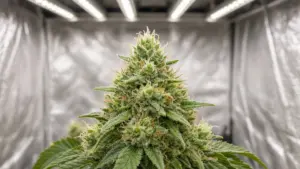
White CBG is one of the most popular lines, known for frost-covered buds and a reported CBG content of about 15% to 20% with minimal THC.
2. Stem Cell CBG
Stem Cell CBG is valued for consistent cannabinoid output, with reported CBG around 15% to 18%.
3. Jack Frost CBG
Jack Frost CBG is a staple of the category, with reported CBG levels reaching about 20%.
4. Sour G CBG
Sour G CBG stands out for aroma, with a pleasantly sour, citrusy terpene profile and reported CBG of about 15% to 18%.
CBG Seeds We Carry
Availability changes, but these CBG seeds are in our catalog now:
5. Seedsman CBG #1 (Feminized)
Seedsman CBG #1 is a feminized CBG line from one of Europe’s longest-running seed companies.
6. CBG-Force (Feminized) by Dutch Passion
CBG-Force by Dutch Passion comes from a breeder with decades of work on specialty chemotypes.
7. CBG Citrus Ginger Auto by Automatically Delicious
CBG Citrus Ginger Auto puts CBG genetics into an autoflower line with a citrus and ginger aroma.
CBGA: The Starting Point for Other Cannabinoids
To understand CBG strains, it helps to know where cannabinoids come from. In the cannabis plant, cannabigerolic acid (CBGA) is made first. Enzymes in the plant then convert CBGA into other acid-form cannabinoids: THCA synthase makes THCA, CBDA synthase makes CBDA, and CBCA synthase makes CBCA.
That is why CBGA is often called the mother cannabinoid. In a typical THC-dominant plant, most of the CBGA is converted, so only small amounts remain. CBG itself is the neutral form of CBGA, produced mainly when the plant material is heated or aged.
We describe this chemistry for buyers who want to understand how CBG strains differ. It is not a health claim, and we make none.

How Breeders Made CBG-Dominant Lines
CBG strains exist because some plants carry versions of the converting enzymes that do not work, or work very little. When a plant cannot convert much of its CBGA, CBGA builds up and becomes the main cannabinoid.
Breeders found plants with that trait and selected for it over many generations, combining it with better structure, frost and aroma. The result is the modern CBG category: lines like White CBG, Jack Frost CBG and Stem Cell CBG, where CBG is dominant and THC is very low.
It is similar in spirit to the work behind CBD-dominant lines, which our guide to CBD-rich cannabis strains covers.
This kind of selection takes patience. A breeder has to test plants, keep the ones with the right chemistry and still pay attention to frost, aroma and overall quality, often across several generations before a line is ready for release.
The Five Cannabis Chemotypes
Researchers often group cannabis into chemotypes based on which cannabinoid dominates. CBG strains belong to a category of their own:
| Chemotype | Dominant cannabinoid profile | Where CBG strains fit |
|---|---|---|
| Type I | THC-dominant | Most dessert, gas and candy lines |
| Type II | Mixed THC and CBD | Balanced lines |
| Type III | CBD-dominant | CBD-rich lines |
| Type IV | CBG-dominant | CBG strains such as White CBG |
| Type V | Very low cannabinoids overall | Mostly fiber and research lines |
This framework helps explain why CBG strains are a separate category rather than just low-THC versions of ordinary cannabis.
CBG Lines Compared With CBD Lines
The two specialty categories are often confused, but they are different. In CBD-dominant plants, the enzyme that makes CBDA is active, so most of the starting CBGA becomes CBDA. In CBG-dominant plants, the converting enzymes are largely inactive, so the CBGA stays as it is.
| Feature | CBD-dominant lines | CBG-dominant lines |
|---|---|---|
| Main cannabinoid | CBD (from CBDA) | CBG (from CBGA) |
| What happens to CBGA | Mostly converted to CBDA | Mostly left unconverted |
| Reported THC | Low | Very low |
For buyers, both categories show how breeders can steer the plant’s chemistry by selection alone.

Aroma in CBG Strains
A common assumption is that CBG strains have little aroma. In practice, terpenes are made separately from cannabinoids, so a CBG line can smell just as interesting as a THC-dominant one. Sour G CBG is known for a sour, citrus profile, and CBG Citrus Ginger Auto is named for its citrus and ginger notes.
For buyers, that means aroma is still a good way to compare CBG seeds. See our guide on what terpenes are for the basics.
The Breeders Behind the CBG Seeds We Carry
Seedsman is one of Europe’s longest-running seed companies, and its CBG #1 is a feminized entry into the category. Dutch Passion, a Dutch breeder with decades of work on specialty chemotypes, makes CBG-Force. Automatically Delicious brings CBG genetics into autoflower form with CBG Citrus Ginger Auto.
Having CBG seeds from three different breeders lets buyers compare how each approached the same goal. Our CBG seeds page lists what is in the catalog.
How to Judge CBG Seeds
- Look for a named breeder and a clear statement that the line is CBG-dominant.
- Check the reported CBG and THC figures, and treat them as ranges rather than guarantees.
- Buy sealed, original breeder packaging.
- Check the rules where you live, since laws on low-THC and CBG genetics differ by state.
Store CBG seeds the same way as any other pack: sealed, cool, dark and dry, out of reach of children and pets.
Seeds, the Law and Our Rules
Cannabis laws differ by state, and federal hemp and seed rules are changing under Section 781. Check the law where you live before you buy anything. Our cannabis seeds by state guide links every state and its official sources, and our explainer on what Section 781 is covers the federal side.
Every buyer must be 21 or older. We sell seeds only to adults 21+.
Introduction to CBG and Its Appeal in Cannabis Cultivation
CBG is often called the “mother of cannabinoids” because THC, CBD, and many other cannabinoids are derived from CBG’s precursor form, CBGA.
CBG strains are relatively new, but they’re gaining popularity fast, especially among those looking to expand beyond traditional THC and CBD strains. However, growing CBG-rich strains comes with some unique challenges, so it’s essential to choose the right strain based on your goals, experience, and setup.
Tips for Maximizing CBG Yield and Quality
Optimize Growing Conditions
CBG-rich strains prefer stable environments. Keep the temperature between 70°F to 85°F, maintain relative humidity between 40% to 50%, and ensure plenty of light (18 to 24 hours during vegetative stages).
Nutrient Management
CBG strains generally respond well to balanced nutrients but require higher phosphorus levels in the flowering stage to enhance bud development.
Harvest Timing
Harvest timing is crucial for preserving CBG levels. Since CBG converts to other cannabinoids as the plant matures, it’s best to harvest a bit earlier than you might with high-THC or high-CBD strains to capture maximum CBG.
Proper Drying and Curing
Dry your CBG buds slowly in a dark, well-ventilated area at around 60°F and 60% humidity to avoid potency loss. Curing for at least 2 to 3 weeks helps preserve the terpenes and enhance flavor.
Frequently Asked Questions
What are CBG strains?
Cannabis lines bred so that cannabigerol (CBG) stays the dominant cannabinoid, usually with very low THC.
Which CBG strains are best known?
White CBG, Stem Cell CBG, Jack Frost CBG and Sour G CBG are among the best-known CBG lines.
Are CBG strains legal everywhere?
No. Laws on low-THC and CBG genetics vary by state. Check the law where you live.
Do you give growing advice for CBG strains?
No.
What is CBGA?
Cannabigerolic acid, the first cannabinoid the plant makes. Enzymes convert it into THCA, CBDA and CBCA.
Why do CBG strains have so little THC?
They carry genetics that limit the conversion of CBGA into THCA, so CBGA builds up instead.
Do CBG strains have an aroma?
Yes. Terpenes are made separately from cannabinoids, so CBG lines can have strong aromas.
What chemotype are CBG strains?
They are usually classed as Type IV, the CBG-dominant chemotype.
Is CBG the same as CBGA?
No. CBGA is the acid form the plant makes; CBG is the neutral form, produced mainly when plant material is heated or aged.
What is the best CBG strain for beginners?
White CBG is an excellent choice for beginners due to its resilience and low maintenance requirements.
How long does it take for CBG strains to mature?
CBG strains typically mature within 8 to 11 weeks, depending on the strain.
What yields can I expect from CBG plants?
Yields vary by strain. Jack Frost, for instance, offers generous yields, while others may prioritize CBG concentration over high yield.
🌱 New to this? Start with our complete guide: CBG Seeds.
Bottom Line
CBG strains show how far selective breeding has come. For adults 21+, CBG seeds are a distinctive chemotype worth adding to any collection.
Sources
Last updated October 7, 2026 by James Bean, founder of Seeds Here Now. Nothing here is legal advice. See our disclaimer, terms of use and shipping policy.
Suggested Articles

 09 Nov 2026
 7 min read
;)
;)
;)
 December 12, 2024


RESPONSES (0)
No responses yet. Be the first to respond!