


Understanding Cannabis Genetics: A Complete Guide for Growers and Consumers
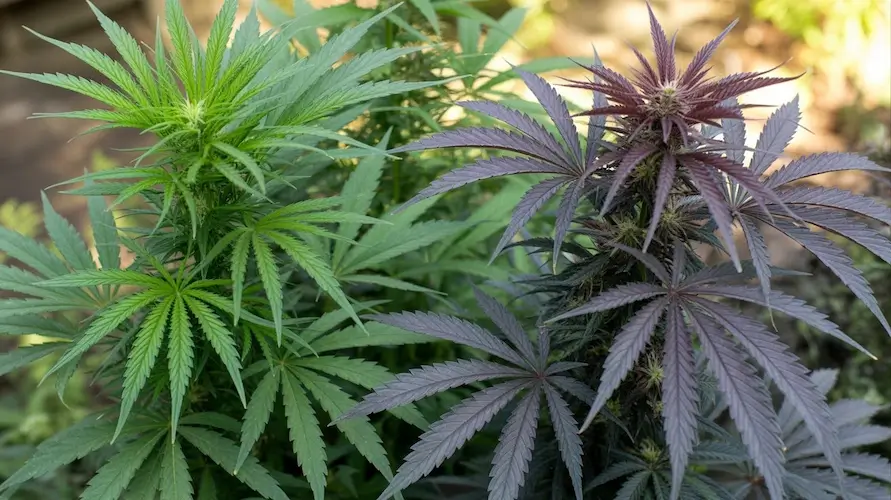
Cannabis genetics are the foundation of how every cannabis plant grows, flowers, and produces cannabinoids and terpenes. While strain names and THC percentages often dominate marketing and consumer conversations, genetics are the real drivers behind consistency, effects, flavor, and cultivation success.
For growers, understanding cannabis genetics reduces risk, improves predictability, and helps match plants to specific environments. For consumers, it explains why two products with similar THC levels can produce very different experiences. Genetics determine what a cannabis plant can become, while cultivation determines how much of that potential is expressed.
This guide explores cannabis genetics in depth, covering plant classification, breeding practices, phenotypes, cannabinoids, terpenes, and emerging genetic science. It is designed to serve as a foundational reference that supports strain reviews, cultivation guides, and breeding content across a cannabis website.
What Are Cannabis Genetics?
Cannabis genetics refer to the inherited DNA that determines how a cannabis plant grows, develops, and expresses chemical compounds. These genetic instructions are passed down through seeds or preserved exactly through cloning.
Genetics defines the plant’s potential, while the growing environment influences how that potential is realized. No amount of skill can force a low-potency genetic line to behave like a high-THC cultivar.
Cannabis genetics influence traits such as:
-
Plant height, structure, and branching
-
Leaf shape and growth vigor
-
Flowering time and stretch
-
Yield potential and bud density
-
Cannabinoid ratios and potency
-
Terpene profiles and aroma
-
Resistance to pests, disease, and stress
Understanding this relationship helps growers set realistic expectations and choose genetics that match their goals.
Cannabis Species and Subspecies Explained
Cannabis has traditionally been divided into Cannabis sativa, Cannabis indica, and Cannabis ruderalis. While modern genetic research increasingly supports a single-species model, these categories remain useful for understanding historical lineage and growth tendencies.
Cannabis Sativa Genetics
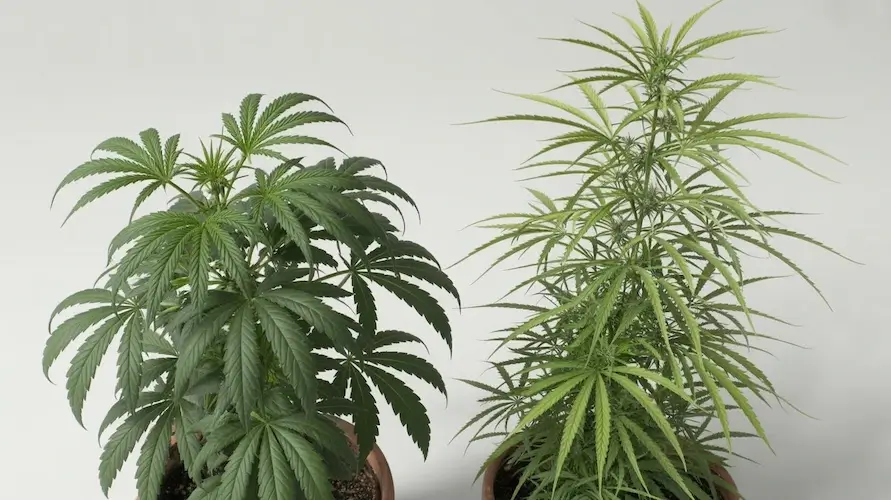
Sativa-leaning genetics evolved in equatorial regions with long growing seasons and consistent daylight. These conditions favored tall plants capable of competing for sunlight.
Common sativa genetic tendencies include:
-
Tall growth with long internodal spacing
-
Narrow, elongated leaves
-
Longer flowering times, often 10–14 weeks
-
Significant stretch during early flowering
-
Terpene profiles skewing citrusy, herbal, or spicy
Sativa-dominant cultivars often require more vertical space and patience but are valued for complexity and aromatic expression.
Cannabis Indica Genetics
Indica-leaning genetics developed in mountainous regions with shorter summers and harsher conditions. These pressures favored compact plants with shorter life cycles.
Typical indica genetic traits include:
-
Short, bushy structure
-
Broad leaves and dense branching
-
Shorter flowering times, often 7–9 weeks
-
Minimal stretch after flowering begins
-
Terpene profiles leaning earthy, sweet, or musky
Indica-dominant cultivars are often easier to manage indoors and popular for limited grow spaces.
Cannabis Ruderalis Genetics
Ruderalis genetics evolved in northern latitudes where daylight hours fluctuate dramatically. To survive short seasons, these plants developed autoflowering behavior, flowering regardless of the light cycle.
Key ruderalis traits include:
-
Autoflowering genetics
-
Small plant size
-
Rapid life cycles
-
Naturally low cannabinoid production
Ruderalis genetics are primarily used to create autoflowering hybrids rather than being grown on their own.
Landrace Strains: The Genetic Foundation of Cannabis
Landrace strains are cannabis populations that evolved naturally in specific regions over centuries without modern hybridization. These genetics adapted to local climates, pests, and environmental stressors, resulting in stable, resilient plants.
Landrace genetics are valued because they offer:
-
Strong genetic stability
-
Distinct, region-specific terpene profiles
-
Environmental resilience
-
Foundational material for modern breeding
Prominent landrace regions include:
-
Afghanistan and the Hindu Kush
-
Southeast Asia
-
Africa
-
Central and South America
Many modern cannabis genetics trace directly back to these original gene pools.
Hybridization and Modern Cannabis Genetics
Nearly all cannabis on today’s market is hybridized. Hybridization involves crossing two genetically distinct plants to combine desirable traits into a single cultivar.
Breeders hybridize cannabis to achieve goals such as:
-
Increased potency
-
Shorter flowering times
-
Higher yields
-
Enhanced terpene expression
-
Improved disease and stress resistance
Terms like “indica-dominant” or “sativa-dominant” describe growth tendencies, not precise genetic makeup. They should be treated as directional guidance rather than scientific classification.
Phenotypes vs. Genotypes in Cannabis
Understanding the difference between genotype and phenotype is essential for working with cannabis genetics.
-
Genotype refers to the plant’s genetic code inherited from its parents
-
Phenotype refers to how those genes are expressed in a specific environment
Environmental factors that influence phenotype include:
-
Light intensity and spectrum
-
Temperature and humidity
-
Nutrient availability
-
Training and pruning methods
This is why plants from the same seed pack can look and behave differently and why growers often phenohunt to identify elite expressions worth cloning.
Seeds, Clones, and Genetic Consistency
Cannabis Seeds
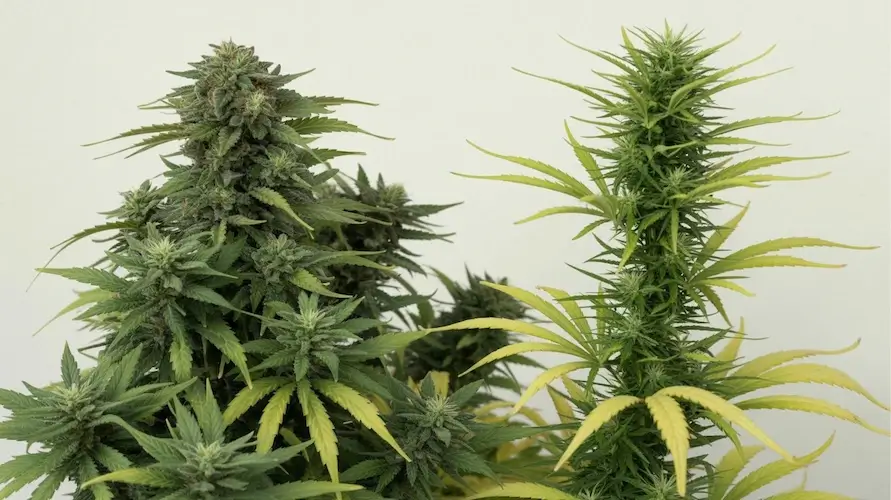
Seeds introduce genetic variation, even within stabilized strains. Each seed represents a unique genetic combination.
Common seed types include:
Seeds are ideal for breeding and discovery, but require selection to achieve consistency.
Cannabis Clones
Clones are cuttings taken from a female plant and rooted to produce genetically identical copies.
Benefits of clones include:
-
Predictable growth and flowering
-
Consistent cannabinoid and terpene profiles
-
Uniform canopy management
However, clones can carry pests or pathogens if sourced irresponsibly.
Genetic Stability, Backcrossing, and Breeding Lines
Genetic stability refers to how consistently a strain reproduces its traits across generations. Unstable strains may show wide variation, while stable lines produce predictable results.
Backcrossing is a breeding technique used to reinforce desired traits by breeding offspring back to a parent plant.
Backcrossing helps:
-
Lock in terpene profiles
-
Reduce phenotypic variation
-
Reinforce desired traits
-
Remove unwanted characteristics
Well-developed breeding lines often take years to stabilize.
Cannabinoids and Genetic Expression
Cannabinoids are chemical compounds produced by cannabis that interact with the body’s endocannabinoid system. Genetics determines which cannabinoids a plant produces and their potential ratios.
Genetically influenced cannabinoids include:
-
THC
-
CBD
-
CBG
-
CBN
-
CBC
Selective breeding allows cultivars to express high-THC, high-CBD, or balanced cannabinoid profiles.
Terpenes and Aromatic Genetics
Terpenes are aromatic compounds responsible for cannabis flavor and aroma. Each plant’s terpene profile is genetically encoded, though the environment affects expression.
Common terpene families include:
-
Myrcene
-
Limonene
-
Caryophyllene
-
Pinene
-
Linalool
Modern breeding increasingly prioritizes terpene complexity over raw potency.
Chemovars: A Modern Classification System
Chemovars classify cannabis based on chemical composition rather than strain name.
Primary chemovar categories include:
-
THC-dominant
-
CBD-dominant
-
Balanced THC/CBD
Chemovar classification aligns more closely with lab testing and is gaining traction as standards improve.
Autoflowering Cannabis Genetics Explained
Autoflowering cannabis flowers based on age instead of light cycle due to ruderalis genetics.
Benefits of autoflowering genetics include:
-
Faster harvest cycles
-
Simplified lighting schedules
-
Compact plant size
Modern autoflowers rival photoperiod strains in quality when bred properly.

How Genetics Influences Growing Difficulty
Some cannabis genetics are naturally resilient, while others require precise control.
Beginner-friendly genetics often feature:
-
Strong stress resistance
-
Compact growth
-
Short flowering times
Matching genetics to experience level is critical for success.
Choosing Cannabis Genetics for Your Goals
Selecting cannabis genetics should be practical, not trend-driven.
Key factors to consider:
-
Available grow space
-
Flowering time constraints
-
Desired cannabinoid and terpene profiles
-
Yield expectations
-
Experience level
Genetic compatibility with the environment matters more than strain hype.
The Future of Cannabis Genetics
Advances in genetic science are reshaping cannabis breeding.
Key developments include:
-
Genetic sequencing and mapping
-
Virus-free tissue culture
-
Marker-assisted breeding
-
Rare cannabinoid expression
-
Precision terpene targeting
These innovations are driving greater consistency and transparency.
Final Thoughts
Cannabis genetics define what a plant is capable of becoming. While cultivation influences results, genetics sets the limits. Understanding cannabis genetics empowers growers to reduce risk, consumers to make informed choices, and the industry to move toward greater reliability.
Cannabis genetics connect directly to strain selection, breeding, cultivation, and product development, making them one of the most important concepts in cannabis education.
FAQs: Understanding Cannabis Genetics
What are cannabis genetics?
Cannabis genetics refer to the DNA that determines how a plant grows, flowers, and produces cannabinoids and terpenes.
Are indica and sativa real genetic categories?
They are useful descriptors, but most modern strains are hybrids rather than pure strains.
Why do plants from the same strain look different?
Different phenotypes emerge due to environmental influence on genetic expression.
Are cannabis clones genetically identical?
Yes. Clones preserve the exact genetics of the mother plant.
What are landrace strains?
Landrace strains are regionally evolved cannabis genetics that form the foundation of modern breeding.
What does genetic stability mean?
It describes how consistently a strain reproduces its traits across generations.
How do genetics affect cannabinoid levels?
Genetics determines which cannabinoids a plant can produce and the potential ratios of those cannabinoids.
What are chemovars?
Chemovars classify cannabis based on chemical composition rather than strain name.
Are autoflowering genetics less potent?
Modern autoflowers can rival photoperiod strains in potency and terpene expression.
How should I choose cannabis genetics for my grow?
Choose genetics based on environment, experience level, and desired effects—not popularity.
Suggested Articles
 10 Apr 2026
  8 min read

;)
;)
;)
 November 03, 2025


RESPONSES (0)
No responses yet. Be the first to respond!