


Chili Verde Strain Review and Information

Introduction to the Chili Verde Strain (Key Lime Pie X Lavender)
The Chili Verde strain is a Key Lime Pie x Lavender hybrid, about 60% indica and 40% sativa, with a spicy, citrus, herbal and floral aroma. It typically has 20% to 25% THC and flowers in 56 to 70 days.
The Chili Verde strain is a unique and flavorful hybrid that combines the zesty essence of Key Lime Pie with the soothing, floral notes of Lavender. With its distinct spicy and citrus aroma, Chili Verde stands out as a must-try for those seeking something a little different.
Key Takeaways
- Lineage: Key Lime Pie x Lavender
- Type: Hybrid (60% Indica, 40 percent Sativa)
- THC Content: 20% to 25%
- Aroma & Flavor: Spicy, Citrus, Herbal, Earthy, Floral
- Flowering Time: 56 to 70 Days
Strain Overview
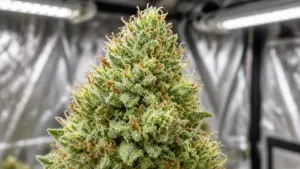
The Chili Verde strain offers a unique sensory experience, characterized by its complex aroma and flavor profile. The buds are dense and medium-sized, with a rich green hue that is often accented by deep purple undertones.
Origins of the Chili Verde Strain
History of the Strain
The Chili Verde strain is a hybrid that brings together two distinct and flavorful parent strains: Key Lime Pie and Lavender. Key Lime Pie is known for its tangy, citrusy flavor, while Lavender offers a more floral, aromatic experience. The combination of these two strains creates a unique hybrid that is both flavorful and effective, making it a favorite among those looking for something a little out of the ordinary. The name “Chili Verde” reflects the strain’s spicy, zesty character, reminiscent of the traditional green chili sauce from which it draws inspiration.
Genetic Lineage and Overview of Parent Strains
By crossing these two distinct strains, Chili Verde inherits the best of both worlds: the tangy zest of Key Lime Pie and the soothing floral notes of Lavender.
Aroma, Flavor, and Terpene Profile
The Chili Verde strain is a feast for the senses, offering a rich and complex aroma that is both spicy and citrusy. The scent is reminiscent of freshly crushed herbs mixed with a splash of lime, creating a refreshing yet earthy bouquet. As the buds are broken apart, the aroma intensifies, releasing hints of floral lavender and a touch of pine.
The initial taste is spicy and citrusy, with the lime notes being particularly prominent. As the flavor develops, you’ll notice underlying herbal and earthy tones, with a subtle floral finish that lingers on the palate. This unique flavor combination makes Chili Verde a delight for those who appreciate complex, layered flavors.
The terpene profile of the Chili Verde strain is rich in Limonene, Caryophyllene, and Myrcene:
Bud and Plant Structure
The Chili Verde strain produces buds that are dense and medium-sized, with a vibrant green color accented by purple hues. The plant itself is moderately tall with sturdy branches, making it well-suited for various growing environments. The leaves are a rich green, often tinged with purple as the plant matures, especially in cooler temperatures.
The plant’s structure is robust, with a thick central cola and numerous side branches that produce large, resinous buds. This makes it a good candidate for various training techniques aimed at maximizing yield.
How To Grow the Chili Verde Strain
Preferred Conditions
Chili Verde is a moderately easy strain to grow, making it suitable for both beginners and experienced cultivators. It thrives in a controlled indoor environment where temperature and humidity can be closely monitored. For indoor growing, maintain daytime temperatures between 70 to 80°F and slightly cooler nighttime temperatures. Humidity should be kept around 50% during the vegetative stage and lowered to 40% during flowering to prevent mold and mildew.
Outdoor growers will find that Chili Verde performs best in a warm, Mediterranean-like climate. The plant is fairly resistant to common pests and diseases, but it’s always a good idea to monitor closely for any signs of trouble.
Feeding and Nutrients
To achieve optimal results with the Chili Verde strain, provide a balanced nutrient regimen throughout its growth cycle. During the vegetative stage, a nitrogen-rich fertilizer will promote strong stem and leaf development. As the plant transitions to flowering, switch to a fertilizer high in phosphorus and potassium to encourage large, dense buds.
Regular feeding every 7 to 10 days is recommended, along with periodic flushing to prevent nutrient buildup, which can lead to nutrient burn. Additionally, supplementing with micronutrients like calcium and magnesium can help prevent deficiencies and support overall plant health.
Pruning and Training
The Chili Verde strain responds well to various training techniques, which can help improve light penetration and increase yield. Techniques such as topping, low-stress training (LST), and screen of green (ScrOG) are effective in managing the plant’s height and encouraging more bud sites. Regular pruning of lower leaves and branches will improve airflow, reducing the risk of mold, particularly during the later stages of flowering.
Harvest Tips
Chili Verde has a flowering time of 56 to 70 days. To determine the best time to harvest, keep an eye on the trichomes using a magnifying glass or microscope.
Dry the buds slowly over 7 to 10 days in a dark, well-ventilated space with a humidity level of around 50% to 60%. Once dried, cure the buds in airtight jars, opening them daily for the first week to release excess moisture and prevent mold.

Comparing Chili Verde With Related Lines
Before you choose a Chili Verde pack, check the lineage printed by the breeder, because different releases of the same name can be built from different parents. Knowing the parents helps you predict structure, aroma and flowering behaviour, and it makes it easier to compare Chili Verde with its relatives.
These related listings in our catalog are worth comparing:
Breeders often work from different cuts or selections of the same parent, so read each label and note the exact cross as printed.
Strain Reviews Related to Chili Verde
If you are researching Chili Verde, these Seeds Here Now reviews cover related lines:
Reading a Chili Verde Seed Pack Label
A breeder label usually shows the strain name, the breeder, the seed type and the seed count. Feminized packs are labelled as such, regular packs contain a natural mix of male and female seeds, and autoflower packs are marked “auto”. Many breeders also print the cross, for example “Parent A x Parent B”, plus a filial marker such as F1, F2, S1 or BX.
F1 means a first-generation cross of two distinct parents, S1 means seeds made from a single parent, and BX means a cross back to one of the original parents. When you compare Chili Verde packs, these markers tell you how close each release is to the original line.
Feminized, Regular or Auto: Choosing a Chili Verde Pack
Feminized seeds are bred to produce female plants, which keeps things simple when space is limited. Regular seeds produce males and females and remain the choice for anyone who wants to make their own crosses or keep a line going from seed. Autoflower versions flower on their own timeline regardless of light hours, which suits short outdoor seasons and quick indoor runs.
Match the seed type to your space, your season and how much time you have, then check the breeder’s notes on flowering time and plant size before you choose a Chili Verde pack.
How to Spot a Genuine Chili Verde Pack
Popular names get copied, and two packs called Chili Verde can come from completely different parents. Genuine breeder packs have consistent printing, a clear breeder name or logo and a sealed closure, and many carry a batch code or security sticker. Blurry artwork, misspelled names or loose seeds in a plain bag are warning signs.
The simplest protection is buying sealed packs from a seed bank that names the breeder on every listing, like the ones linked above.

Storing Chili Verde Seeds Until You Plant
Seeds stay viable longest when they are kept cool, dark and dry. Leave Chili Verde seeds in their sealed pack, place the pack in an airtight container with a food-safe desiccant packet, and store it somewhere with a steady temperature, such as a refrigerator shelf that is not opened constantly.
Label the container with the strain, breeder and the date you bought it. When you are ready to plant, let the container warm to room temperature before opening it so moisture does not condense on the seeds.
Comparing Chili Verde Releases From Different Breeders
When more than one breeder offers Chili Verde, compare the published cross, the filial marker, the seed type and the breeder’s notes on structure and flowering time. One breeder may work from an original cut while another builds a new cross that shares only part of the family tree.
Reading those details side by side helps you pick the release that best fits your space and goals instead of choosing on the name alone.
Germinating Chili Verde Seeds: A Simple Method
Most growers start Chili Verde seeds with the paper towel method. Place the seeds between two damp (not dripping) paper towels, set them on a plate under an upturned bowl, and keep them somewhere warm, around 70°F to 80°F. Check once a day and keep the towels moist.
Once a taproot appears, plant the seed about a quarter to half an inch deep in a light, airy starter medium with the root pointing down, and handle it as little as possible. Give the seedling gentle light as soon as it breaks the surface so it does not stretch.
Planning a Chili Verde Grow
Before you start, check the breeder’s notes for the version of Chili Verde you bought: seed type, expected flowering time and how large the plant tends to get. A feminized photoperiod plant flowers when you switch to 12 hours of darkness, while an autoflower follows its own timeline.
Match those details to your space, your light and your season. Keep a simple journal with the start date, medium, feeding and photos, so you can repeat what works the next time you run Chili Verde.

Indoor or Outdoor: Where Chili Verde Fits
Indoors you control light, temperature and humidity, which makes it easier to keep dense flowers clean and to time the harvest. Outdoors you trade that control for free sunlight and bigger plants, but you need a season long enough for the variety to finish before cold, wet weather arrives.
Check the breeder’s flowering time for Chili Verde seeds against your first expected autumn rain or frost. If the numbers are tight, an indoor run, a greenhouse or an autoflower version is usually the safer choice.
Seedling Care for Chili Verde: The First Three Weeks
Seedlings need gentle light, mild warmth and a medium that is moist but never soggy. Water in small amounts around the stem, let the top of the medium dry slightly between waterings and keep a light breeze moving so stems thicken.
Hold off on strong nutrients until the plant has several sets of true leaves; most starter mixes carry enough food for the first couple of weeks. Pale, stretched seedlings usually want more light or a closer lamp, while drooping, dark leaves often mean too much water.
Chili Verde Strain Review: Conclusion
Chili Verde is a unique and flavorful hybrid that offers a well-balanced experience. With its spicy, citrusy aroma and a complex flavor profile that includes herbal, earthy, and floral notes, this strain is a delight for the senses.
“Gardening adds years to your life and life to your years.” – Unknown
Now that you know all about the exotic Chili Verde strain, shop the collection of regular, feminized, and autoflower cannabis seeds and clones at Seeds Here Now.
FAQs About the Chili Verde Strain
#1.
#2. Is Chili Verde more Indica or Sativa?
A. Chili Verde is a slightly Indica-dominant hybrid with a 60% Indica and 40 percent Sativa genetic makeup.
#3. How long does it take for Chili Verde to flower?
A. Chili Verde has a flowering time of approximately 56 to 70 days.
#4. What is the THC content of Chili Verde?
A. The Chili Verde strain typically contains 20% to 25% THC.
#5. What does Chili Verde taste like?
A. Chili Verde has a spicy, citrusy flavor with herbal, earthy, and floral notes, creating a complex and enjoyable taste profile.
#6. How do I grow Chili Verde?
A. Chili Verde is relatively easy to grow and thrives in both indoor and outdoor environments. It responds well to various training techniques and prefers a warm, Mediterranean-like climate.
#8. What is the terpene profile of Chili Verde?
A. Chili Verde is rich in Limonene, Caryophyllene, and Myrcene, contributing to its spicy, citrusy, and herbal aroma.
#9.
#10. What is the origin of Chili Verde?
A. The Chili Verde strain is a hybrid of the flavorful Key Lime Pie and the aromatic Lavender, combining the best traits of both.
Frequently Asked Questions
What are the genetics and parent strains of Chili Verde?
Chili Verde is a hybrid cross of Key Lime Pie and Lavender, combining the tangy citrus profile of Key Lime Pie (a Girl Scout Cookies phenotype) with the floral, aromatic qualities of Lavender.
Chili Verde has a THC content ranging from 20% to 25%, making it a moderately strain with a generous trichome coating that gives the buds a frosty appearance.
What does Chili Verde taste and smell like?
Chili Verde features a complex aroma and flavor profile with spicy, citrus, herbal, earthy, and floral notes that deliver a refreshing and robust taste with lingering herbal undertones on the palate.
How long does Chili Verde take to flower?
Chili Verde has a flowering time of 56 to 70 days, making it a relatively moderate-length flowering strain for indoor or outdoor cultivation.
Further reading: Wikipedia: Cannabis strain.
Key Facts About Chili Verde
| Lineage | Key Lime Pie x Lavender |
|---|---|
| Type | About 60% indica, 40% sativa |
| Reported THC | About 20% to 25% |
| Flowering time | 56 to 70 days |
| Aroma | Spicy, citrus, herbal, earthy, floral |
| Drying | 7 to 10 days at about 50% to 60% humidity |
| Where to buy | Seeds Here Now, authentic breeder packs for adults 21+ |
Suggested Articles

 12 Nov 2026
 12 min read

;)
;)
;)
 August 19, 2024


RESPONSES (0)
No responses yet. Be the first to respond!