


Cannabis Hermaphrodite Genetics Explained
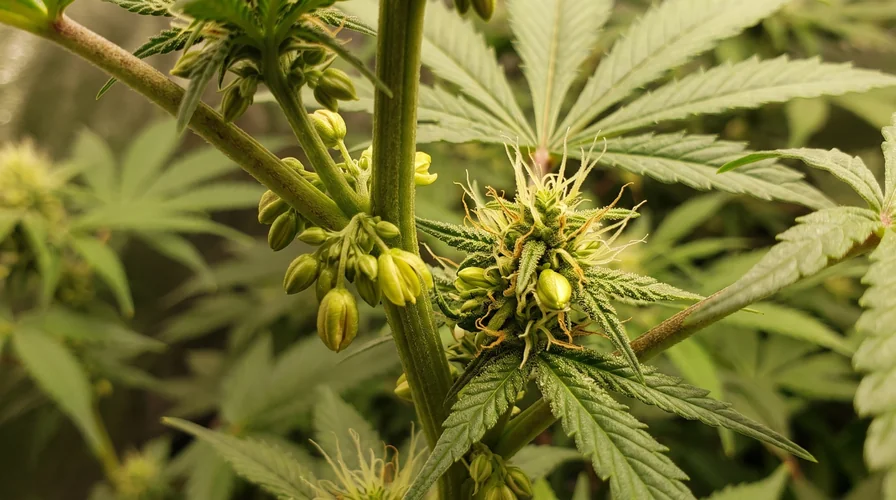
Every female cannabis plant in your room is already carrying the instructions to make pollen. Not a defective one. Not a badly bred one. All of them. The genes for staminate flowers are sitting there in the genome of the healthiest, frostiest, most reliably female plant you have ever run, and the only reason you never see them expressed is that nothing has told the plant to switch them on. That is the single idea that makes cannabis hermaphrodite genetics click into place, and it is also the idea that most grow-room conversations skip right past.
Once you accept it, the question changes shape. It stops being “does this plant have hermie genes” and becomes “how much pressure does this particular plant need before those genes get read?” That number varies enormously between cultivars, between siblings inside the same seed pack, and between a well-worked line and a rushed one. It is heritable, it is selectable, and it is the actual thing a breeder is managing when they talk about stability. What follows is what the genetics are doing underneath, why some lines fold under conditions others shrug off, and how to judge a line before you hand it a whole cycle.
Chromosomes Set the Default, Not the Verdict
Cannabis is normally dioecious, meaning individual plants are male or female rather than both, and sex is chromosomal. Females carry two X chromosomes, and males carry an X and a Y, which is the same broad arrangement people are used to hearing about in mammals. A seed’s chromosomal sex is fixed at fertilization and never changes.
What the chromosomes deliver, though, is a strong default rather than a locked outcome. Flower development in cannabis is governed downstream by plant hormones, and hormone balance responds to conditions. Ethylene signaling pushes development toward pistillate flowers, while other hormone pathways, gibberellins among them, push in the staminate direction. A genetically female plant whose hormone signaling gets shoved far enough out of its normal balance can and will build male flower parts, because it has the blueprints and the machinery to do so.
This is why so much of the hermie conversation talks past itself. One grower insists it is environmental, another insists it is genetic, and both are describing real halves of the same mechanism. The environment supplies the shove. The genetics decide how big a shove it takes.
Why the Word “Hermaphrodite” Covers Two Different Situations
Precision helps here, because the two things growers call hermies do not carry the same genetic weight.
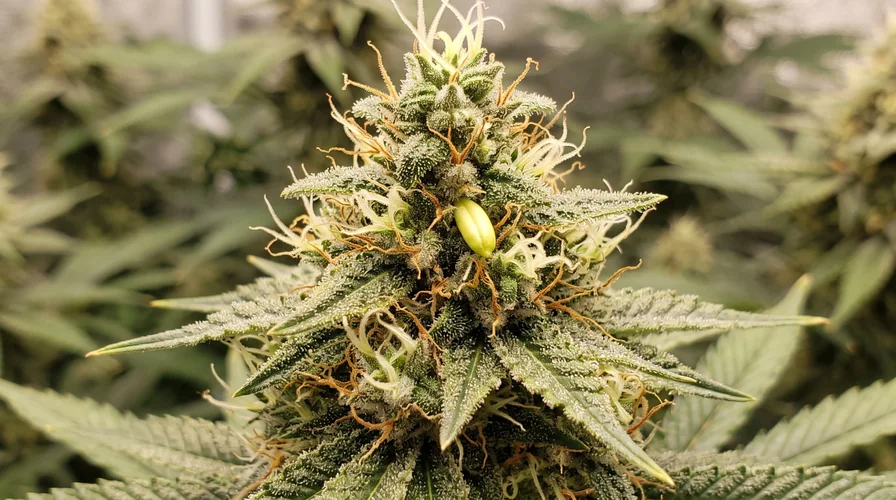
The first is a true intersex plant, one that produces both pistillate and staminate flowers as part of how it develops, often early and often without any obvious provocation. These plants tend to make structured male flowers on their own schedule, and they frequently do it again in the next run under better conditions. When a plant behaves this way with nothing in the room to blame, the tendency is coming from the genetics far more than the circumstances.
The second is a stress response, the late-flower staminate cluster growers call a nanner or a banana. Those are usually solitary anthers pushing out from between bracts, most often in the last stretch of bloom or after a specific insult like an interrupted dark period, a heat spike, or serious physical damage. A single line of nanners on a plant in week 8 that got roasted by a heat wave is telling you about your week, not necessarily about your seed stock.
The distinction matters because it determines what you do next. A plant throwing structured male flowers in week 3 of flower in a well-run room is a genetics problem, and the line is suspect. A plant throwing a few anthers at the end of a hard run is data about your environment, and it may be a perfectly good plant that was pushed too far.
What You Actually Inherit Is a Threshold
Think of every plant as carrying a stress tolerance for sex expression, a level of hormonal disruption it can absorb before staminate development begins. That threshold is what gets passed down.
A high-threshold plant can take an ugly cycle, a light leak, a bad week of temperatures, and heavy defoliation, and still finish as a clean female. A low-threshold plant carrying identical chromosomes will throw pollen over something the first plant would not have noticed. Neither one has a special hermaphrodite gene the other lacks. They differ in how much provocation it takes to read the genes they both have.
Because the threshold is a quantitative trait rather than a simple on-or-off switch, it does not behave the way growers often expect. It varies across siblings in a single pack, since each seed is a fresh recombination of the parents. It can be high enough that a plant looks bulletproof in your conditions and still be low enough that it would fail in someone else’s harder room. And it responds to selection, which is the entire reason worked lines exist.
The Same Pack, Two Different Outcomes
Growers regularly report running five seeds from one pack, watching a single plant throw nanners, and concluding the pack is garbage. That is an overreaction. Sibling variation in threshold is expected, and one low outlier in a group of otherwise clean plants is normal biology, not evidence of a broken line.
The pattern worth reacting to is different: several plants from the same pack showing staminate flowers, early, in a room where nothing else is complaining. That is a line-level signal. A single plant is an individual.
Where Low-Threshold Lines Come From
Unstable lines are made, not cursed. A few specific paths account for most of them.
Feminized Seed Production, Explained Honestly
Feminized seeds exist because that latent staminate capacity can be induced deliberately. A breeder treats a female plant with colloidal silver or silver thiosulfate, both of which interfere with ethylene signaling, and the treated plant produces functional staminate flowers. Its pollen carries only X chromosomes, so crossing it onto a female produces seeds that are all chromosomally female.
Here is the part that matters for stability. Silver treatment overrides a female plant’s normal hormone signaling by force. It does not require the plant to be prone to intersex expression, and it does not select for a low threshold, which is why a properly executed feminized cross can be every bit as stable as a regular one. Feminized seeds are not inherently hermie-prone, and the reputation is largely inherited from a different practice.
That other practice is using a plant that hermed on its own as the pollen source. Sometimes called rodelization, it means collecting pollen from a female that produced staminate flowers spontaneously under stress. It works, and it costs nothing in chemicals, but it is direct selection for the trait you least want. You are choosing a low-threshold parent and asking it to pass that threshold along, which is exactly what it does. A couple of generations of that and a line can be genuinely fragile.
Heritage and Photoperiod Mismatch
Some background is simply less predictable in a 12-hour room. Equatorial sativa genetics evolved under day lengths that barely move across the year, and lines with heavy tropical heritage can express sex less rigidly than heavily worked indica-dominant material bred for indoor cycles. Certain landrace populations also carry a broader natural range of sex expression than a stabilized modern hybrid does, because nothing in their history ever pushed them toward uniformity.
That is background, not a warning label. Plenty of sativa-leaning cultivars run clean for years. But if you are choosing between a long-flowering equatorial project and a well-worked hybrid for a room with a marginal light seal, one of those choices is more forgiving than the other.
Selection That Was Never Performed
The most common cause is the least dramatic. Weeding low-threshold individuals out of a population takes generations, physical space, and a willingness to throw away plants that look fantastic. A breeder who releases an F2 population after a single cross has not had the chance to do that work yet, no matter how good the parents were. Early-generation crosses carry more variation of every kind, including this one.
Segregation is the mechanism. An F1 cross between two stable parents can look uniform and behave beautifully, and then the F2 generation splits, surfacing recessive combinations that were hidden in the first round. This is why experienced growers treat a fresh F2 drop as a project rather than a production run.
Judging a Line Before You Commit a Room to It
You cannot inspect a seed for this, so evaluation is about lineage, reputation, and your own record-keeping.
Generation depth is the first thing worth asking about. A breeder who tells you a line is at F5 or F6 with selection at each step is describing several rounds of culling. A cross labeled F1 or F2 is telling you the work is in progress, which is fine as long as you know what you signed up for. Reputable breeders are direct about where a line sits.
Second, look for feedback from growers running rooms harder than yours. A cultivar that stays female through other people’s heat spikes and long flowering stretches has been tested more honestly than anything a marketing page can claim.
Third, keep your own notes. Log the cultivar, the pack, the plant number, and any staminate flowers you find, along with what the room was doing that week. After a handful of cycles, that log becomes the most reliable stability data you will ever have, because it comes from your conditions instead of someone else’s.
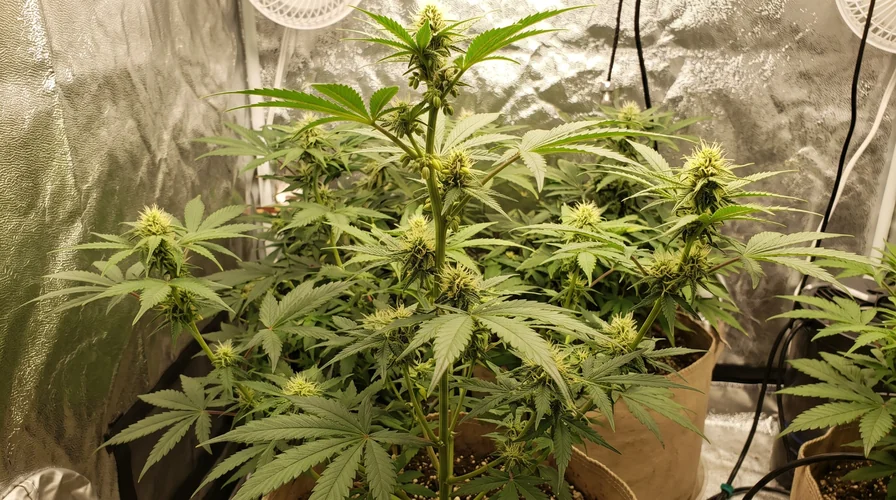
Fourth, be honest about your setup. If your tent has a seam that glows or your temperatures swing 15°F between lights-on and lights-off, you are supplying more provocation than average, and you want higher-threshold genetics to absorb it. Growers with tight environmental control can take chances that growers with leaky tents cannot.
Seeds From an Intersex Plant: What They Are Worth
A plant that pollinated itself leaves you holding seeds, and the same two questions come up every time.
They are viable, and they are chromosomally female, since a self-pollinated female contributes only X chromosomes from both sides. What they are not is a reliable line. Selfed seed from a spontaneous herm inherits the low threshold of that parent, and it also carries the inbreeding effects of a self-cross, which can surface unwanted recessive traits along with reduced vigor. Some growers pop them out of curiosity, and occasionally one turns out fine. As the basis for a keeper hunt or anything you intend to run repeatedly, it is starting a project on the worst possible footing.
If you do grow them, isolate them and watch them harder than you would watch anything else. Assume a higher rate of intersex expression and be prepared to cull without hesitation.
Breeding the Threshold Upward
For anyone working on their own line, raising the threshold is straightforward in principle and tedious in practice.
Grow a large enough population to see the variation. A handful of plants cannot show you the range of a population, and selection with nothing to select from is not selection. Then apply consistent pressure rather than protecting the plants from everything, because a population coddled through every cycle never reveals which individuals were fragile. Some breeders run deliberate stress tests, extending flowering well past ripeness or applying controlled photoperiod disruption, specifically to find the plants that break first.
Cull the individuals that show staminate flowers, and cull their siblings if the pattern repeats within a family. Then keep records across generations, because a threshold is only visible as a trend. Do that for enough rounds and the population’s average tolerance climbs, which is exactly what people are buying when they buy a worked line.
Frequently Asked Questions
Does every cannabis plant have hermaphrodite genes?
Functionally, yes. Females carry the genetic capacity to produce staminate flowers, which is why silver treatments can induce pollen on a normal female. What differs between plants is the amount of hormonal disruption required to express that capacity, not whether the capability exists.
Can a chromosomally female plant permanently become male?
No. Chromosomal sex is fixed at fertilization. What changes is expression, so a female plant can produce staminate flowers alongside pistillate ones while remaining genetically female throughout. Pollen from that plant carries only X chromosomes.
Are feminized seeds less genetically stable than regular seeds?
Not because of the feminization itself. Silver-induced pollen comes from a plant that was chemically forced, not from a plant selected for intersex tendency. Instability arrives when a breeder uses a spontaneously hermed female as the pollen donor, which selects directly for a low threshold, or when a line has not had enough generations of culling behind it.
Is intersex expression dominant or recessive?
Neither framing fits well. Sex expression stability behaves as a quantitative trait influenced by multiple genes rather than a single dominant or recessive allele, which is why offspring show a range of tolerances instead of sorting into two clean groups.
Do autoflowers herm more often than photoperiod plants?
Autoflowers are not vulnerable to dark-period interruption, since they flower on age rather than photoperiod, which removes one of the most common triggers entirely. Their genetics are otherwise subject to the same threshold variation, and their fixed timeline leaves less room to recover from a hard stress event.
Can a clone from a plant that hermed be trusted?
A clone is genetically identical to the mother, so it carries the same threshold. If the mother expressed staminate flowers under conditions you consider reasonable, expect the clone to do the same in a similar room. If the mother only broke under a genuinely extreme event, the clone may run clean when the event does not repeat.
Does stress on one plant affect the genetics of its neighbors?
No. Stress does not alter a neighbor’s DNA. Pollen, on the other hand, travels readily, so an intersex plant in a shared space threatens the harvest of everything around it even though it changes nothing about their genetics.
How many generations does it take to stabilize a line for sex expression?
There is no fixed number, since it depends on the starting population, how much variation is present, and how ruthlessly the breeder culls. Several generations of selection with meaningful population sizes is the realistic scale, which is why worked lines cost more and take years to produce.
Pick Genetics That Match the Room You Actually Have
The most useful shift here is thinking in thresholds instead of labels. No plant is immune, and no plant is doomed, so your job is to pair the tolerance of your genetics with the amount of provocation your space realistically supplies. Tighten the environment where you can, and buy lines whose breeders did the culling work you would otherwise have to do yourself over several years. If you are ready to start from stock that has been selected rather than rushed, browse the breeder catalog at Seeds Here Now and pick a line built for the conditions you are working in.
Suggested Articles
 10 Nov 2026
 12 min read

;)
;)
;)
 October 20, 2026


RESPONSES (0)
No responses yet. Be the first to respond!