


Cannabis Root Aphid Infestation: Detection and Treatment
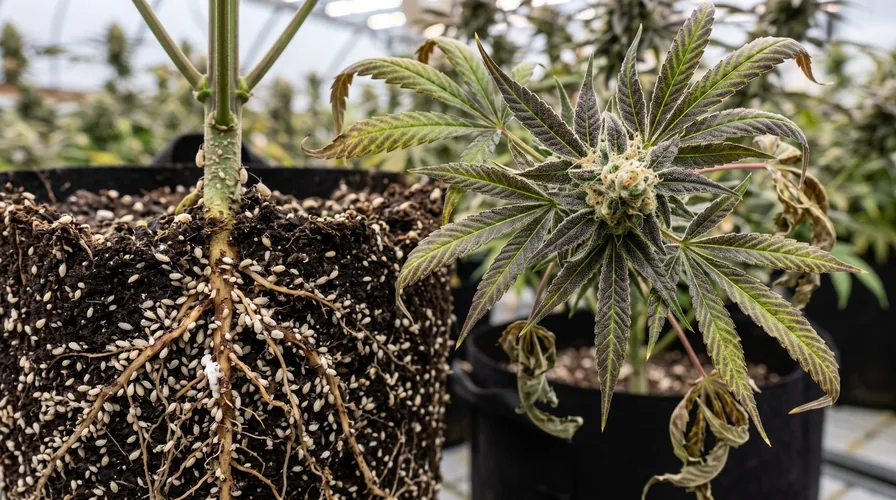
Picture a plant that is doing everything wrong for no reason you can find. The leaves are yellowing from the bottom up, the growth has stalled, the tips look thirsty even though the medium is moist, and you have already chased the usual suspects: you have flushed, you have adjusted the feed, and you have checked the pH twice. Nothing sticks. That maddening loop is the signature of root aphids, which cannabis growers almost always misdiagnose, because the pest doing the damage is not on the plant at all. It is under the soil line, wrapped around the roots, feeding on the plumbing you cannot see. By the time the symptoms drive you to dig, the colony has usually been established for weeks.
Root aphids are worth treating as their own problem rather than a variant of the aphids you find on leaves, because almost everything about finding and killing them is different. They live in the medium, they disguise themselves as pests you already know, and they shrug off the foliar sprays that would flatten a leaf colony overnight. This guide walks the problem from the roots up: what the insect actually is, why it fools growers into treating the wrong thing, how to confirm it before you commit to a plan, and how to clear it from a living root zone without cooking the plant in the process.
Meet the Pest Living in Your Root Zone
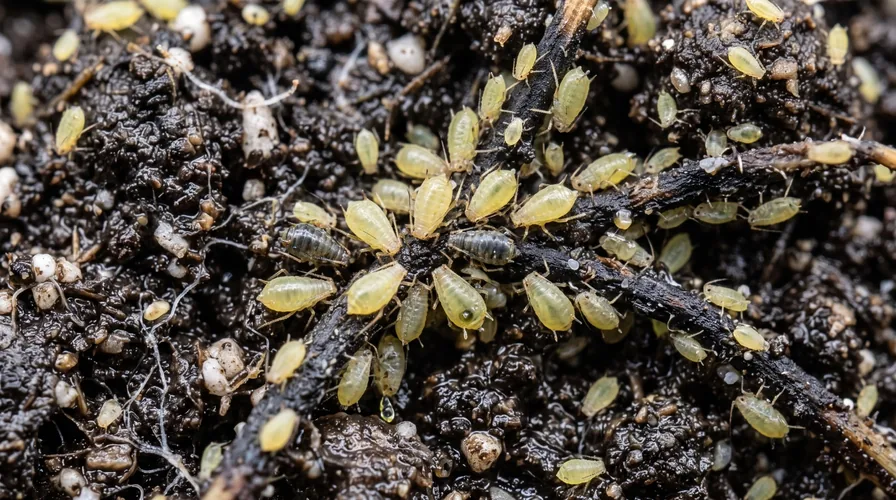
Root aphids are small, soft-bodied, pear-shaped insects closely related to the aphids that colonize new shoots, but they have adapted to feed below ground on roots and the base of the stem rather than on foliage. Most of the time, you will see wingless forms that are white, gray, or pale green, often lightly dusted with a waxy powder that can make a cluster look like a smear of mold or a scatter of perlite. They pierce the roots and drink sap, and like their leafy cousins, they reproduce at a frightening pace, with wingless females giving birth to live young that mature and breed within days.
The reason they matter so much is leverage. A pest chewing a leaf costs you that leaf. A pest draining the root system costs you the plant’s ability to take up water and every nutrient dissolved in it, so a modest colony below ground can produce symptoms that look far more severe than the number of insects would suggest. That mismatch, big symptoms from a hidden cause, is exactly why root aphids are so often chased as a feeding problem for weeks before anyone thinks to check the medium.
Why They Are Not Just Aphids That Wandered Down
It is tempting to assume a root aphid is an ordinary aphid that crawled below the soil line, but treating them as the same pest leads you straight to the wrong tools. Foliar aphids sit on surfaces you can wet with a contact spray, so soap or oil ends the fight fast. Root aphids sit inside the medium where those sprays never reach, protected by the soil itself. They also cycle differently: at certain points in their life cycle, particularly outdoors or in a struggling crop, they produce winged adults that leave the root zone, fly, and land on leaves or sticky traps, which is the single biggest source of misidentification in the whole grow. That winged form is what fools growers into reaching for the wrong playbook, and it deserves its own section.
The Impostor Problem: What Root Aphids Pretend to Be
More than any other grow-room pest, root aphids win by looking like something else. Ruling out the impostors is not a side quest here; it is the main event, because every wrong guess buys the colony another week to grow.
The Fungus Gnat Mix-Up
When winged root aphids appear, they are dark and small, and they flit around the base of the plant and the top of the medium, which is exactly what fungus gnat adults do. Growers see the flyers, conclude they have gnats, and treat for gnats, and because some gnat treatments do nothing to root aphids, the “gnats” never fully clear. The tells that separate them are worth memorizing. Fungus gnat adults are delicate and mosquito-like with long, dangly legs, and their larvae are clear, thread-thin worms with a shiny black head that live in the top inch or two of wet medium. Root aphid winged adults are stouter and rounder-bodied, and the real giveaway is what you find at the roots: fungus gnat larvae are worms, while root aphids are the classic soft, pear-shaped clusters clinging to root tissue.
The Deficiency and Overwatering Mix-Up
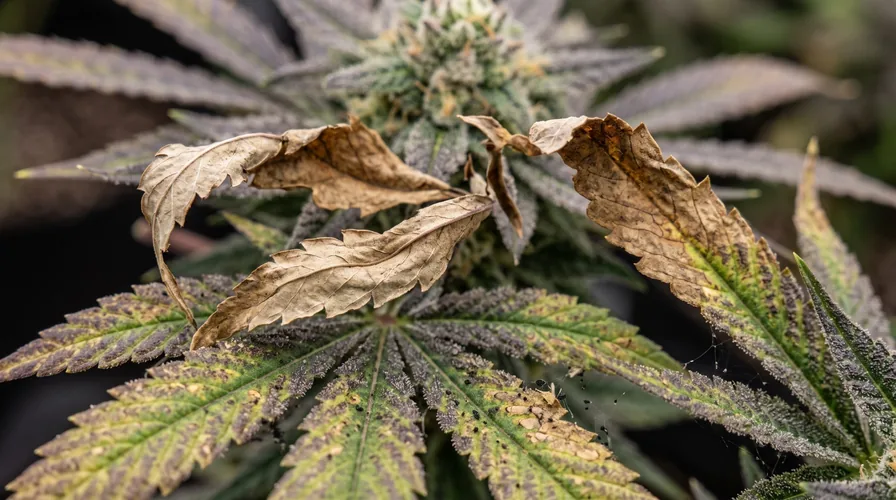
Because root aphids sabotage nutrient uptake, the above-ground picture reads like a feeding chart gone wrong: interveinal yellowing, stunting, drooping that does not respond to watering, and lower leaves fading first. Many growers spend two to three weeks adjusting the nutrient mix and pH, watching the plant refuse to recover, before they suspect an insect. A useful rule of thumb is simple: when a plant shows classic deficiency or overwatering symptoms, but your feed and your pH both check out, and correcting them changes nothing, stop trusting the leaves and go look at the roots.
The White Specks You Blame on Your Medium
The waxy powder on a root aphid colony, plus the pale bodies themselves, can look at a glance like perlite, mineral salts, or a dusting of mold in the medium. That camouflage is why a quick peek at the top of the pot is not enough to clear a plant. Confirmation has to happen at the roots, which is what the next section covers.
Confirming Root Aphids Before You Commit
Because the treatment is disruptive to the plant, you want a positive identification, not a hunch, before you start. The good news is that confirmation is quick once you know where to look.
Start with a gentle root inspection. Slide the plant out of its pot, or if it is in the ground, carefully excavate a little soil away from the stem base and the upper root mass. Look along the crown where the stem meets the medium and across the outer roots for clusters of soft-bodied insects, sometimes with that telltale white waxy dusting. A second strong sign is a fine, powdery, ash-like residue clinging to roots or the inside of the pot, which is the wax and shed skins the colony leaves behind. If you see winged adults on yellow sticky cards laid flat on the medium surface, that is corroborating evidence, though on its own, it can still be confused with gnats, so always confirm at the roots.
A Five-Minute Confirmation Routine
You do not need a lab to be sure. Work through a short, repeatable check: pull one representative plant and examine the crown and outer root ball under a hand lens; look specifically for pear-shaped bodies and waxy powder rather than worms; lay a fresh yellow sticky card flat on the medium and check it after a day for stout winged adults; and rinse a small section of root over a white plate or paper towel so any dislodged insects show up against the background. If you find soft-bodied clusters on the roots, you have your answer and can move to control with confidence. If you find only clear worms, you are dealing with fungus gnats and should treat for those instead.
Clearing Root Aphids From a Living Root Zone
Killing root aphids means getting a treatment into the medium, in contact with the roots, without poisoning or drowning the plant that lives there. That constraint shapes everything that follows. There is no single spray that ends it; success comes from a soil-focused, repeated approach that outlasts the insect’s fast breeding cycle.
Isolate and Reduce the Pressure First
Before treating, separate any confirmed plants from the rest of the room if you can, because winged adults will seed neighboring pots. Remove and discard any obviously infested medium from the surface, clean up fallen debris, and lay flat yellow sticky cards to trap the winged adults that would otherwise start new colonies. If a plant is small, cheap, and severely overrun late in a grow, the honest math sometimes favors culling it rather than nursing it, since a badly damaged root system rarely produces a competitive yield.
Soil Drenches That Reach the Colony
The core of root aphid control is a drench: a treatment watered into the medium so it contacts the roots where the insects live. Several grower-friendly options work by smothering, disrupting, or repelling the colony rather than by systemic poisoning. Insecticidal soap solutions and botanical oils such as neem, mixed to label strength and applied as a root drench, can knock down the population when they reach the insects directly. Beneficial soil microbes and botanical soil treatments are also used to make the root zone hostile. Whatever you choose, the two rules that matter most are coverage and repetition: the drench has to saturate enough of the root ball to actually contact the colony, and because eggs and young hatch in waves, you will need to repeat the treatment every five to seven days across two to three weeks to catch each new generation. A single drench almost always leaves survivors who rebuild.
Beneficial Insects and Nematodes in the Medium
Living controls shine against a soil pest because they hunt where the sprays cannot reach. Beneficial nematodes, microscopic organisms watered into the medium, seek out and parasitize soft-bodied soil pests and are one of the more reliable biological tools against root aphids. Predatory soil mites are used similarly to patrol the upper medium. As with any beneficial, timing matters: introduce them after a harsh chemical drench has cleared rather than alongside it, keep the medium in the moderately moist range they need to move through, and treat them as a sustained layer of defense rather than an overnight fix.
Why Flowering Plants Change the Plan
The deeper into bloom a plant is, the fewer options you have, because you do not want treatment residues near swelling buds, and you cannot repot without shocking a flowering plant. Late in flower, the realistic play is often to hold the plant steady with careful watering and gentle drenches, prioritize the rest of the room’s protection, and plan a thorough medium reset before the next run rather than a heroic mid-bloom rescue. This is one more reason early detection pays for itself many times over: caught in veg, root aphids are a manageable project, while caught in late flower, they are mostly a damage-control exercise.
A Practical Order of Operations
Pulled together, a root aphid response is less about any one product and more about doing the right things in the right sequence and sticking with them long enough:
- Confirm the pest at the roots with a hand lens before treating, so you are not chasing fungus gnats or a phantom deficiency.
- Isolate the affected plant and lay flat sticky cards to intercept the winged adults that spread it.
- Clear the obvious infested surface medium and clean up any debris around the base.
- Apply a thorough soil drench that saturates the root ball, using a soap, oil, or botanical treatment at label strength.
- Repeat the drench every five to seven days for two to three weeks to break the reproductive cycle.
- Introduce beneficial nematodes or predatory mites once any harsh drench residue has cleared.
- Keep monitoring the root zone and sticky cards for several weeks after the plant looks healthy, since a few survivors restart everything.
Building a Grow Root Aphids Cannot Get Into
The most effective root aphid strategy is refusing them a way in, because a soil pest is far easier to keep out than to evict. The overwhelming majority of indoor infestations arrive on infested clones or in contaminated soil and amendments, so quarantine is the single highest-value habit you can build. Hold every incoming clone away from your main room for a week or two, inspect the root zone before it joins the crop, and be cautious with reused or unsterile medium and cheap bulk soil that may already carry the pest.
Inside the room, make the environment work against them. Screen intake vents to keep winged adults out, lay flat yellow sticky cards on the surface of every pot as an early-warning system, and avoid the constant sogginess that soil pests love by letting the medium dry appropriately between waterings. Sanitation between runs matters more than growers expect: clean pots, trays, and tools thoroughly, and do not reuse medium from an infested crop. Strong, vigorous genetics help here too, because a healthy root system tolerates a minor scare far better than a stressed one and gives you more room to respond before real damage sets in. None of these steps is dramatic on its own, but stacked together, they turn your grow into a place where root aphids struggle to establish.
Frequently Asked Questions
How Are Root Aphids Different From Regular Aphids?
Regular aphids feed on leaves and new shoots, where you can see and spray them, while root aphids live in the medium and feed on the roots and stem base out of sight. That difference changes everything about treatment: contact sprays that clear a leaf colony do not reach a root colony, so root aphids call for soil drenches and soil-dwelling beneficials instead. Root aphids also periodically produce winged adults that leave the medium and are easy to mistake for fungus gnats.
Are Root Aphids the Same as Fungus Gnats?
No, though they are constantly confused because both produce small dark flyers around the base of the plant. The reliable way to tell them apart is at the roots: fungus gnat larvae are clear, thread-thin worms with a dark head that live in the top inch or two of wet medium, while root aphids are soft, pear-shaped, often waxy-dusted clusters clinging to the roots themselves. If you find worms, treat for gnats; if you find soft-bodied clusters, treat for root aphids.
What Do Root Aphids Look Like?
They are small, soft-bodied, pear-shaped insects, usually white, gray, or pale green, and often lightly coated in a white waxy powder that can make a colony resemble mold, perlite, or mineral residue. You will find them clustered on roots and at the crown where the stem meets the soil. When populations spike, some develop wings and appear as stouter, rounder-bodied flyers compared with the delicate, mosquito-like fungus gnat.
Can I Get Rid of Root Aphids Without Repotting?
Often yes, especially if you catch them early. Repeated soil drenches that saturate the root ball, combined with beneficial nematodes and diligent sticky-card trapping of the winged adults, can clear a colony in place over two to three weeks. Repotting into fresh, clean medium is a stronger reset for a heavily infested plant, but it stresses the plant and is risky during flower, so many growers reserve it for veg or for a between-run cleanup.
Why Do My Plants Look Deficient When the Feed Is Correct?
Because root aphids damage the roots that take up water and nutrients, a plant can show textbook deficiency and overwatering symptoms even when your nutrient mix and pH are dialed in. If correcting the feed and pH changes nothing and the plant keeps declining from the bottom up, it is worth pulling the plant and inspecting the root zone for a hidden colony rather than continuing to adjust the nutrients.
How Long Does It Take to Get Rid of Root Aphids?
Plan on two to three weeks of consistent effort rather than a single treatment. Root aphids reproduce quickly and hatch in waves, so one drench leaves survivors that rebound fast. Repeating your drench every five to seven days across that window, backing it with beneficial nematodes, and trapping the winged adults is what actually breaks the cycle, and you should keep monitoring for several weeks afterward.
Look Below the Soil Line and the Mystery Solves Itself
Root aphids owe their whole reputation to being hidden. They wear the costume of a nutrient deficiency, a case of fungus gnats, or a dusting of perlite, and they count on you treating the disguise instead of the insect. The grower who confirms the pest at the roots, breaks the fast breeding cycle with repeated drenches, brings in nematodes to hunt where sprays cannot, and keeps clean medium and quarantined clones as a standing policy, takes away every advantage the pest has. Since a resilient root system is your best insurance against a hidden invader, it always pays to start from strong, healthy genetics. When you are planning your next grow, browse the breeder-direct seed selection at Seeds Here Now and give your garden the sturdy foundation that makes an underground pest far easier to shrug off.
Suggested Articles
 16 Nov 2026
 12 min read

;)
;)
;)
 September 17, 2026


RESPONSES (0)
No responses yet. Be the first to respond!