


Spider Mites Cannabis Guide: Kill Them Fast and Keep Them Out
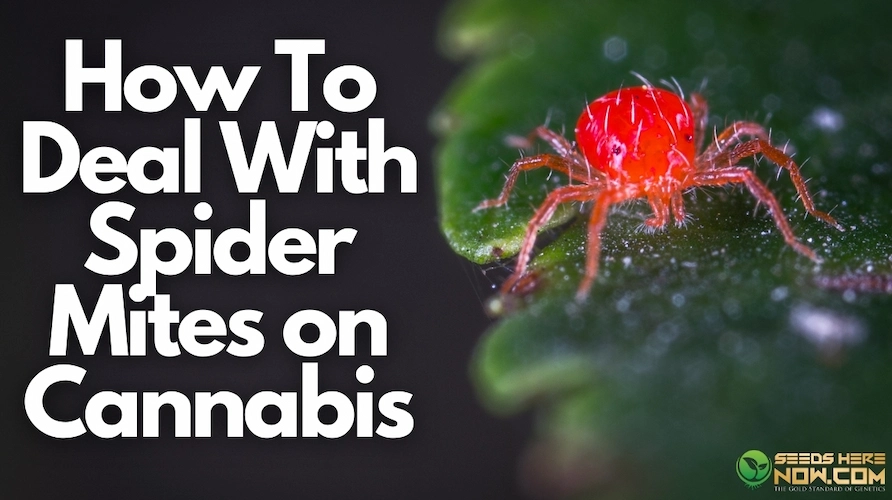
Spider mites are the pest that humbles experienced growers. They’re almost too small to see, they breed faster than you’d believe, and they hide on the undersides of leaves where you’re not looking. By the time you notice webbing, you don’t have a few mites — you have generations of them. I’ve watched growers lose rooms to mites they swore they’d handled two weeks earlier.
I’ve spent 16 years running a seed bank and fielding panic messages about these things. Here’s the straight version: what spider mites are, how to catch them before the webbing, how to actually kill them instead of just annoying them, and how to keep them out of your garden.
How To Spot Spider Mites On Cannabis
The most common one on cannabis is the two-spotted spider mite (Tetranychus urticae). They thrive in warm, dry rooms — exactly the conditions a lot of indoor grows run. They live on the undersides of leaves and feed by piercing plant cells and draining the fluid, which is what wrecks your plant’s ability to photosynthesize.
What to look for, in the order it usually shows up:
- Tiny yellow, white, or bronze dots — “stippling” — scattered across the tops of leaves. That’s feeding damage showing through from mites working underneath. This is your early warning, and most people walk right past it.
- Mites themselves on the leaf undersides. Flip your leaves. They look like slow-moving specks of pepper. A cheap loupe or a phone macro makes them obvious.
- The paper test: hold a sheet of white paper under a leaf and tap. If specks fall and then start crawling, you’ve confirmed it.
- Leaf discoloration and curling as damage builds.
- Fine webbing across leaves and between colas. If you’re seeing webbing, understand the infestation is already advanced — this is a late sign, not a first sign.
Catch them at the stippling stage and this is a manageable problem. Catch them at the webbing stage and you’re in for a fight.
What Causes Spider Mites On Cannabis
Spider mites don’t spontaneously appear. They ride in, and then your environment decides whether they explode or not.
How they get in:
- Infected clones are the number one vector, hands down. A single mite or a few eggs on a cutting seeds your whole room.
- On you — clothing, hands, pets, another grower’s garden you visited.
- Outdoor air and plants drifting in through intakes or off nearby vegetation.
Why they explode once they’re in: the two-spotted mite breeds terrifyingly fast. In warm conditions the whole life cycle — egg to reproducing adult — runs in about 7–10 days, and a single female lays over 100 eggs in her life. Do that math across a hot, dry tent and you go from a handful to thousands in a couple of weeks.
That speed is exactly why they’re dangerous. Beyond the direct feeding damage that saps vigor, yield, and potency, a heavy mite infestation and its webbing trap moisture and stress the plant, opening the door to mold and bud rot on top of everything else. And here’s the piece that makes them so hard to kill: the eggs resist most treatments. You can wipe out every adult on the plant and have a fresh generation hatch three days later from eggs your spray never touched. That single fact dictates the entire treatment strategy below.
How To Treat Spider Mites On Cannabis
The core principle: one treatment will never work, because you can’t kill the eggs in one pass. You have to hit the plant repeatedly, on a schedule tight enough to catch each new generation before it lays the next batch of eggs. Miss that window and you’re back to square one.
Start physical. Knock the population down mechanically before you spray anything. A firm water rinse of leaf undersides removes a lot of mites and webbing. Prune out the worst-hit leaves and get them out of the room. Fewer bugs means your sprays do more.
Then treat, in veg and early flower:
- Insecticidal soap kills mites on contact. Cheap, effective on adults, coverage is everything — get the undersides.
- Neem oil works as a contact treatment and a repellent that disrupts feeding and breeding. Keep it off open flowers and never spray it under hot lights.
- Horticultural oils smother mites and their eggs, which makes them valuable since egg-killing is the hard part.
- Spinosad is a solid organic option that kills on contact and ingestion.
Rotate your treatments. Mites develop resistance fast — lean on one product and you’re breeding a population that laughs at it. Alternate modes of action across applications.
Spray on a schedule, not a whim. Treat every 3–5 days for at least 2–3 weeks, timed to catch each hatch before it matures. Coverage on leaf undersides is non-negotiable — that’s where they live.
Biological control is powerful, especially for bigger or ongoing grows. Predatory mites like Phytoseiulus persimilis and Neoseiulus californicus eat spider mites and their eggs and then die off when the food runs out. Note: you can’t run predators and broad miticides at the same time — the spray kills your predators too. Pick a lane.
In flower, your options narrow hard. You do not want to be coating buds in oil or soap late in bloom — you’ll invite mold and bud rot and you can taint the flower. Late-flower mite management leans on gentle measures, predators, and environmental control. Which is exactly why you want to catch these in veg, not in week six of bloom.
Chemical miticides exist as a last resort and are veg-only. Honestly, with good scouting and the organic rotation above, most growers never need them.
How To Prevent Spider Mites On Cannabis
Killing an active infestation is miserable. Preventing one is easy by comparison. Here’s the routine.
Quarantine every incoming plant. New clones are how mites get in — isolate them at least two weeks and inspect the leaf undersides before they go anywhere near your main canopy. This one habit prevents most infestations. If you can start from seed instead of unknown clones, you skip the single biggest mite vector entirely.
Make the environment less friendly. Mites love hot and dry. Keep temps under about 80°F and hold humidity in a reasonable range instead of bone dry. You don’t have to make the room miserable, just less of a mite paradise.
Scout relentlessly. Weekly, flip leaves and check undersides with a loupe. Run yellow sticky traps as an early-warning system. The whole game is catching stippling before it becomes webbing.
Keep it clean. Clean tools and space between cycles, don’t drag in outside plant debris, and be mindful of what you carry in on your clothes after visiting another garden.
Companion planting can help outdoors and in larger setups — marigolds, dill, and cilantro attract beneficial predators that patrol for you.
A straight word on genetics. I sell seed, and I’m not going to blow smoke: there’s no cannabis line that’s meaningfully immune to spider mites the way some lines resist mold and mildew. Mites are opportunists that hit vigorous and struggling plants alike. What genetics does buy you here is overall plant vigor and resilience — a strong, healthy, fast-recovering plant tolerates and bounces back from pest pressure far better than a weak, stressed one. Starting from quality, vigorous seed instead of a questionable clone does two things: it skips the number one way mites enter a room, and it gives you a tougher plant to work with. That’s the honest genetics angle on mites — not a resistance claim, a vigor-and-clean-start claim.
FAQ
What’s the first sign of spider mites on cannabis?
Tiny yellow, white, or bronze speckles (stippling) on the tops of leaves, from mites feeding underneath. Flip the leaf and look at the underside with a loupe to confirm. If you’re already seeing webbing, the infestation is advanced — the speckling comes first and it’s your real early warning.
Why do my spider mites keep coming back after I spray?
Because most sprays don’t kill the eggs. You wipe out the adults, then a new generation hatches a few days later. The fix is repeated applications every 3–5 days for 2–3 weeks to catch each hatch, rotating products so the mites don’t build resistance. One-and-done never works with mites.
Can I treat spider mites during flowering?
Very carefully, and it’s not ideal. Heavy oil or soap sprays on buds invite mold and bud rot and can taint your flower. In flower you lean on gentle measures, predatory mites, and environment. The real answer is to catch and crush mites in veg so you’re not spraying buds in the first place.
Are some cannabis strains resistant to spider mites?
Not really — unlike mold and mildew, there’s no meaningful genetic immunity to mites. What good genetics gives you is vigor: a strong, healthy plant tolerates and recovers from mite pressure much better than a stressed one. Starting from clean, quality seed also skips infected clones, the top way mites get in.
Start Clean, Grow Strong
Sixteen years of grower messages have taught me that most spider mite disasters trace back to a dirty clone and a plant that was already stressed. At Seeds Here Now, you start from vigorous, quality genetics — no mystery clones carrying eggs into your room, and a stronger plant that shrugs off pressure and bounces back. Skip the number one mite vector and grow something built to thrive. Browse the collection and start your next run clean.
Related reading: Cannabis Powdery Mildew, How To Control Aphids on Cannabis
Suggested Articles
 10 Nov 2026
 12 min read

;)
;)
;)
 September 25, 2025


RESPONSES (0)
No responses yet. Be the first to respond!