


Black Widow Strain: The Real Shantibaba Story, the White Widow Split, and What You Get From Seed


The Black Widow strain is more than a frosty classic. It sits at the center of the most famous naming dispute in seed history, tied to White Widow, Shantibaba and Mr. Nice Seedbank.
I’m James Bean, founder of Seeds Here Now since 2010. This review covers the lineage, the disputed history told plainly, the aroma and how to find the real line.
Seeds Here Now sells authentic breeder packs to adults 21+. We do not provide growing instructions, and nothing here is a medical claim.
Shop Widow-family strains in stock now
- White Widow XXL (Feminized) – Barney’s Farm: the famous White Widow line
- White Widow (Feminized) – Seedsman: a classic White Widow cut
- Original White Widow Auto (Feminized) – Fast Buds: an autoflower version of the Widow line
- White Widow x AK47 FV (Feminized) – TurboFlora Genetics: a White Widow cross
Or browse every deal in the Breeder Blowout.
Black Widow at a Glance
| Trait | Black Widow |
|---|---|
| Lineage | Brazilian sativa landrace x South Indian indica |
| Breeder | Shantibaba (Mr. Nice Seedbank) |
| Type | Sativa-leaning hybrid |
| Reported THC | High teens to mid-20s % |
| Aroma | Earthy, citrus, sweet, candy |
| Era | Early to mid 1990s |
Lab figures vary by sample, so treat THC numbers as reported ranges, not guarantees. We describe lineage, aroma and appearance only; we make no claims about effects.
Black Widow Genetics and History
The original Black Widow is a Brazilian sativa landrace crossed with a South Indian indica. That is the same foundation behind White Widow, and the overlap is the heart of one of cannabis’s most famous disputes.
In the early to mid 1990s, Shantibaba (Scott Blakey) worked with Green House Seeds in Amsterdam alongside Arjan Roskam. In his account, he sourced the South Indian genetics in Kerala, crossed them onto the Brazilian mother and built the line, which Green House released as White Widow. It went on to win a Cannabis Cup.
In 1998 Shantibaba left and co-founded Mr. Nice Seedbank with Neville Schoenmakers and Howard Marks. Green House kept the White Widow name, so Shantibaba released what he says is the same line as Black Widow.
Green House tells it differently, and a Dutch grower named Ingemar claims he found the original seeds in imported hashish and bred the line himself. Nobody can settle it with documented evidence, so we present all three accounts plainly.
The Two Landraces Behind Black Widow
Black Widow is built on two landraces, traditional varieties shaped over generations in one region.
| Parent | Origin | What it brings to the Black Widow strain |
|---|---|---|
| Brazilian sativa | Brazil | Tall, energetic sativa character, sweet fruit and floral notes |
| South Indian indica | Kerala, South India | Resin, density and an indica backbone |
A pure equatorial sativa can be sprawling and slow, and the South Indian parent tames that while adding the heavy frost that made the line famous. The combination produced a sativa-leaning hybrid with unusually dense resin coverage for its era. Our guide to landrace and heritage strains explains why lines like these matter.

Black Widow Aroma and Appearance
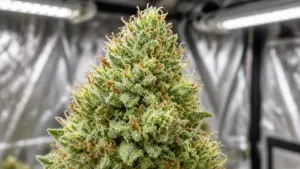
The Black Widow strain carries an earthy base with citrus and a sweet, candy-like top note. It is a resin-heavy line that helped define what frosty meant in the 1990s.
Buds are compact and coated in trichomes, the classic Widow look that made the family famous.
It is not a candy-gas modern hybrid. The profile is cleaner and more classic: pine, earth and lemon with a little spice, and on some phenotypes a stronger fruity sweetness from the Brazilian side. That variation is part of what makes a regular pack interesting to buyers.
Black Widow vs. Similar Strains
| Strain | Origin | Aroma |
|---|---|---|
| Black Widow | Shantibaba / Mr. Nice | Earthy, citrus, sweet |
| White Widow | Green House Seeds | Earthy, woody, pungent |
| Landrace parents | Brazil and South India | Varies |
Read our White Widow review and our guide to landrace and heritage strains.
Buying Black Widow
Authentic Black Widow seeds come from the Mr. Nice line; many generic Widow packs share the name but not the history. Look for the named breeder and sealed packaging, and browse our breeders index for heritage lines.
I have been selling seeds for more than 16 years and have heard every version of the Widow story. The buyers who get the most out of this line are the ones who care about provenance: they keep the pack sealed, record the breeder and lineage, and can tell the history when someone asks. With the Black Widow strain, that history is half the appeal.
Who Is Shantibaba?
Shantibaba, whose real name is Scott Blakey, is one of the most important figures in modern seed breeding. His name is attached to several classic lines from the 1990s, and the Black Widow strain is the one he is most closely associated with.
After leaving Green House Seeds in 1998, he co-founded Mr. Nice Seedbank with two famous partners. Neville Schoenmakers is often called the godfather of the modern seed industry for his pioneering seed company work in the Netherlands in the 1980s. Howard Marks was the Welsh smuggler turned author whose nickname, Mr. Nice, gave the seed bank its name.
Mr. Nice built its reputation on regular seeds and on preserving classic genetics, which is why its version of Black Widow is the one buyers consider the pedigree line.

Amsterdam in the 1990s
To understand why the Widow story matters, picture Amsterdam in the early 1990s. Coffeeshops were thriving, the Cannabis Cup was drawing visitors from around the world, and a handful of seed companies were turning landrace genetics into the strains that would shape the next 30 years.
White Widow was one of the breakout stars of that era, winning a Cannabis Cup and becoming one of the most famous strain names on earth. Its heavy white frost set a new standard for what top-shelf cannabis should look like.
The disputes that followed, over who bred what and who owned which name, are a reminder that the industry’s foundations were built informally. Very little was written down, which is why the Black Widow strain’s history still comes down to competing accounts.
Black Widow vs. White Widow
The short version: the two names share the same Brazilian x South Indian genetic story, and the split between them is a naming and business dispute rather than a different cross. Shantibaba says Black Widow is his original line under a new name. Green House kept the White Widow name and tells the history differently.
In practice, the packs you find today can differ, because each line has been maintained separately for decades and many other seed companies sell their own Widow versions. That is why the breeder’s name on the pack matters more than the color in the strain name. Read our White Widow review for that side of the family.
The Widow Family Tree
The Widow line became one of the most used parents of the 1990s and 2000s. A few descendants buyers know well:
- White Russian: commonly listed as AK-47 x White Widow, a classic in its own right. See our White Russian review.
- Berry White: a cross that pairs Blueberry with White Widow for berry aroma and heavy resin. See our Berry White review.
- Countless Widow hybrids: many breeders used the line to add frost to their own work.

What the Widow Name Means
The name refers to the strain’s heavy coat of white trichomes, which made the buds look as if they were dusted in frost. In the 1990s, when most imported cannabis looked nothing like that, the effect was striking.
Shantibaba’s choice of Black Widow for his version keeps the Widow reference while drawing a clear line from the White Widow name that Green House kept.
Regular or Feminized Black Widow Seeds?
Mr. Nice built its reputation on regular seed, which includes both male and female plants and preserves the fullest genetic range. That is what breeders and buyers usually want from a heritage line like this.
Feminized versions of Black Widow also exist from various seed companies. Neither is wrong, but know which you are buying, and remember that the regular Mr. Nice line is the one with the documented pedigree. Our explainer on feminized vs. regular seeds covers the difference.
How to Spot Authentic Black Widow Seeds
Because White Widow and Black Widow are so tangled together, mislabeling is common. A few checks protect your collection:
- Look for Mr. Nice Seedbank or Shantibaba named as the breeder.
- Check that the listed lineage is Brazilian sativa x South Indian indica.
- Buy sealed, original breeder packaging from a seller who can tell you the history.
- Treat a generic Widow pack with no named breeder as a different plant with a familiar label.
A seller who can explain the story you just read is a good sign they know what is in the pack.
Why the Black Widow Strain Still Matters
Today’s shelves are dominated by gas-and-candy hybrids descended from Cookies and Gelato. An honest Black Widow is a reminder of what the 1990s Amsterdam benchmark plants were like: heavy resin, a clean, classic aroma and a family history that goes straight back to landraces.
For buyers, that makes it a foundational piece. It connects modern cannabis to the era when seed companies first turned imported landraces into named strains, and it carries one of the best stories in the hobby. Our real story of Gelato covers how the next big family took over a generation later.
Seeds, the Law and Our Rules
Cannabis laws differ by state, and federal hemp and seed rules are changing under Section 781. Check the law where you live before you buy anything. Our cannabis seeds by state guide links every state and its official sources, and our explainer on what Section 781 is covers the federal side.
Every buyer must be 21 or older. We sell seeds only to adults 21+.
Growing It
Black Widow is a rewarding grow, and it’s more forgiving than its heavy sativa reputation suggests, thanks to that South Indian indica backbone.
Structure and training: Expect a moderately tall, branchy plant with sativa stretch during flower — not as extreme as a pure Haze, but enough that you’ll want to manage height. It responds well to topping and low-stress training, and it takes a SCROG net nicely if you want to even out the canopy and push the frostier flower sites into the light. Indoors it’s very manageable; outdoors in a warm climate it can get big.
Flowering time: Figure roughly 8 to 9 weeks (56 to 65-plus days) indoors. Outdoors in the Northern Hemisphere, it finishes around early-to-mid October.
Resin and mold: Because this plant is bred to pack on trichomes and can throw dense flowers on the indica-leaning phenos, watch your late-flower humidity. Frosty, tight buds hold moisture. Keep flowering-room humidity down (40-50%) and keep air moving, especially in the last few weeks, or you’ll invite bud rot into your best colas. That’s the one place this strain will punish carelessness.
Yield: Solid and above-average when you feed it and give it light.
Indoor vs. outdoor: Indoors it’s a great candidate for a SCROG or a topped multi-cola plant, and its moderate flowering time makes it easy to slot into a perpetual rotation. Outdoors it wants a warm, dry-ish climate to finish clean — the same humidity sensitivity that bites you in a wet indoor room will bite you harder in a rainy October.
If you’re in a temperate zone with a dry fall, you’ll be rewarded; if you’re somewhere that turns cold and wet early, run it indoors or in a greenhouse where you control the back half of flower. The Brazilian sativa heritage gives it decent heat tolerance, so warm regions suit it better than cold ones.
Frequently Asked Questions
Who bred the Black Widow strain?
Shantibaba (Scott Blakey), released through Mr. Nice Seedbank.
Is Black Widow the same as White Widow?
Shantibaba says they share the same original genetics; Green House and others dispute it. No documented evidence settles it.
What is Black Widow’s lineage?
A Brazilian sativa landrace crossed with a South Indian indica.
What does Black Widow smell like?
Earthy, with citrus and a sweet, candy-like note.
Do you give growing advice for Black Widow?
No.
Who founded Mr. Nice Seedbank?
Shantibaba, Neville Schoenmakers and Howard Marks founded it in 1998. Howard Marks’s nickname, Mr. Nice, gave the seed bank its name.
Why is it called Black Widow?
Widow refers to the heavy white frost of trichomes. Shantibaba used Black Widow because Green House kept the White Widow name.
Is the Black Widow strain sativa or indica?
It is a sativa-leaning hybrid, combining a Brazilian sativa landrace with a South Indian indica.
Where did the South Indian parent come from?
In Shantibaba’s account, he sourced the South Indian genetics on a trip to the Kerala region of India.
How strong is the Black Widow strain?
Reported THC for the Black Widow strain generally runs from the high teens to the mid-20s percent. Lab results vary by sample.
What does the Black Widow strain look like?
Compact buds covered in a thick coat of white trichomes, the frosty look that gave the Widow family its name.
Can I still buy the original Mr. Nice Black Widow seeds?
Mr. Nice Black Widow packs do appear from time to time. We list heritage lines when available for adults 21+.
Bottom Line
The Black Widow strain is a living piece of cannabis history, complete with a dispute nobody can fully settle. For adults 21+, the original Mr. Nice line is a must-have heritage pack.
Sources
Last updated October 7, 2026 by James Bean, founder of Seeds Here Now. Nothing here is legal advice. See our disclaimer, terms of use and shipping policy.
Suggested Articles

 12 Nov 2026
 12 min read
;)
;)
;)
 February 12, 2025


RESPONSES (0)
No responses yet. Be the first to respond!