


Cannabis Ruderalis: The Wild Subspecies Behind Every Autoflower
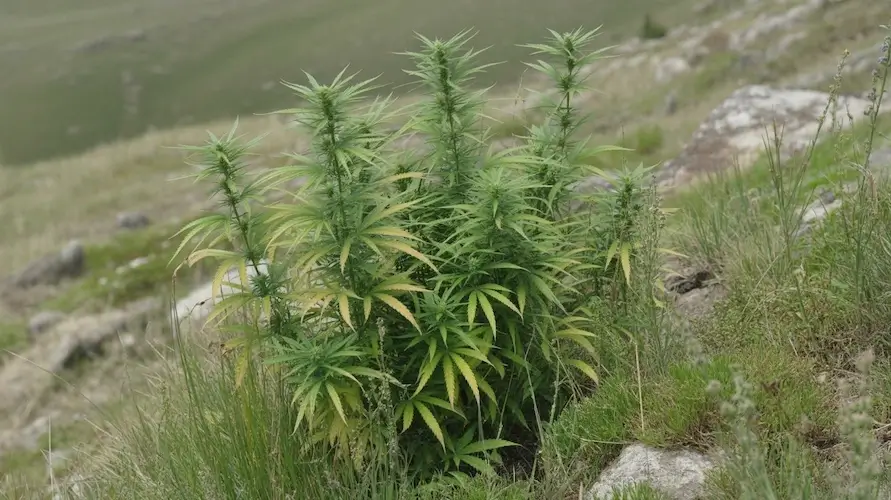
Nobody’s smoking straight ruderalis. Let’s get that out of the way first. This is a scrubby, low-THC weed that grows wild in ditches across Russia and Central Asia, and on its own it’ll do close to nothing for you. So why does a genetics-first seedsman care about it? Because ruderalis carries one gene that rewired the entire cannabis world. Every autoflower you’ve ever grown — every 70-day-from-seed harvest, every stealth balcony plant — traces back to this unglamorous wild plant. I’ve spent 16 years in seeds, and I’ll tell you straight: ruderalis is the most important cannabis you’ll never actually smoke.
What Cannabis Ruderalis Actually Is
Cannabis ruderalis is the third member of the cannabis family, alongside the sativa and indica types everyone knows. Botanists still argue whether it’s a full species or a subspecies of Cannabis sativa — you’ll see it written Cannabis ruderalis and Cannabis sativa subsp. ruderalis both. Either way, it’s a distinct wild lineage. A Russian botanist, D.E. Janischewsky, formally described it in 1924 after studying wild cannabis growing along the Volga.
The name tells you everything about how it lives. “Ruderal” is a botany term for a plant that thrives in disturbed ground — roadsides, rubble, cleared land, ditches, the edges of farm fields. Ruderalis is a survivor and a weed in the truest sense. It spread across Russia, Central and Eastern Europe, and Central Asia, adapting to brutal northern climates with short summers and long daylight.
Physically it’s humble: short, usually 1 to 2.5 feet tall, with thick sturdy stems and broad leaves. It doesn’t yield much and it doesn’t get you high. What it does have, forged by those harsh northern latitudes, is a survival trait no other cannabis evolved — and that trait is worth more to breeders than all the potency in a Cookies cut.
The Autoflowering Gene: Ruderalis’s Superpower
Here’s the whole reason ruderalis matters. It flowers on age, not on light.
Normal cannabis — every photoperiod sativa and indica — is a short-day plant. It reads the length of the night to decide when to bloom. Outdoors it waits for late summer, when nights grow long, before it starts flowering. Indoors you force it by flipping your lights to 12 hours on, 12 off. The plant is a slave to the light cycle.
Ruderalis doesn’t care about the light cycle at all. It’s day-neutral — sometimes called autoflowering. It starts flowering after a set number of weeks of growth no matter what the light is doing. Think about why. Ruderalis evolved near the Arctic, where summers are short and daylight barely dips even at night. A plant that sat around waiting for long nights would freeze before it ever set seed. So ruderalis threw out the light-sensing schedule entirely and evolved to just start flowering on an internal clock, race through its cycle in eight to ten weeks seed-to-seed, and finish before the frost. Survival forced it into an autopilot flowering trigger.
That autopilot is controlled by a recessive gene. Recessive is the key word — it matters enormously for breeding, and I’ll come back to it.
Why Ruderalis Is the Backbone of Every Autoflower
Every autoflowering strain on the market — and autos are a massive chunk of what growers buy today — exists because breeders took that ruderalis autoflowering gene and married it to real cannabis.
The problem was obvious from the start: ruderalis flowers on its own schedule, which is fantastic, but it’s low-THC and low-yield, which is useless. Sativa and indica are potent and productive but chained to the light cycle. So breeders did the natural thing — they crossed them. Take ruderalis’s autoflowering trait, cross it into a potent photoperiod strain, and chase the best of both: a plant that flowers automatically and actually gets you high and yields something worth trimming.
But because the autoflowering trait is recessive, you can’t just cross once and call it done. A first-generation (F1) cross of ruderalis to a photoperiod plant usually won’t autoflower, because the dominant photoperiod genes mask the recessive auto gene. Breeders have to cross those F1s back together and select, generation after generation, hunting for the plants that both autoflower and carry the potency and structure of the photoperiod parent. That selection work — done over the last couple of decades — is why early autos were weak and modern autos can rival photoperiod flower for potency. The ruderalis genetics are still in there, in every single autoflower, doing exactly one job: keeping the flowering on an internal clock. Everything else worth having was bred in from the sativa and indica side.
So when you grow an auto and it flips to flower on day 30 under a 20/6 light schedule with no effort from you, that’s ruderalis. It’s the invisible backbone. The plant nobody smokes is inside the seed of every plant that made autos a category.
Ruderalis and Landrace Preservation
This is where the genetics-first angle gets real, and where most articles stop short. Ruderalis isn’t just a breeding ingredient — it’s a landrace, a wild population shaped by a specific place over thousands of years, and that makes it a piece of cannabis heritage worth protecting.
Wild ruderalis populations carry a deep, unique pool of genetics: cold tolerance, fast finishing, pest and mold resistance, and of course that day-neutral flowering trigger, all fine-tuned by centuries of natural selection in some of the harshest cannabis-growing environments on Earth. That raw genetic material is a resource breeders will keep drawing on for traits we haven’t even prioritized yet — resilience to climate stress, disease resistance, novel flowering behavior.
The threat is the same one facing every landrace: crossbreeding and habitat loss dilute the pure wild lines until they’re gone. Once a distinct landrace pool is bred out or paved over, you don’t get it back. That’s why serious seedspeople care about preserving original ruderalis and other landrace populations in their true form, not just strip-mining them for one gene. As a seedsman, I see landrace preservation as protecting the raw material of everything we’ll build next. Ruderalis is a case study: an ugly-duckling wild weed nobody wanted turned out to hold the single trait that created a whole new class of cannabis. What other overlooked landrace holds the next one? That’s why you protect them.
Ruderalis, CBD, and the Hemp Question
One more piece of the ruderalis story that gets glossed over: cannabinoid ratio. Because ruderalis is naturally low in THC, some wild and semi-wild populations lean toward CBD-dominant or balanced chemotypes. That’s caught the attention of hemp and CBD breeders, because a plant that’s already low-THC, autoflowering, cold-hardy, and fast-finishing is a strong starting chassis for compliant CBD hemp grown at high latitudes. It’s not that ruderalis is a magic CBD plant — most of it is simply low in everything cannabinoid-wise — but the low-THC baseline plus the autoflower trait makes it a useful genetic building block on the hemp side, not just the drug-type side. Same gene, different destination.
It also clears up a common mix-up: ruderalis is not the same thing as “hemp.” Hemp is a legal THC-threshold classification that applies across cannabis types; ruderalis is a distinct wild lineage defined by where it came from and how it flowers. A plant can be ruderalis-descended and legally hemp, or ruderalis-descended and a potent auto well over the hemp line. The lineage and the legal label are two separate things.
Should You Grow Pure Ruderalis?
Almost certainly not — and I say that as someone who respects the plant. Pure ruderalis is low in THC (typically under 3%), low-yielding, and small. As a smoke, it’s a non-starter. It has some interest for CBD and for hardcore breeders and preservationists working directly with landrace stock, but for a grower who wants to actually harvest and enjoy cannabis, pure ruderalis is a science project, not a crop.
What you want instead is what breeders already built for you: a modern autoflower, where the ruderalis backbone is doing its job in the background and potent, flavorful photoperiod genetics are doing everything you can see, smell, and smoke. That’s the smart way to benefit from ruderalis — grow the descendants, not the ancestor.
FAQ
Is cannabis ruderalis a real species?
It’s a distinct wild lineage of cannabis, first described in 1924. Botanists debate whether to call it its own species (Cannabis ruderalis) or a subspecies of Cannabis sativa — you’ll see both. Either way it’s a genuinely separate type from the sativa and indica lines, defined by its wild origin and its autoflowering trait.
Does ruderalis get you high?
Barely. Pure ruderalis is very low in THC, usually under 3%, so on its own it produces little to no psychoactive effect. Its value isn’t in its own flower — it’s in the autoflowering gene breeders cross into potent strains.
Why is ruderalis used to make autoflowers?
Because it flowers based on age instead of the light cycle. That day-neutral trait, evolved to survive short northern summers, is what lets autoflowers bloom automatically. Breeders cross it into potent photoperiod strains to get plants that both autoflower and get you high.
Is ruderalis the same as an autoflower strain?
No. Ruderalis is the wild ancestor; an autoflower is a bred hybrid. Autos carry ruderalis’s autoflowering gene but get their potency, yield, flavor, and structure from sativa and indica parents. You grow autos, not pure ruderalis.
Grow the Payoff of Ruderalis Genetics
You don’t grow ruderalis. You grow what ruderalis made possible. At Seeds Here Now I stock modern autoflowers where that wild backbone finishes fast and the photoperiod genetics deliver the potency and flavor you actually want. Browse the autoflower seed collection, dig into the breeders I’ve vetted over 16 years, or explore feminized and regular seeds if you want photoperiod lines to breed with. Genetics first, always.
Suggested Articles

 12 Nov 2026
 11 min read

;)
;)
;)
 November 13, 2025


RESPONSES (0)
No responses yet. Be the first to respond!