


Savor the Taste of the Key Lime Pie Strain

This key lime pie strain guide covers Key Lime Pie’s lineage, history, aroma and grow notes, plus where to find Key Lime Pie seeds from named breeders. For adults 21+.
This cultivar is a unique phenotype of the famed Girl Scout Cookies strain, resulting in a unique flavor profile that’s sure to satisfy.
But what exactly is Key Lime Pie, and what makes it so special? In this article, we’ll explore the origins, characteristics, and benefits of this tasty strain, as well as tips for growing and using it to its fullest potential.
Key Takeaways:
- Key Lime Pie is a hybrid cannabis strain with a sweet and tangy flavor reminiscent of its namesake dessert
- Cultivating the strain requires attention to its preferred growing conditions and techniques
What Is the Key Lime Pie Strain?
The Key Lime Pie cannabis strain is a standout phenotype of the renowned Girl Scout Cookies.
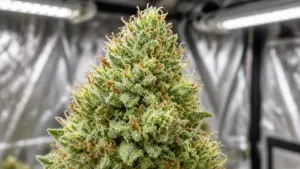
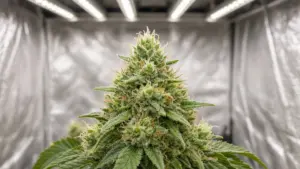
Visually, Key Lime Pie is a beautiful strain, featuring bright green buds with purple undertones and fiery orange hairs. The buds are dense and resinous, with a distinct lime aroma that blends perfectly with the sweet and earthy notes of the Girl Scout Cookie and LA Confidential strains.
The Origins of the Key Lime Pie Strain
The Key Lime Pie strain is a rare phenotype of Girl Scout Cookies that features a distinct aroma and flavor profile that’s unlike the typical cookie-dough funk of most Cookies strains. To understand the origins of Key Lime Pie, let’s take a closer look at its parent, Girl Scout Cookies.
Girl Scout Cookies
Girl Scout Cookies is a hybrid strain that originated in California.
The Key Lime Pie strain is a testament to the skill and vision of the breeders who created it, and its popularity is a testament to the quality and appeal of its genetic lineage.
Delightful Lime Flavor and Creamy Texture
The Key Lime Pie strain is renowned for its unique lime flavor and smooth, creamy texture. This hybrid strain offers a delightfully balanced terpene profile that any cannabis connoisseur will enjoy.
Terpenes and Flavonoids
The Key Lime Pie strain contains a variety of terpenes and flavonoids that contribute to its distinct flavor and aroma. Limonene, which is responsible for the citrusy scent, is the dominant terpene in this strain. Other terpenes present include caryophyllene, myrcene, and humulene, which add subtle spicy and earthy notes to the overall flavor profile.
| Terpenes | Flavonoids |
|---|---|
| Limonene | Quercetin |
| Caryophyllene | Apigenin |
| Myrcene | Campherol |
| Humulene | Kaempferol |
“The taste of Key Lime Pie is unlike any other cannabis strain I’ve tried.
Its lime flavor and creamy texture make it a favorite among cannabis connoisseurs, and its terpene and flavonoid profile showcase its complex and nuanced flavor profile.
Growing the Key Lime Pie Strain
If you are interested in cultivating the Key Lime Pie cannabis strain, there are a few essential things to keep in mind. As a hybrid strain, Key Lime Pie performs best when provided with warm temperatures, moderate humidity levels, and proper air circulation. Here are some tips on how to grow Key Lime Pie:
| Difficulty Level | Beginner |
|---|---|
| Climate | Warm and cool |
| Humidity | Moderate humidity |
| Air Circulation | Proper circulation |
| Lighting | Bright, full spectrum |
| Soil | Rich and well-draining |
| Watering | Regular, but not overwatering |
When growing Key Lime Pie, make sure to keep the environment clean and free of pests and mold. Additionally, provide consistent lighting with a bright, full spectrum light source, and ensure the soil is rich and well-draining for optimal growth. Water the plants regularly but avoid overwatering. With these tips in mind, you can enjoy a bountiful harvest of Key Lime Pie cannabis.
Where To Find Key Lime Pie Seeds
If you’re looking to cultivate your own Key Lime Pie plants, finding high-quality seeds is essential. Fortunately, several reputable US-based seed banks sell authentic Key Lime Pie seeds.
However, it’s important to do your research and choose a seed bank with a good reputation to ensure you receive high-quality seeds. Additionally, some seed banks may only offer feminized or autoflower Key Lime Pie seeds, so consider your personal growing preferences before making a purchase.
Happy gardening!
Reading a Key Lime Pie Seed Pack Label
A breeder label usually shows the strain name, the breeder, the seed type and the seed count. Feminized packs are labelled as such, regular packs contain a natural mix of male and female seeds, and autoflower packs are marked “auto”. Many breeders also print the cross, for example “Parent A x Parent B”, plus a filial marker such as F1, F2, S1 or BX.
F1 means a first-generation cross of two distinct parents, S1 means seeds made from a single parent, and BX means a cross back to one of the original parents. When you compare Key Lime Pie packs, these markers tell you how close each release is to the original line.

Feminized, Regular or Auto: Choosing a Key Lime Pie Pack
Feminized seeds are bred to produce female plants, which keeps things simple when space is limited. Regular seeds produce males and females and remain the choice for anyone who wants to make their own crosses or keep a line going from seed. Autoflower versions flower on their own timeline regardless of light hours, which suits short outdoor seasons and quick indoor runs.
Match the seed type to your space, your season and how much time you have, then check the breeder’s notes on flowering time and plant size before you choose a Key Lime Pie pack.
How to Spot a Genuine Key Lime Pie Pack
Popular names get copied, and two packs called Key Lime Pie can come from completely different parents. Genuine breeder packs have consistent printing, a clear breeder name or logo and a sealed closure, and many carry a batch code or security sticker. Blurry artwork, misspelled names or loose seeds in a plain bag are warning signs.
The simplest protection is buying sealed packs from a seed bank that names the breeder on every listing, like the ones linked above.
Storing Key Lime Pie Seeds Until You Plant
Seeds stay viable longest when they are kept cool, dark and dry. Leave Key Lime Pie seeds in their sealed pack, place the pack in an airtight container with a food-safe desiccant packet, and store it somewhere with a steady temperature, such as a refrigerator shelf that is not opened constantly.
Label the container with the strain, breeder and the date you bought it. When you are ready to plant, let the container warm to room temperature before opening it so moisture does not condense on the seeds.
Comparing Key Lime Pie Releases From Different Breeders
When more than one breeder offers Key Lime Pie, compare the published cross, the filial marker, the seed type and the breeder’s notes on structure and flowering time. One breeder may work from an original cut while another builds a new cross that shares only part of the family tree.
Reading those details side by side helps you pick the release that best fits your space and goals instead of choosing on the name alone.
Germinating Key Lime Pie Seeds: A Simple Method
Most growers start Key Lime Pie seeds with the paper towel method. Place the seeds between two damp (not dripping) paper towels, set them on a plate under an upturned bowl, and keep them somewhere warm, around 70°F to 80°F. Check once a day and keep the towels moist.
Once a taproot appears, plant the seed about a quarter to half an inch deep in a light, airy starter medium with the root pointing down, and handle it as little as possible. Give the seedling gentle light as soon as it breaks the surface so it does not stretch.
Planning a Key Lime Pie Grow
Before you start, check the breeder’s notes for the version of Key Lime Pie you bought: seed type, expected flowering time and how large the plant tends to get. A feminized photoperiod plant flowers when you switch to 12 hours of darkness, while an autoflower follows its own timeline.
Match those details to your space, your light and your season. Keep a simple journal with the start date, medium, feeding and photos, so you can repeat what works the next time you run Key Lime Pie.

Indoor or Outdoor: Where Key Lime Pie Fits
Indoors you control light, temperature and humidity, which makes it easier to keep dense flowers clean and to time the harvest. Outdoors you trade that control for free sunlight and bigger plants, but you need a season long enough for the variety to finish before cold, wet weather arrives.
Check the breeder’s flowering time for Key Lime Pie seeds against your first expected autumn rain or frost. If the numbers are tight, an indoor run, a greenhouse or an autoflower version is usually the safer choice.
Seedling Care for Key Lime Pie: The First Three Weeks
Seedlings need gentle light, mild warmth and a medium that is moist but never soggy. Water in small amounts around the stem, let the top of the medium dry slightly between waterings and keep a light breeze moving so stems thicken.
Hold off on strong nutrients until the plant has several sets of true leaves; most starter mixes carry enough food for the first couple of weeks. Pale, stretched seedlings usually want more light or a closer lamp, while drooping, dark leaves often mean too much water.
Feeding and Watering Key Lime Pie Plants
Start feeding at a quarter to half of the label strength and increase slowly while watching the leaf tips. Burnt, crispy tips point to too much food; yellowing lower leaves in vegetative growth often point to too little nitrogen.
Water when the pot feels noticeably lighter rather than on a fixed schedule, and make sure excess water drains away. Consistent pH, roughly 6.0 to 7.0 in soil and 5.5 to 6.5 in hydro or coco, keeps nutrients available to the roots.
Training Options for Key Lime Pie Plants
Low-stress training (bending and tying branches outward) and topping (removing the main tip so two colas form) both create a flatter, more even canopy. An even canopy shares light more fairly and usually improves the size of lower flowers.
Train during vegetative growth and stop major changes a week or so into flowering. Autoflowers have a short vegetative window, so stick to gentle bending rather than topping if you are unsure.

Knowing When Key Lime Pie Is Ready to Harvest
The breeder’s flowering time is a starting estimate, not a deadline. Look at the trichomes with a jeweller’s loupe or a clip-on phone lens: clear heads mean the plant needs more time, cloudy heads mean it is close, and a share of amber heads shows it is fully mature.
Pistils darkening and curling in is another sign. Check several flowers from the top and the middle of the plant, because the top colas often mature a few days earlier.
Drying and Curing Key Lime Pie Flowers
Hang branches or lay flowers on racks in a dark room around 60°F to 65°F and about 55 to 60 percent humidity, with gentle air movement that does not blow directly on the plants. Small stems should snap rather than bend before the flowers go into jars, which usually takes one to two weeks.
Fill glass jars about three-quarters full and open them briefly each day for the first week, then less often. A slow, steady cure protects the aroma that drew you to Key Lime Pie in the first place.
Common Grow Problems With Key Lime Pie and How to Avoid Them
Dense flowers are prone to mould when humidity stays high late in flowering, so keep air moving, thin out crowded inner growth and aim for lower humidity in the final weeks. Inspect leaves weekly for spider mites, thrips and fungus gnats, and act early rather than late.
Nutrient burn, overwatering and light stress are the other usual suspects. Change one thing at a time and give the plant a few days to respond before making another adjustment.
Questions to Ask Before You Order Key Lime Pie Seeds
Before you buy, confirm the breeder, the exact cross and filial marker, the seed type and the number of seeds in the pack. Check the expected flowering time and plant size against your space, and decide whether you want a feminized, regular or autoflower version.
If anything on a listing is unclear, ask the seed bank before ordering. A good seller will tell you exactly whose genetics you are getting and how the pack is supplied.
Key Lime Pie Strain Review: Conclusion
Key Lime Pie is a versatile strain that can be enjoyed in various forms, including culinary creations.
The parent strain, Girl Scout Cookies, has influenced the characteristics of Key Lime Pie, giving it a unique and appealing flavor profile.
If you’re looking to try Key Lime Pie for yourself, you can find seeds at several reputable USA seed banks.
Now that you’ve learned all about the Key Lime Pie strain, check out the collection of regular, feminized, and autoflower cannabis seeds at Seeds Here Now.
FAQ
What is the Key Lime Pie strain?
Key Lime Pie is a cannabis strain that is a unique phenotype of Girl Scout Cookies.
What are the origins of Key Lime Pie?
Key Lime Pie is derived from its parent strain, Girl Scout Cookies, which contributes to its distinct characteristics.
What does the Key Lime Pie strain taste like?
Key Lime Pie has a delightful lime flavor and a creamy texture that make it a truly enjoyable strain.
How do I grow the Key Lime Pie strain?
To grow Key Lime Pie, it is recommended to provide optimal growing conditions, including proper lighting, temperature, and nutrients. Careful attention to cultivation techniques is essential.
Where can I find Key Lime Pie seeds?
You can purchase Key Lime Pie seeds from reputable USA seed banks that offer a wide selection of cannabis strains.
Can you share any user testimonials about Key Lime Pie?
However, individual experiences may vary.
Is the Key Lime Pie strain a good choice for beginners?
Key Lime Pie can be enjoyed by both beginners and experienced cannabis enthusiasts. However, proper knowledge and care are recommended for optimal cultivation and usage.
Suggested Articles
 10 Nov 2026
 12 min read

;)
;)
;)
 November 16, 2023


RESPONSES (0)
No responses yet. Be the first to respond!