


Northern Lights Strain: History, Effects, and Best Seeds [2026]

The Northern Lights strain is one of the few cannabis cultivars that actually earns the word “legendary.” Not because of marketing. Because of what it did to indoor cultivation as a practice, and because its genetics—developed by a small, secretive group of growers in the Pacific Northwest—became the backbone of nearly everything that came after.
If you want to understand where modern cannabis genetics came from, you need to understand Northern Lights. And if you want to grow it, Seeds Here Now has authentic NL genetics from the breeders keeping this lineage alive.
The Northern Lights Crew: Where the Strain Came From
Northern Lights didn’t come from a seed company. It came from a group of obsessive cultivators in the Pacific Northwest during the 1970s and 1980s—growers who figured out indoor cultivation before “indoor cultivation” was a recognized category in the cannabis world. They called themselves the Northern Lights Crew.
The driving force was Steve Murphy, owner of the Indoor Sun Shoppe in the Pacific Northwest and one of the first people in the country to seriously document cannabis cultivation under artificial light. Murphy wrote a series of foundational texts under the pen name “Murphy Stevens”—including How to Grow Marijuana Indoors Under Light (1975) and Indoor Marijuana Cultivation (1977)—that gave countless growers a blueprint for what was then an entirely new practice.
In the late 1970s, Murphy began crossing his Afghan genetics with other strains to develop plants specifically optimized for indoor environments: compact, fast-finishing, resin-heavy. The result was the Northern Lights lineage—a series of numbered phenotypes (NL #1 through NL #11 and beyond) that would transform cannabis cultivation globally.
The Key Figures and How NL5 Changed Everything
Steve Murphy wasn’t working alone. The crew included several key collaborators who shaped the genetics in meaningful ways.
Herbie introduced a Hawaiian Sativa into the breeding pool, which resulted in the legendary NL #5—a cross of his Hawaiian Sativa and Murphy’s Afghan strain. NL #5 became the most significant of the numbered phenotypes, prized for its exceptional resin production, short flowering time, and manageable indoor structure. It’s the NL that Nevil received in Amsterdam in the mid-1980s, made crosses from, and eventually incorporated into NL #5 x Haze—a cross that became one of the most widely grown strains of that era and a genetic ancestor to countless modern hybrids.
His documentation of the crew’s history—through forums and podcast appearances—preserved knowledge that might otherwise have been lost entirely. He remains a key voice on the crew’s legacy.
Don, “The Indian,” developed NL #2, a cross of his Afghan Hybrid and Murphy’s Afghan strain. This expanded the genetic diversity of what the crew could work with and gave subsequent breeders more raw material to explore.
In the late 1980s, Operation Green Merchant—a large-scale DEA operation targeting grow stores nationwide—disrupted the crew and led to significant losses. But by then, the genetics were already out in the world. Nevil’s Amsterdam work with NL #5 had seeded an entire generation of European breeders, and the strain’s influence was irreversible.
Growing Northern Lights: What You Need to Know
Northern Lights is one of the most beginner-friendly strains in the cannabis world—not because it’s simple, but because it’s forgiving. That resilience was baked in by the Northern Lights Crew, who were breeding for indoor performance above everything else.
Growing environment: Northern Lights performs excellently indoors and finishes reliably outdoors in temperate climates. Indoors, keep temperatures in the 65 to 80°F range during flowering and maintain humidity below 50% to protect those dense colas from moisture issues. Plants stay compact—typically 3 to 4 feet indoors—making it ideal for space-limited grows.
Feeding: NL is not a heavy feeder. It responds well to a balanced nutrient program but doesn’t need to be pushed hard. Overfeeding is a more common mistake with this strain than underfeeding. Follow your nutrient line’s recommended schedule and dial back if you see signs of excess.
Yield: Good. Northern Lights is known for dense, resin-coated buds that pack weight for their size. Growers report 400 to 500g/m² indoors under optimal conditions, with higher numbers possible from experienced cultivators.
For a full guide to getting your grow environment dialed in before you start, read our complete cannabis grow guide. And if you’re considering a Northern Lights run outdoors, our team can help you match the phenotype to your climate—reach out through the strain finder tool.
Best Northern Lights Seeds and Crosses at Seeds Here Now
The classic NL lineage has been preserved and extended by a small number of dedicated breeders who understand its significance. At Seeds Here Now, we carry Northern Lights genetics from breeders who take that responsibility seriously. Here’s what to look for.
Crickets and Cicadas Seeds – NL5 x Tom Hill’s Haze: A cross between the legendary NL #5 and Tom Hill’s Haze—a strain with serious sativa pedigree. Exactly the kind of work that keeps classic genetics moving forward without losing what made them valuable.
Crickets and Cicadas Seeds – NL2 x Tom Hill’s Haze: The NL #2 version of the same concept. Both are worth hunting if you’re serious about Northern Lights genetics.
Browse the full selection of regular seeds and breeder pages at Seeds Here Now to see current availability. Northern Lights genetics in authentic form are not always easy to find. When they’re in stock, serious collectors move quickly.
Why Northern Lights Still Matters in 2026
Here’s the thing about Northern Lights: it’s not a nostalgia play. The reason breeders like Bodhi, Jtoucan, Coastal Seeds, and Crickets and Cicadas keep working with this lineage isn’t sentimentality. It’s genetics.
That’s rare. Most dominant genetics dilute when you cross them. NL tends to express strongly, which is why NL-crosses keep showing up in breeding programs from breeders who could be using anything.
For collectors interested in preserving heirloom cannabis genetics, Northern Lights is as important as it gets.
If you’re looking to add Northern Lights seeds to your collection, start at SeedsHereNow.com.
Related Seeds in Our Catalog
These listings from the Seeds Here Now catalog connect to northern lights. Each one names the breeder, so you know exactly whose genetics you are looking at.
| Listing | Breeder | Type |
|---|---|---|
| Northern Lights Auto (Feminized) | Seedsman | Autoflower |
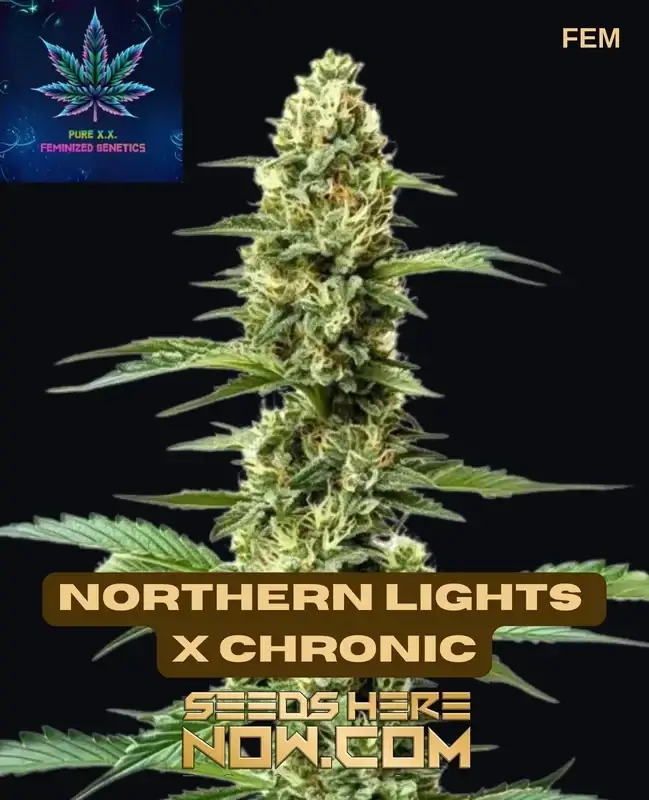
| Northern Lights x Chronic (Feminized) | Pure XX | Feminized |
| Northern Lights x Big Bud (Feminized) | Dr. Blaze | Feminized |
| Northern Lights (Autoflower) | Automatically Delicious | Autoflower |
| Northern Lights x Cinderella 99 (Feminized) | Dr. Blaze | Feminized |
| Original Northern Lights Auto (Feminized) | Fast Buds | Autoflower |
Pack sizes and releases change as breeders drop new batches, so open each listing for the current details.
How to Read a Seed Pack Label
Most breeder labels show the strain name, the breeder, the seed type and the seed count. Feminized and autoflower packs are marked as such, and regular packs contain a natural mix of male and female seeds. Many labels also print the cross, for example “Parent A x Parent B”, plus a filial marker such as F1, F2, S1 or BX.
F1 is a first-generation cross of two distinct parents, S1 is a line made from a single parent and BX is a cross back to one of the original parents. These details tell you far more about a pack than its name alone.
Feminized, Regular or Autoflower Seeds?
Feminized seeds are bred to produce female plants, which keeps things simple when space is limited. Regular seeds produce males and females and are the choice for anyone who wants to make their own crosses. Autoflowering seeds flower on their own timeline regardless of light hours, which suits short seasons and quick indoor runs.
Browse our feminized, regular and autoflower seeds to compare options.

How to Spot Genuine Breeder Packs
Well-known names get copied. Genuine breeder packs have consistent printing, a clear breeder name or logo and a sealed closure, and many carry a batch code or security sticker. Blurry artwork, misspelled names or loose seeds in a plain bag are warning signs.
The simplest protection is buying sealed packs from a seed bank that names the breeder on every listing.
Storing Seeds Until You Plant
Seeds stay viable longest when they are kept cool, dark and dry. Leave them in the sealed pack, place the pack in an airtight container with a food-safe desiccant packet, and store it somewhere with a steady temperature.
Label each container with the strain, breeder and purchase date, and let it warm to room temperature before opening so moisture does not condense on the seeds.

Choosing a Seed Bank You Can Trust
A trustworthy seed bank names the breeder and lineage on every listing, sells sealed breeder packs rather than anonymous loose seeds, and answers questions about where its stock comes from. Clear listings make it easy to compare releases and pick the right genetics for your space.
Seeds Here Now lists the breeder on every pack, so you always know whose work you are buying.
Germinating Seeds: A Simple Method
The paper towel method is the easiest way to start most seeds. Place them between two damp paper towels on a plate under an upturned bowl, keep them warm, around 70°F to 80°F, and check once a day.
Once a taproot appears, plant the seed about a quarter to half an inch deep in a light starter medium with the root pointing down, and give the seedling gentle light as soon as it breaks the surface.
Frequently Asked Questions About the Northern Lights Strain
What is the Northern Lights strain?
Northern Lights is an indica-dominant cannabis strain developed in the Pacific Northwest during the 1970s and 1980s by a group of indoor cultivators known as the Northern Lights Crew. Bred from Afghani and Thai genetics, it became one of the most influential strains in cannabis history—providing the genetic backbone for many modern hybrids and setting the standard for indoor indica cultivation.
How long does Northern Lights take to flower?
Northern Lights typically finishes in 7–9 weeks indoors—one of its key advantages over other indicas. Outdoor harvests in temperate climates fall in early-to-mid October.
Is Northern Lights a good strain for beginners to grow?
Yes. Northern Lights is one of the most forgiving strains available. It stays compact, finishes fast, and produces reliable results even for newer growers. If you’re looking for a manageable first run with a high-quality end product, NL is a strong choice.
Where can I buy Northern Lights seeds in the USA?
You can buy authentic Northern Lights seeds and Northern Lights crosses at SeedsHereNow.com. Check the breeders page for current NL availability from Crickets and Cicadas Seeds and other breeders preserving this lineage.
Related reading: The History of 420
Further reading: Wikipedia: Cannabis strain.
Key Facts About Northern Lights
| Type | Indica-dominant |
|---|---|
| Origin | Pacific Northwest growers, 1970s and 1980s |
| Indoor flowering | About 7 to 9 weeks |
| Beginner-friendly | Yes; compact, fast and forgiving |
| Known for | Shaping modern indoor cultivation |
| Where to buy | Seeds Here Now, authentic breeder packs for adults 21+ |
Suggested Articles
 10 Nov 2026
 12 min read
;)
;)
;)
 May 20, 2023


RESPONSES (0)
No responses yet. Be the first to respond!